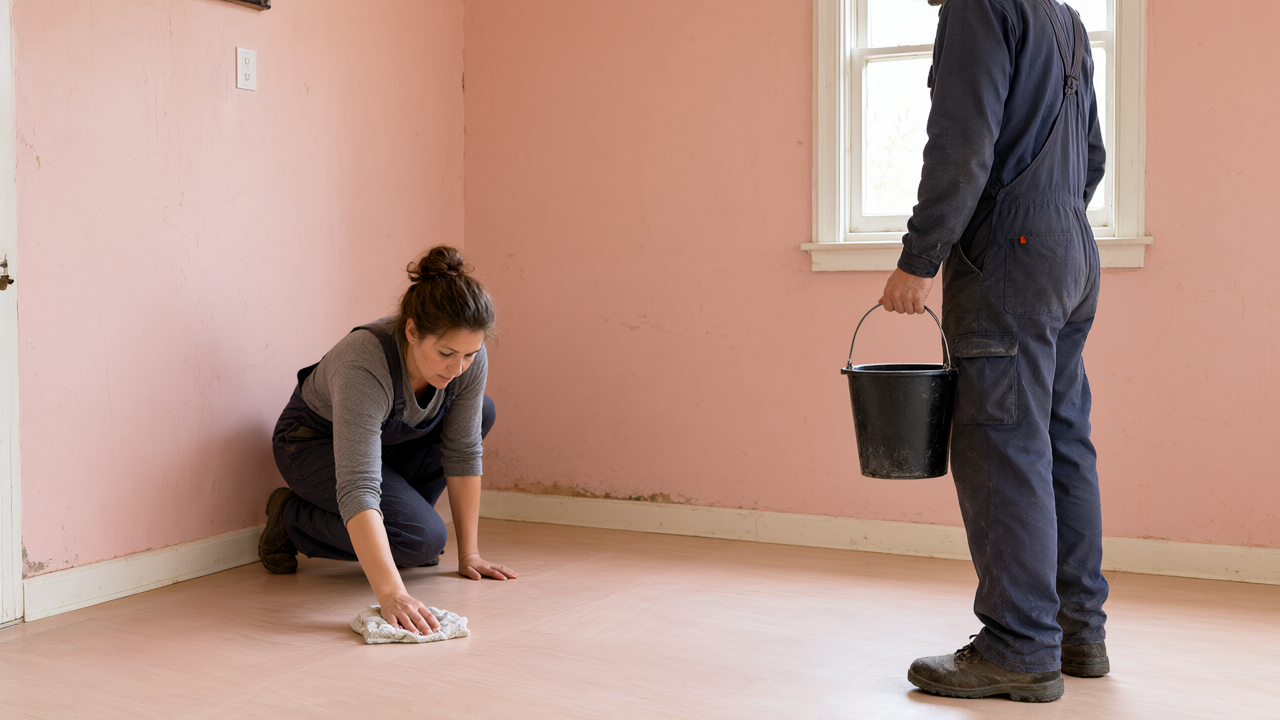
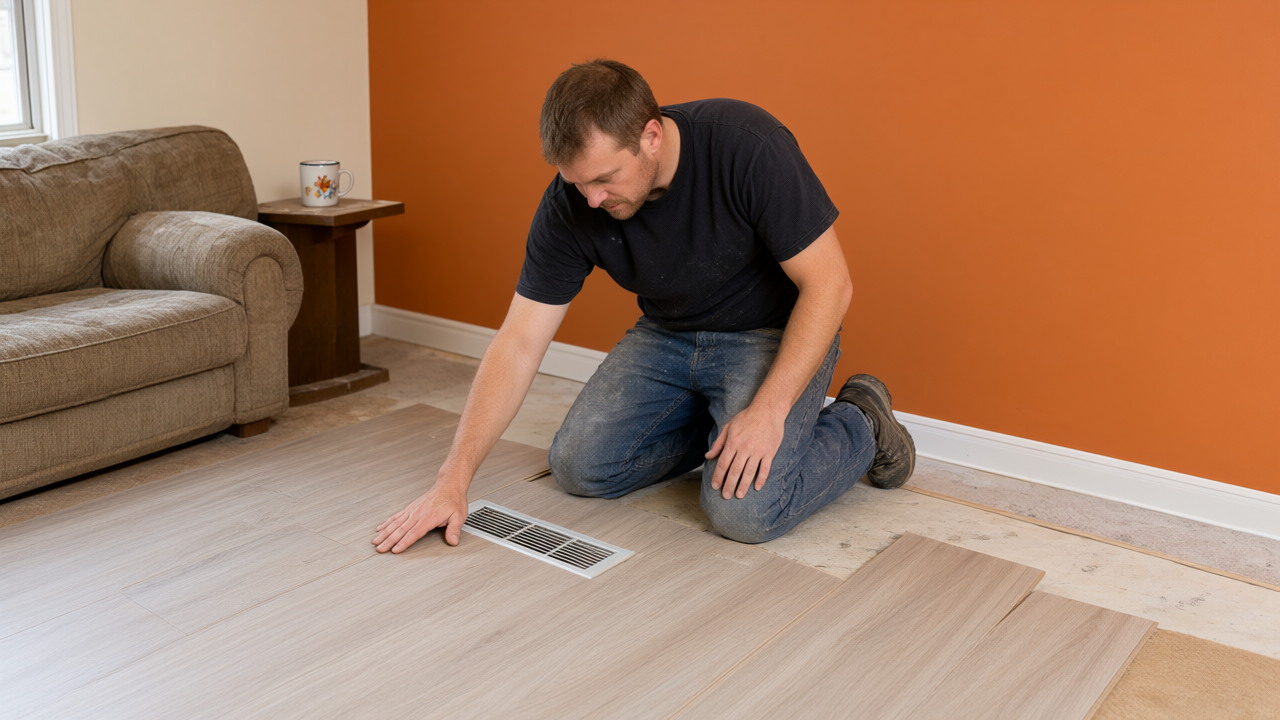
Water damage to Laminate Flooring after a Cary basement flood is one of the few home repairs where the clock genuinely matters. You have roughly 24 to 48 hours before the swelling, delamination, and mold risk turn a $600 repair into a $4,000 replacement. The good news is that laminate is more forgiving than most people think, and a lot of the damage you're staring at right now is reversible if you move fast and skip the panic purchases at the hardware store. This guide walks through exactly how to assess what happened, stabilize the floor, decide whether to repair or replace, and handle the insurance side without getting steamrolled.
How to Assess Water Damage to Laminate Flooring After a Cary Basement Flood
Laminate is a wood composite core sandwiched between a printed image layer and a clear wear layer. Water doesn't just sit on top. It wicks into the exposed edges of each plank, swells the core, and pushes the layers apart. That's why the damage almost always shows up at the seams first, and why the planks closest to the water source look the worst while the planks six feet away can look untouched.
Start by walking the floor in bare feet or socks. You're feeling for two things: soft spots (the core has absorbed water and lost its structure) and cupping or crowning (edges curling up or centers bulging). Then get on your hands and knees and look at the seams under a bright flashlight. A plank that looks flat but has a visible gap or a slight lip at the joint is already compromised, even if it doesn't feel wrong yet.
Next, figure out how deep the water actually went. Clean water from a burst supply line or a failed sump pump behaves very differently from water that came up through a floor drain or a sewer backup. Category 1 water (clean) can sometimes be dried in place. Category 2 (gray water, like a washing machine discharge) and Category 3 (black water, sewage) mean the flooring is a total loss and needs to come out for health reasons, not just cosmetic ones. This distinction matters enormously for your insurance claim.
Here's a quick assessment checklist you can run in about 15 minutes:
- Measure the affected area. Mark the edges of the wet zone with painter's tape so you can track whether it's spreading.
- Test the seams every 12 inches with a flathead screwdriver. If the tip sinks in easily, that plank is done.
- Check the baseboards and drywall. If the drywall is soft up to 2 inches above the floor, water has been sitting longer than you think.
- Snap photos and video of everything before you touch a single plank. Your adjuster will want them.
- Smell the area. A musty, earthy odor within 24 hours means microbial growth has already started.
If more than 30% of the visible floor shows swelling or soft spots, replacement is almost always the smarter financial call. Under that threshold, targeted plank replacement is realistic, and that's a repair Burns Carpentry handles regularly for Cary homeowners.
5 Emergency Steps to Stabilize and Dry Wet Laminate Floors in Cary, IL
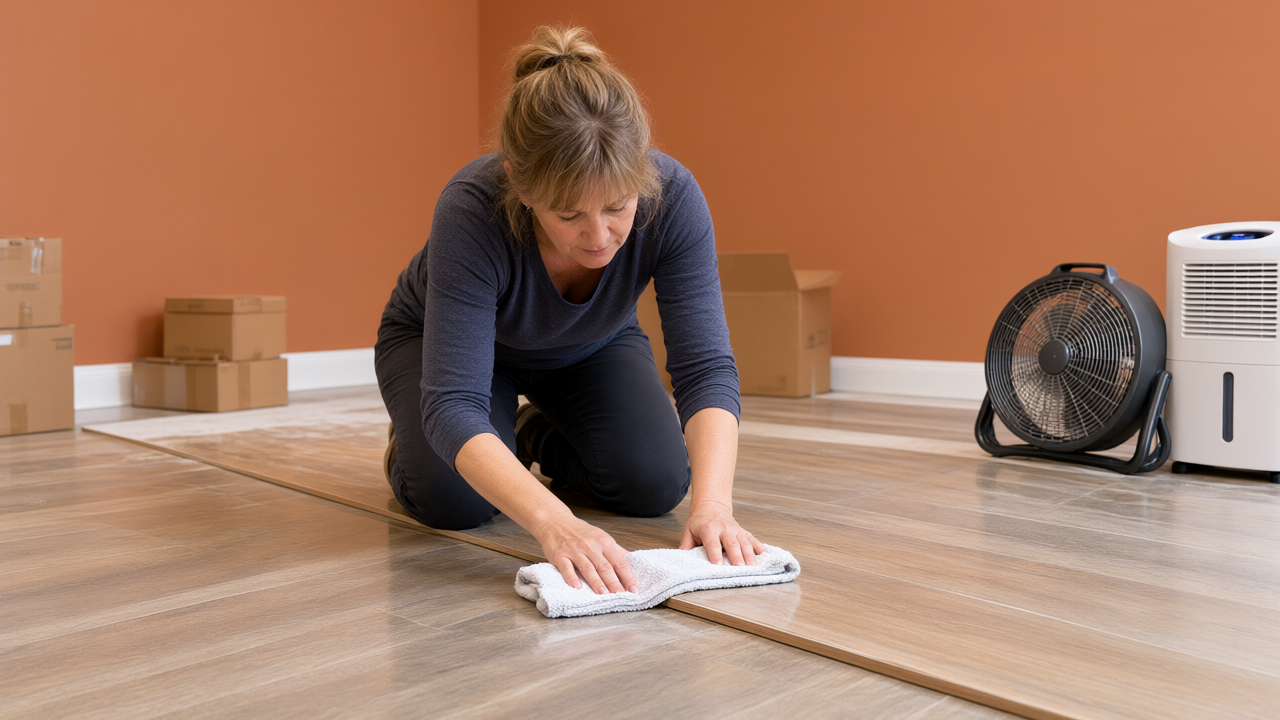
Do these in order. Skipping a step is how a manageable problem becomes a full gut job.
- Kill the water source first. Shut off the supply valve, unplug the sump pump breaker, or call the village if it's a main line issue. Drying a floor while water is still coming in is a waste of your time and your equipment rental money.
- Pull up the wet area rug and anything sitting on the floor. Cardboard boxes, stored holiday bins, and area rugs act like sponges and hold moisture against the laminate. Get them out and into the garage or driveway.
- Extract standing water within the first hour. A wet/dry shop vac handles most residential basement floods. For anything deeper than a half inch across more than 200 square feet, rent a commercial extractor from a Cary or Crystal Lake equipment rental for about $60 to $90 per day.
- Set up airflow and dehumidification immediately. You want a minimum of one box fan per 10 feet of wall and a refrigerant dehumidifier rated for the square footage. Run them continuously for 72 hours minimum. In an Illinois October, the outdoor humidity usually cooperates, so crack a window if the temperature is above 60 degrees.
- Do not walk on the wet floor more than necessary. Foot traffic pushes water deeper into the seams and accelerates delamination. Set up a temporary path with plywood scraps if you have to cross the space.
One thing most people get wrong: don't crank the heat. Blasting a space heater at wet laminate dries the surface too fast while the core stays wet, which causes the planks to warp unevenly. Steady airflow at room temperature is the goal.
If the water came from a sewage backup or a floor drain, stop here and call a professional. That's a Category 3 situation and it's not a DIY job. Burns Carpentry can assess whether the subfloor underneath is salvageable, which is the question that actually determines your repair scope.
When to Repair vs. Replace Water-Damaged Laminate: A 2026 Cary Homeowner's Decision Guide
The honest answer is that laminate rarely survives a real flood. But "rarely" isn't "never," and there are specific situations where you can save thousands by repairing instead of replacing.
Repair makes sense when: the water was clean, it was cleaned up within 24 hours, less than 20% of the floor is affected, the moisture meter reads under 15% after drying, and the damage is concentrated in a single room or a straight-line area. In these cases, a skilled carpenter can remove and replace individual planks, feather the new material in with the existing floor, and you'd be hard-pressed to spot the repair.
Replace makes sense when: the water sat for more than 48 hours, more than a third of the floor is affected, the subfloor is soft or shows signs of mold, the laminate is more than 10 years old and no longer matches current production runs, or your insurance claim is covering it anyway. Here's the number that matters: replacing a 400 square foot basement floor with mid-grade laminate in the Cary area typically runs $2,400 to $4,800 installed, while a targeted plank repair on the same floor usually lands between $500 and $1,200. The math favors repair until roughly the 30% threshold, then flips hard.
One factor specific to this region: many Cary and McHenry County basements have concrete slab subfloors with no vapor barrier, and older homes built before the 1990s often have no subfloor at all. If your laminate was installed directly over concrete, the planks you can't see are probably wetter than the ones you can. A $40 moisture meter from any home improvement store will tell you more in five minutes than an hour of visual inspection. If the slab reads above 20% moisture content, replacement is your only real option because the new floor will fail the same way.
Also worth knowing: laminate that has already swelled does not "dry back down." The swollen core stays swollen permanently. So if you're seeing cupped edges today, they'll be cupped edges next month. That's not a drying issue, that's a structural one.
How to Prevent Future Basement Flooding Under Laminate Flooring in Cary, IL
The average Cary basement flood costs homeowners $3,500 to $8,000 once you factor in flooring, drywall, and contents. Preventing the next one is cheaper than fixing it, and it's mostly about three systems: drainage, waterproofing, and the sump pump.
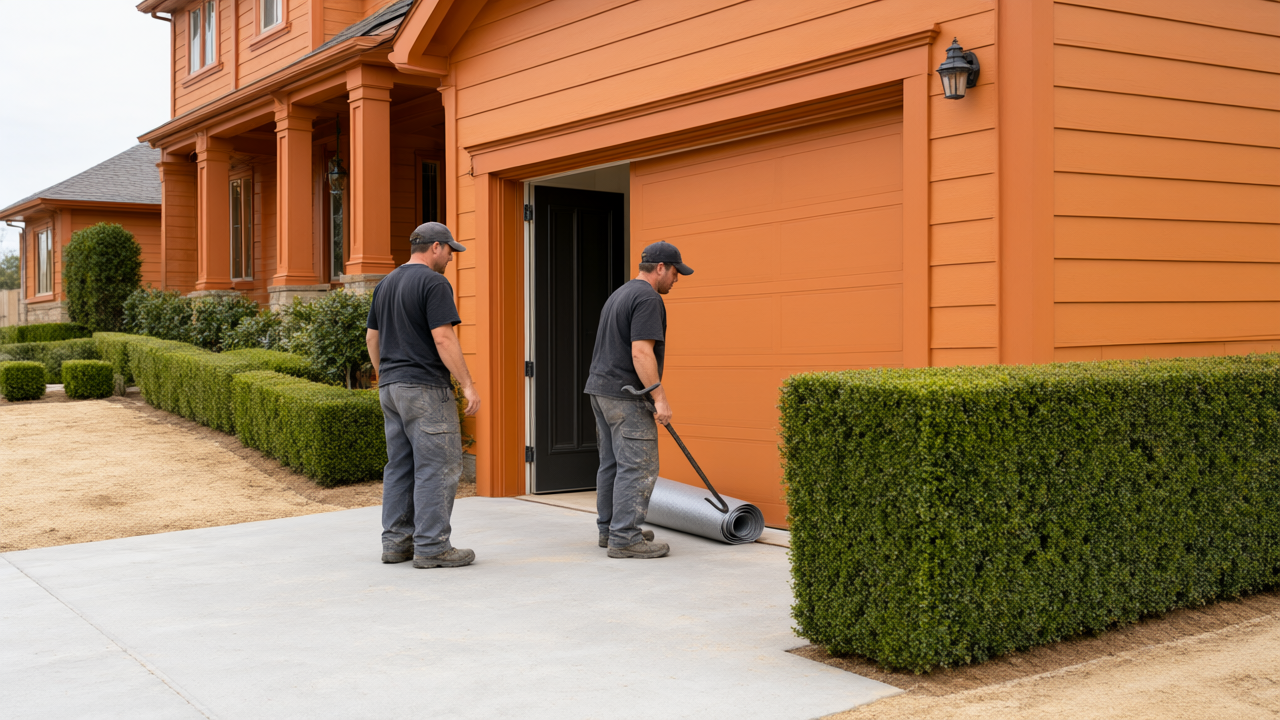
Start outside. Fox River Valley soil holds water, and the grading around your foundation matters more than most people realize. The ground should slope away from the house at roughly 6 inches of drop over the first 10 feet. If it doesn't, you're funneling water straight into your basement every time it rains. Extend your downspouts at least 6 feet from the foundation, and if you have a below-grade window well, make sure the drain in it isn't clogged with leaves.
Inside, the two biggest wins are a properly sized sump pump with a battery backup and a vapor barrier under any new flooring. A quality primary pump runs $150 to $400, a battery backup adds $300 to $600, and it's the single best money you'll spend in a Cary basement. Power outages during summer storms are exactly when a flooded basement happens, and a backup pump is the difference between a dry floor and a claim.
If you're finishing or refinishing a basement after a flood, this is the moment to install a vapor barrier and consider vinyl flooring instead of laminate. Burns Carpentry installs both, and for below-grade spaces, vinyl plank is the honest recommendation nine times out of ten because it's fully waterproof, handles temperature swings better, and costs about the same to install. Laminate belongs in above-grade rooms where a plumbing leak is the worst-case scenario, not in a basement where groundwater is the real risk.
Working with a Cary Carpentry Pro on Insurance Claims and Restoration
Most homeowner policies cover sudden and accidental water damage, which includes burst pipes, appliance failures, and sump pump discharge. They typically do not cover gradual seepage, repeated flooding, or groundwater that came in through a foundation crack you knew about. That distinction is where claims get denied, so be precise in how you describe what happened.
Before you call your adjuster, document everything: photos of the water line, a video walkthrough, receipts for anything you've already purchased, and a written timeline of when the water appeared and when you discovered it. Get at least one written estimate for the repair scope. An experienced carpenter can give you a line-item estimate that breaks out flooring removal, subfloor repair if needed, new material, and labor, which is exactly what an adjuster needs to process the claim without lowballing you.
Watch for two common upselling moves during the restoration process. First, anyone who insists you need full basement demolition before a moisture reading has been taken is guessing. Second, be cautious of contractors who want to handle the insurance paperwork for you and won't let you see the estimate. You're entitled to a copy of everything submitted to your insurer.
Burns Carpentry handles Laminate Flooring, Vinyl Flooring, and full Basement Finishing for homeowners across Cary and McHenry County, and the team works directly with adjusters on water damage claims so the scope of work is accurate the first time. Andy Burns and the crew provide free estimates, carry current licensing and insurance, and back workmanship with a two year guarantee. If your basement floor is beyond a shop vac and a fan, give Burns Carpentry a call at (847) 555-0142. They'll tell you straight whether it's a repair or a replacement, and they won't sell you a floor you don't need.
Frequently Asked Questions
How much does it cost to replace water damaged laminate flooring in Cary, IL?
Most Cary homeowners pay between $2,400 and $4,800 to replace a 400 square foot basement floor with mid-grade laminate, including removal and disposal of the old material. If the subfloor needs repair or a vapor barrier has to be added, add another $800 to $2,000. A targeted plank repair on a smaller affected area usually runs $500 to $1,200.
Can wet laminate flooring be saved after a basement flood?
Sometimes, but only if the water was clean, cleanup started within 24 hours, and less than 20% of the floor is affected. Once the core swells, it never returns to its original shape, so any cupped or soft planks have to be replaced. If the subfloor reads above 20% moisture content, the whole floor needs to come out.
Does homeowners insurance cover water damage to laminate floors?
It usually covers sudden and accidental events like a burst pipe or failed water heater, but not gradual seepage or repeated flooding. Document the damage with photos and a written timeline, get a professional estimate, and be specific about the cause when you file. The wording of your claim matters more than most people expect.
Should I replace my flooded basement laminate with vinyl instead?
For below-grade spaces in the Cary area, vinyl plank is usually the better call. It's fully waterproof, handles the temperature and humidity swings of an Illinois basement better than laminate, and installs for roughly the same cost. Laminate works fine in above-grade rooms, but basements are a different environment.
If your Cary basement floor is wet right now, get airflow on it in the next hour and take photos before you move anything. Then call Burns Carpentry at (847) 555-0142 for a free assessment. They'll tell you honestly whether you're looking at a $600 plank repair or a full replacement, and they'll work with your insurance company to get the scope right the first time.