You just got a quote to tear out the tile in your Cary, IL kitchen before installing Laminate Flooring, and the number made you blink. Here's the thing most flooring salespeople won't tell you: roughly half the homes we walk into around Cary and McHenry County don't need that tear out at all. Laminate flooring can often go right over existing tile, saving you thousands and a week of dust. But when the tile is loose, cracked, or sitting on a spongy subfloor, skipping removal turns a five year floor into a two year regret. This guide breaks down exactly when you can install laminate over old tile, what removal actually costs in 2026, and the demo mistakes that quietly destroy new laminate before the first box is even opened.
When You Can Install Laminate Over Existing Tile in Cary, IL (and When You Can't)
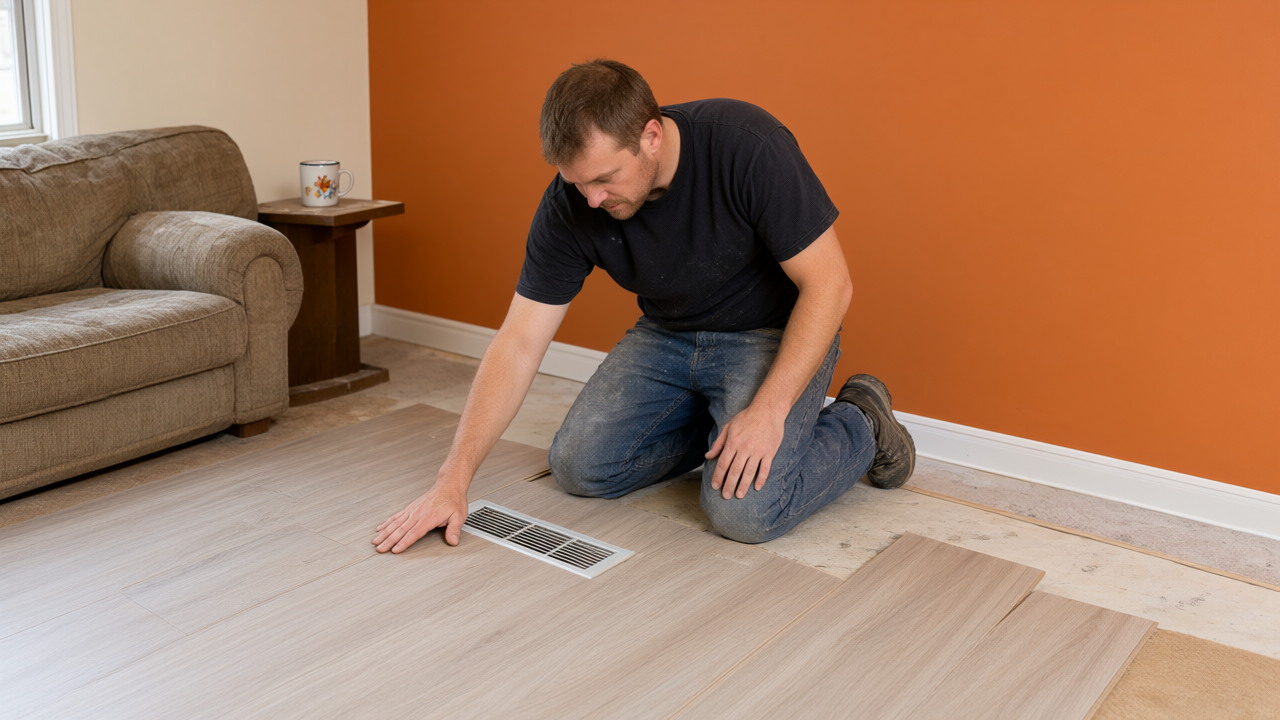
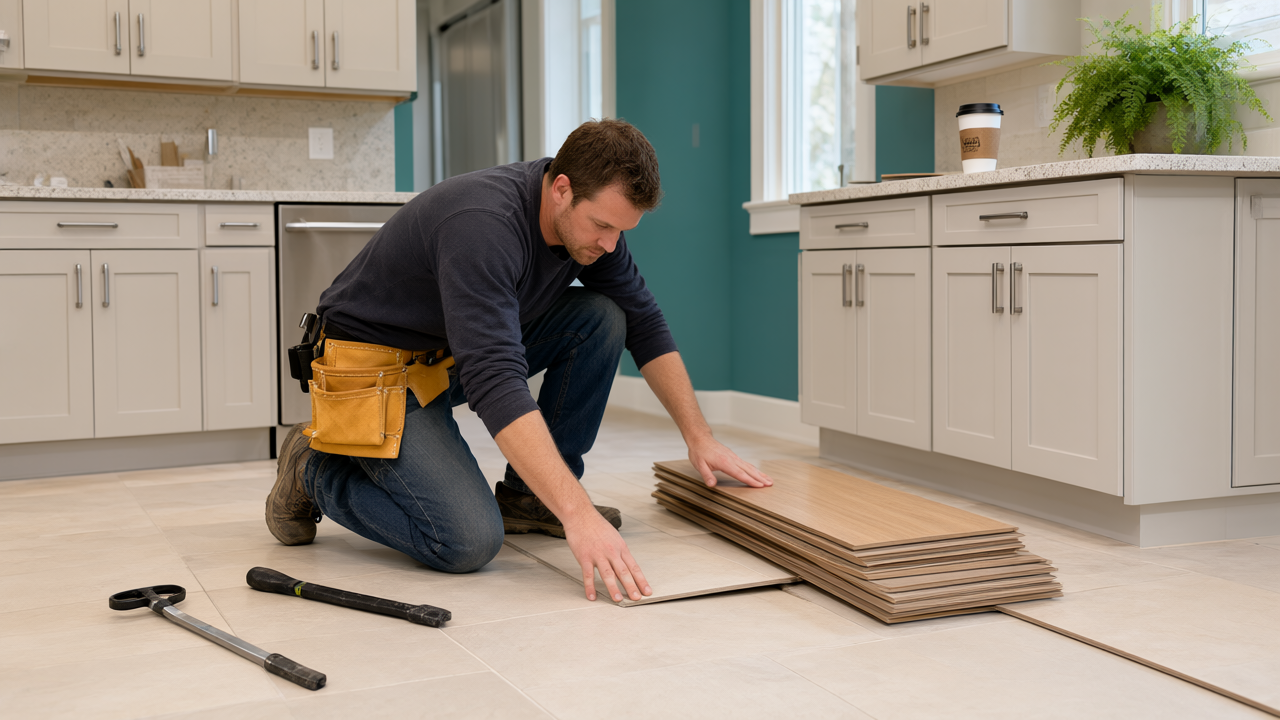
The rule professionals use is simple: tile is a perfectly flat, solid surface, and laminate loves flat and solid. If your existing tile is firmly bonded, free of cracks and hollow spots, and the grout lines aren't wider than about 1/4 inch, you can usually float laminate right on top. That saves the entire demolition phase, which in this area typically runs $1.50 to $3.50 per square foot for removal and disposal. On a 300 square foot kitchen, that's $450 to $1,050 back in your pocket before you buy a single plank.
There are real limits, though. Laminate needs a floor that won't flex, and tile over a wood subfloor in an older Cary home sometimes does. Walk across the room in socks and listen. A hollow thud or a tile that rocks underfoot means the bond is failing, and laminate installed over that will telegraph every movement into the locking joints. Those joints are the weakest part of the floor, and once they pop, the plank edges fray and cup within a season. If more than about 10 percent of the tiles show movement, plan on full removal. You also can't go over tile that's more than roughly 3/8 inch above an adjacent floor without a transition issue at doorways, and you can't go over tile that was installed directly on a concrete slab with a moisture problem, which is common in basements across the Chicago suburbs.
One more thing specific to this region: Cary sits in a climate that swings from humid 90 degree summers to sub zero winters, and that expansion and contraction is hard on any floating floor. Over tile, laminate actually handles it better than over plywood because the tile surface is dimensionally stable. Just make sure you leave the required expansion gap at every wall, usually 1/4 inch, and cover it with baseboard or quarter round. Skip that gap and the floor will buckle in July.
The Real Cost of Tearing Out Old Tile Before Laminate Installation
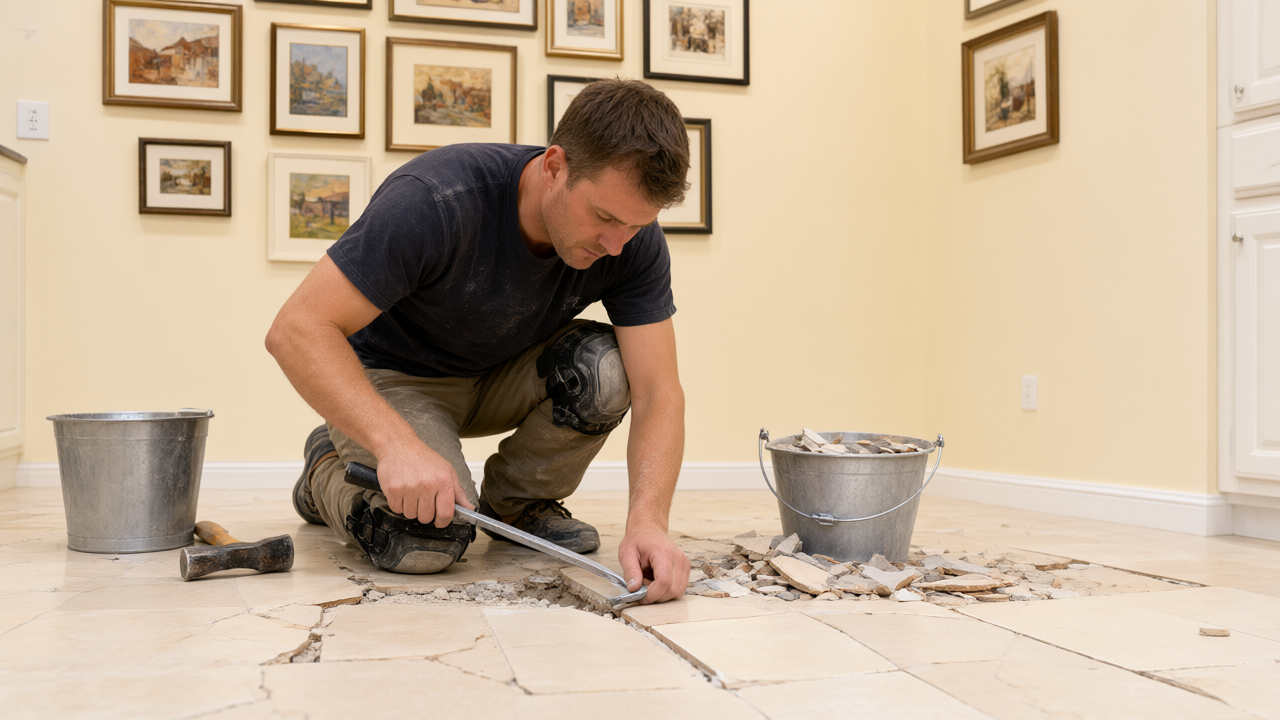
Demolition quotes vary wildly in the Cary area, and the spread usually has nothing to do with how hard your tile is. It has to do with what's underneath. Ceramic tile set on a cement backer board over plywood comes up in manageable chunks. Porcelain over a thick mortar bed, common in kitchens built before 1990, is a different animal. That mortar bed can be an inch and a half thick and bonded to the subfloor, and getting it out means chipping, not prying.
Here's a realistic breakdown for a 300 square foot room in 2026:
- Tile and thinset removal only: $1.50 to $2.50 per square foot, so $450 to $750
- Removal plus mortar bed or backer board: $2.50 to $4.00 per square foot, so $750 to $1,200
- Disposal and dump fees: $150 to $400 depending on weight. Tile is heavy, and most Cary haulers charge by the ton
- Subfloor repair if the demolition damages the plywood: $200 to $800, and this is the line item that surprises people
- Dust containment and cleanup: $100 to $300 if you hire it out properly
Add it up and a full tear out on a typical Cary kitchen runs $1,650 to $2,900 before any new flooring goes down. That's the number to weigh against the risk of going over the tile. If your tile passes the flat and solid test, going over it isn't the cheap shortcut. It's the smart call, and it's what Burns Carpentry recommends more often than not when the existing floor is sound.
DIY Tile Removal vs. Hiring a Cary, IL Carpentry Pro: Time, Tools and Dust
Plenty of homeowners can demo tile. It's not complicated work. It is, however, loud, heavy, and filthy, and the dust from thinset and mortar is fine enough to travel through an entire house. If you're going the DIY route, here's what you're signing up for on a 300 square foot room: two full weekends for a first timer, roughly $200 to $400 in tool rental, and a level of dust that will find its way into closets you never opened.
The tools that actually matter:
- Rotary hammer with a chipping bit (rent, don't buy). This does 80 percent of the work. A hammer and chisel is a fantasy
- Heavy duty floor scraper for the thinset left behind
- Oscillating multi tool for edges and under cabinet toe kicks
- Plastic sheeting and zip wall barriers to seal off the work zone
- N95 or P100 respirators, not the paper dust masks from the hardware store
- Thick gloves and steel toe boots. Tile shards are razor sharp
Where DIY goes wrong is the disposal and the subfloor. Hauling 2,000 pounds of tile to a transfer station in a pickup takes multiple trips and costs real money in dump fees. More importantly, most homeowners don't know what a damaged subfloor looks like until the new laminate is already down and the floor feels soft in one corner. A pro walks the room with a straightedge and a level before anyone touches a plank. That's the difference. If your room is small, the tile is coming up easy, and you've got a truck and a free weekend, go for it. If it's a whole first floor, or you've got a mortar bed, or you value your marriage, hire it out. Burns Carpentry handles Flooring Installation across Cary and the surrounding suburbs, and a free estimate will tell you fast whether tear out is even necessary.
Step-by-Step: Prepping Your Subfloor After Tile Removal for Laminate
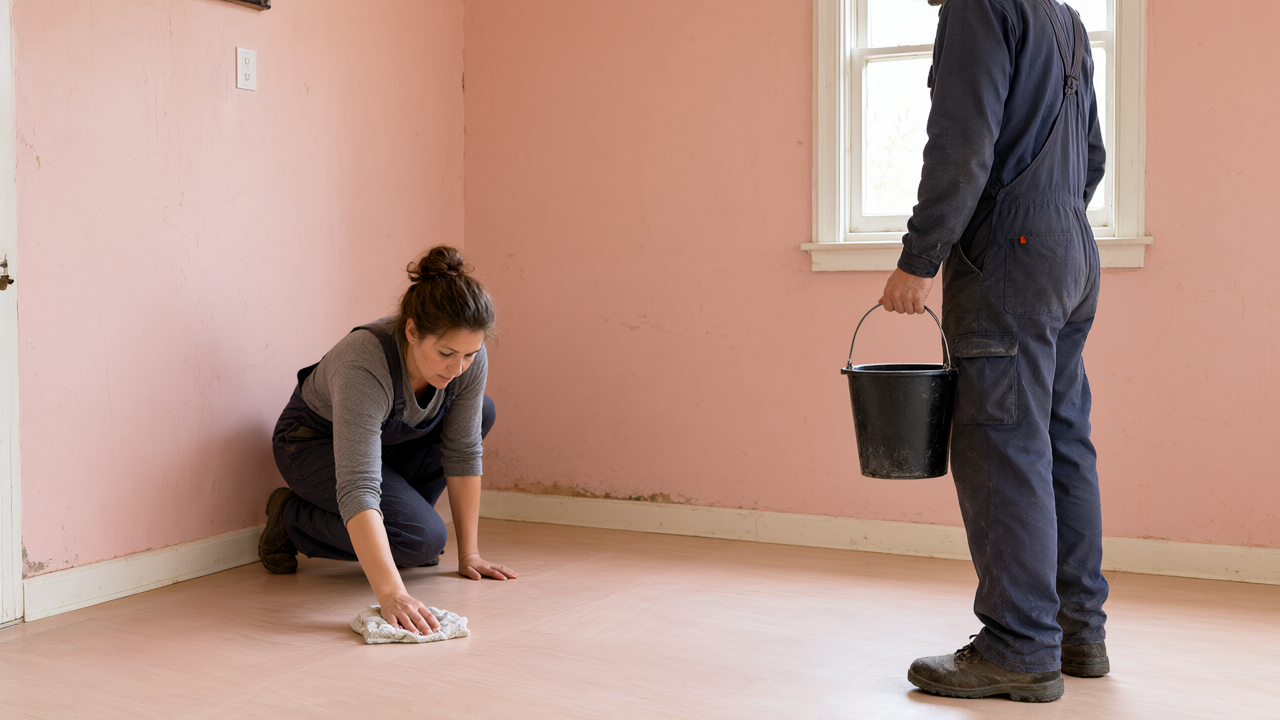
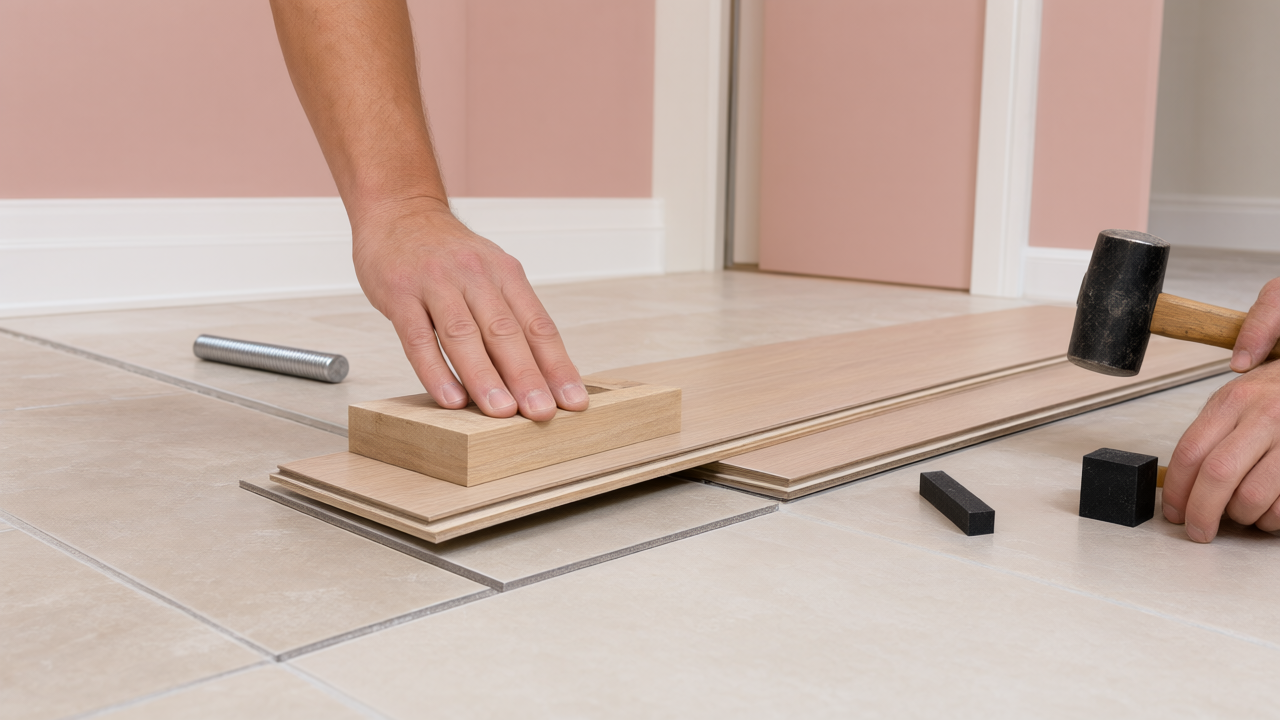
This is where the floor is won or lost. Freshly stripped concrete or plywood is almost never ready for laminate as is. Here's the sequence that experienced installers follow, and it's the same one you should insist on if you're hiring.
- Remove every trace of thinset and adhesive. High spots will rock the planks. Run a floor scraper and a grinder with a diamond cup wheel over the whole surface
- Check flatness with an 8 foot straightedge. Laminate needs the floor flat within 1/8 inch over 6 feet, or 3/16 inch over 10 feet. Mark every high and low spot with a pencil
- Grind the highs, fill the lows. Use a self leveling compound for dips and a grinder for ridges. Let the compound cure fully, usually 24 hours
- Test for moisture on concrete. Tape a 2 foot square of plastic sheeting to the slab for 24 hours. Condensation underneath means you need a vapor barrier, and in Illinois basements you almost always do
- Vacuum, then vacuum again. Fine dust under a floating floor turns into a gritty crunch every time you walk on it
- Install underlayment. Foam for standard rooms, or a combined vapor barrier and foam if you're over concrete
- Acclimate the laminate. Let the boxes sit flat in the room for 48 hours before installation so the planks adjust to your home's humidity
If you're installing laminate over existing tile instead of removing it, you skip steps one through five but you still need to fill the grout lines if they're deep, and you still need underlayment. Grout lines that are more than 1/8 inch deep will telegraph through thin laminate over time, so a skim coat of floor patch across the whole surface solves it.
5 Demo Mistakes That Ruin New Laminate Flooring in Cary Homes
We've seen every one of these, and each one turns a $3,000 flooring project into a $5,000 flooring project. Watch for them whether you're doing the work or hiring it.
- Prying tile up with a shovel or crowbar. You'll gouge the subfloor and create high spots that have to be ground down or patched. Use a chipping hammer at a shallow angle
- Skipping the moisture test on a slab. This is the number one cause of laminate failure in basements across McHenry County. Trapped moisture warps planks from underneath and voids the manufacturer warranty
- Not sealing off the work area. Tile dust destroys appliances, coats HVAC filters, and settles into every surface. Zip wall barriers and negative air pressure are not optional
- Leaving thinset ridges behind. Even a 1/16 inch ridge will cause a click lock joint to separate as the floor flexes over it
- Installing over a squeaky or soft subfloor. Fix the structure first. If the plywood flexes, laminate on top of it will fail no matter how good the planks are
The honest takeaway: if your existing tile is solid and flat, skip the removal and put that money toward better laminate or a nicer underlayment. If it's failing, do the demo right the first time. There's no cheap middle ground that lasts. If you want a straight answer on which situation you're in, Burns Carpentry will come out, walk the floor, and tell you whether you need tear out or not. No pressure, no upsell. That's a free estimate in Cary, and it's worth the phone call before you rent a chipping hammer.
Frequently Asked Questions
Can you put laminate flooring over tile without removing it?
Yes, as long as the tile is firmly bonded, flat, and free of cracks or hollow spots. You'll need to fill deep grout lines and use underlayment, but skipping removal can save you $1,500 to $2,500 on a typical Cary kitchen. If tiles move or the floor flexes, removal is the safer route.
How much does tile removal cost in Cary, IL?
Most homeowners pay between $1.50 and $4.00 per square foot for removal, plus $150 to $400 in disposal fees. A 300 square foot room with a mortar bed often lands between $1,650 and $2,900 total once subfloor repair is factored in.
How long does it take to remove tile before installing laminate?
A professional crew usually strips a 300 square foot room in one to two days, including cleanup. A first time DIY effort typically takes two full weekends, mostly because of the thinset and disposal work.
Do I need a professional for laminate flooring installation in Cary?
Not always. Small rooms over sound subfloors are reasonable DIY projects. But if you're removing a mortar bed, dealing with a concrete slab, or installing across multiple rooms with doorways, hiring a pro pays for itself in avoided rework. Burns Carpentry provides free estimates and will tell you honestly if your project is DIY friendly.
If you're in Cary or anywhere in the northwest suburbs and you're not sure whether your tile needs to come up, call Burns Carpentry. They'll walk your floor, test it, and give you a real answer instead of a sales pitch. Free estimates, licensed and insured in McHenry County, and two year workmanship guarantee on every installation.