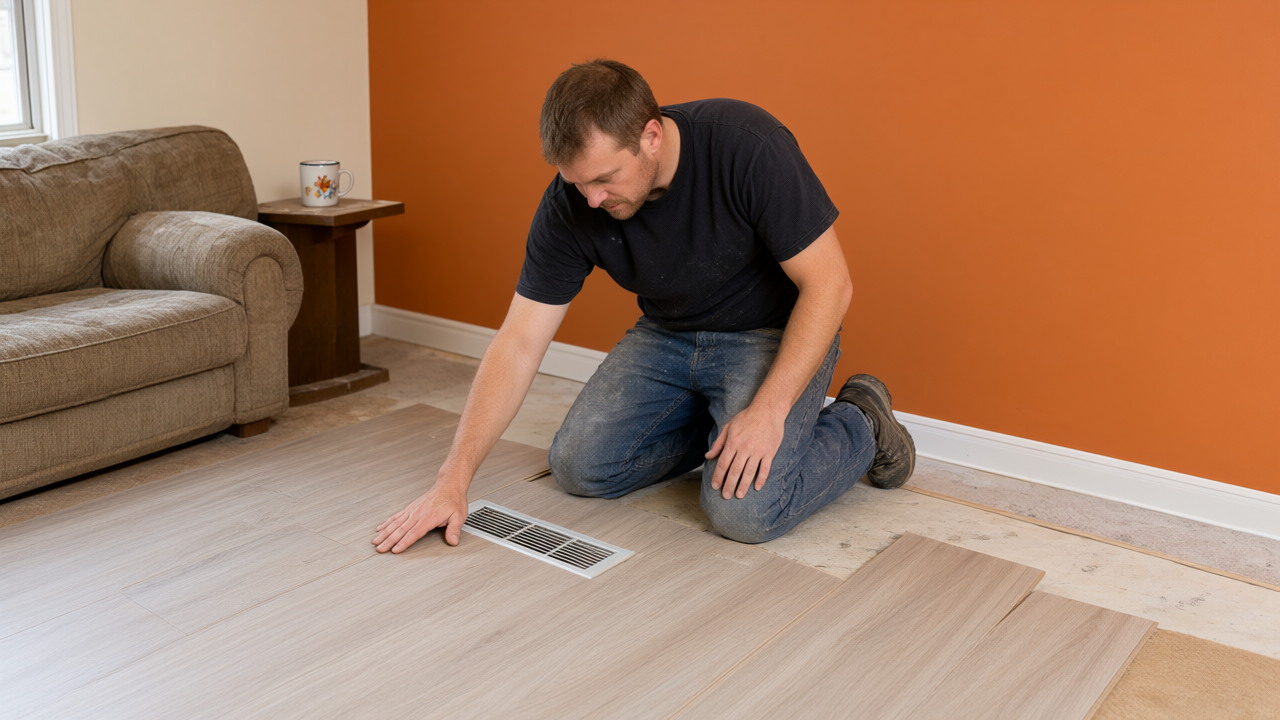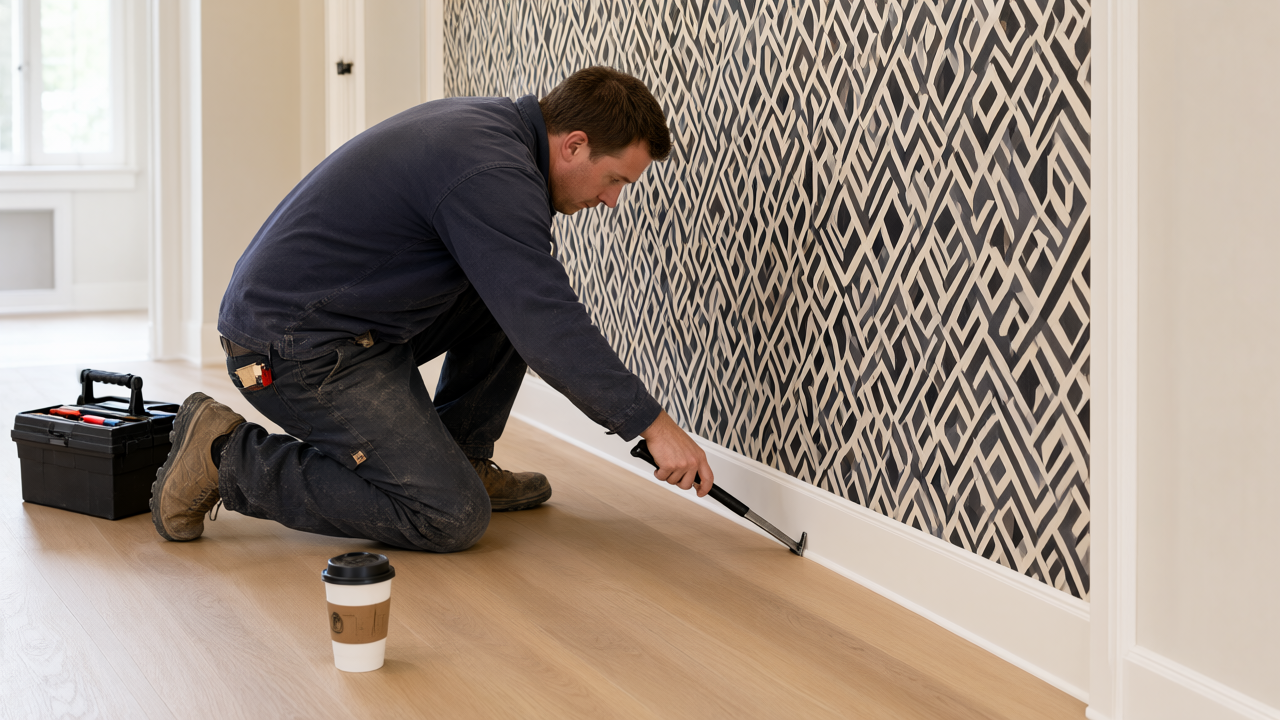
Laminate flooring is one of the loudest floors you can put in a Cary, IL home, and most homeowners only discover that after the boxes are already open. A 2025 National Association of Home Builders acoustics study found that floating laminate floors amplify footstep noise by up to 12 decibels compared to glued-down hardwood, which is roughly the difference between a normal conversation and a vacuum cleaner. If you just had laminate installed and your downstairs sounds like a bowling alley, or you are planning a Flooring Installation in Cary and want to get the acoustics right the first time, this is the playbook.
Why Laminate Flooring Echoes More Than You Expect: Cary, IL Home Layouts and Hard-Surface Acoustics
The physics are simple. Laminate is a floating floor. It is not nailed, glued, or stapled to the subfloor. It sits on top of an underlayment and clicks together plank by plank, which is exactly why it is affordable and fast to install. It is also exactly why it transmits sound instead of absorbing it. Every footstep sends energy through the plank, into the underlayment, into the subfloor, and out into the room below. In a two-story Cary home with a second-floor hallway running above the kitchen, that energy lands right on the ceiling joists.
Add Cary's housing stock to the equation. A large share of homes in the 60013 and 60014 ZIP codes were built between 1985 and 2005, which means open floor plans, vaulted ceilings, and engineered I-joist floor systems. I-joists are strong and economical, but they are lighter than old-school dimensional lumber, so they flex more and carry sound more efficiently. Combine a floating laminate floor with an open-concept great room and a vaulted ceiling, and you have created what acousticians call a reverberant cavity. Sound bounces off the hard floor, up to the ceiling, and back down without ever hitting a soft surface.
Here is the number that surprises people: a bare laminate floor over standard 2mm foam underlayment typically produces an Impact Insulation Class (IIC) rating in the low 40s. Building codes in many multi-family buildings require an IIC of 50 or higher. Single-family homes are not held to that standard, but your ears are. Anything under 45 and you will hear every chair scrape, every dog's toenails, and every pair of shoes from the floor above.
Laminate does not echo because it is cheap. It echoes because it floats. Fix the float and you fix most of the noise.
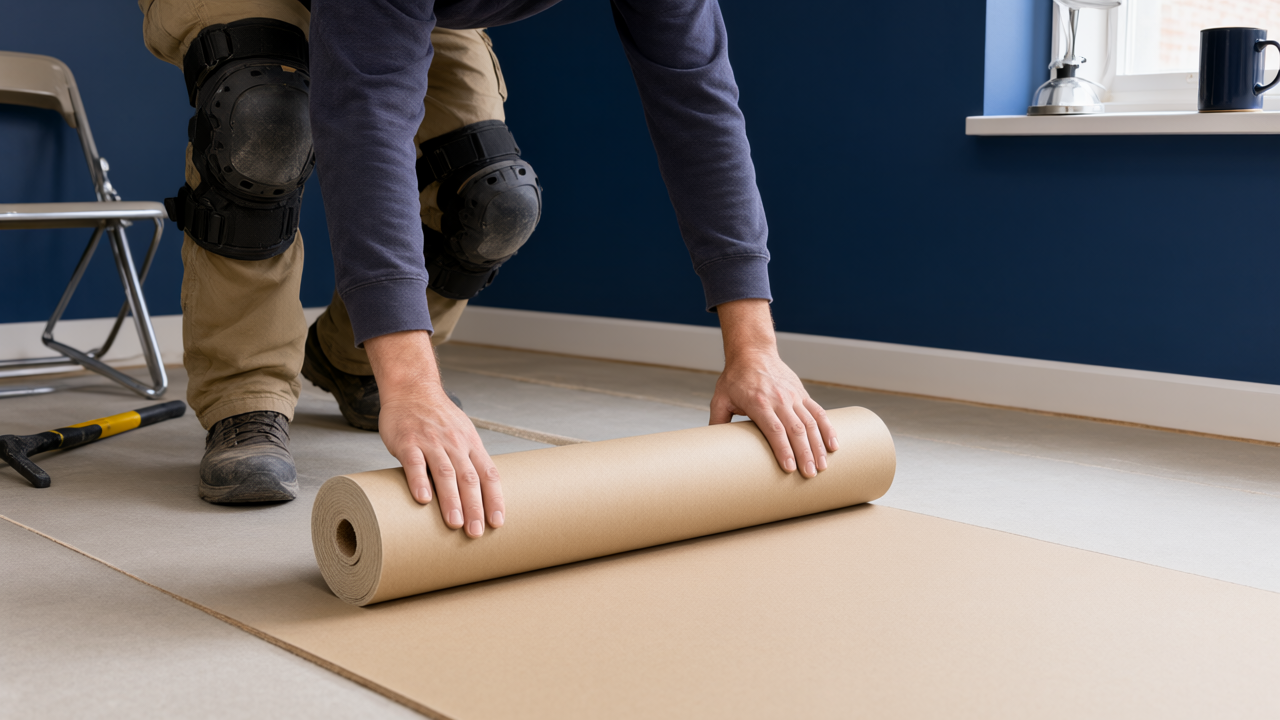
5 Quieting Solutions: Acoustic Underlayment, Cork Backing, Area Rugs, Furniture Pads, and Expansion Gap Sealing
You do not need to rip out your floor to make a meaningful difference. These five fixes range from a $40 weekend project to a $1,200 professional upgrade, and most homeowners combine two or three of them for the best result.
- Upgrade to acoustic underlayment. Standard 2mm polyethylene foam is what comes free with most laminate. A 3mm or 5mm acoustic underlayment with a closed-cell foam and foil layer can improve IIC by 8 to 12 points. Expect to pay $0.40 to $0.90 per square foot for quality acoustic underlayment in the Cary area. For a 500 square foot room, that is $200 to $450 in material. If your floor is already installed, you can sometimes add a second layer only by pulling up the planks, so this is a "do it during installation" fix.
- Add cork backing. Cork is the quietest underlayment material commonly available for laminate. A 6mm cork roll runs about $0.75 to $1.20 per square foot and deadens impact noise noticeably better than foam. Cork also handles the seasonal humidity swings we get in northern Illinois better than foam, which can compress and lose its bounce over five or six years.
- Lay down area rugs with proper pads. A 8x10 area rug with a felt and rubber pad can cut footstep noise in that zone by 40 to 60 percent. The pad matters more than the rug. Skip the thin non-slip mesh and get a 0.25 inch felt pad. This is the cheapest high-impact fix and the one most Cary homeowners start with.
- Put felt pads on every piece of furniture. A dining chair dragged across laminate produces a sharp, high-frequency scrape that travels through the whole house. Self-adhesive felt pads cost about $8 for a 100-pack and take 20 minutes to install on every chair, table, and sofa leg. Replace them every 12 to 18 months; they compact and stop working.
- Seal the expansion gaps. Laminate needs a 0.25 to 0.375 inch gap around the perimeter to allow for seasonal movement. That gap is also a direct sound leak into the wall cavity. Fill it with color-matched acoustic caulk or a foam backer rod, not standard silicone, which hardens and transfers vibration. A tube of acoustic caulk runs $10 to $15 and covers roughly 25 linear feet.
Room-by-Room Noise Fixes for Cary Homes: Open-Concept Living Areas, Basements, and Staircases
The right fix depends on which room is making the noise and which room is hearing it. In an open-concept great room, the problem is usually airborne echo rather than impact noise. The sound bounces off the floor, the vaulted ceiling, and the big windows. The fix is soft surfaces. A large area rug in the seating zone, upholstered furniture instead of leather, and heavy curtains on the windows will drop the reverberation time noticeably. If you have a two-story great room, a fabric wall hanging or acoustic panel on the upper wall does more than you would expect.
Basements are a different animal. A finished basement with laminate over a concrete slab transmits sound straight into the slab, and the slab carries it into every room. If you are planning basement finishing or Basement Remodeling, this is the moment to get it right. A dimpled membrane underlayment (often called a subfloor panel system) creates a small air gap between the concrete and the laminate, which breaks the sound path and also protects against the minor moisture wicking that happens in Illinois basements. Expect to pay $1.50 to $3.00 per square foot for that system, but it is far cheaper than tearing out a floor later.
Staircases are the worst offender in most Cary homes because there is no subfloor to absorb anything. The treads sit directly on the stringers, and laminate stair noses act like a drum. Two fixes work well. First, apply construction adhesive between the tread and the riser during installation. Second, add a thin cork pad under each tread. If the stairs are already finished, a runner rug held with stair rods will cut the noise substantially and looks great in a traditional Cary home.
What Not to Do: Common Mistakes That Make Laminate Noise Worse in Cary, IL Homes
We see the same five mistakes over and over, and each one makes the problem worse instead of better.
- Doubling up on cheap foam. Two layers of 2mm polyethylene foam do not equal 4mm of acoustic underlayment. They compress, shift, and create a spongy feel that actually increases impact noise over time. Use one correct product, not two wrong ones.
- Caulking the perimeter with standard silicone. Silicone cures hard. It transfers vibration from the floating floor straight into the drywall. Use acoustic caulk, which stays flexible.
- Skipping the expansion gap to "tighten things up." This is the single most common cause of buckling and squeaking in Illinois homes. Our humidity swings from 20 percent in January to 70 percent in July. Laminate expands and contracts with that swing, and it needs room to move. No gap equals a floor that buckles in summer and gaps in winter.
- Installing laminate over an uneven subfloor. Any dip or hump over 3/16 inch in a 10 foot span will create hollow spots that act like a drum head. Self-leveling compound or a plywood underlayment fixes it before the laminate goes down.
- Ignoring the stair nose detail. A poorly fastened stair nose rattles loose within a year. It needs adhesive plus mechanical fasteners, not just the click-lock.
When to Call a Cary Carpentry Pro: Diagnosing Squeaks, Hollow Spots, and Installation-Related Noise
Some noise problems are DIY friendly. Felt pads, area rugs, and acoustic caulk are all weekend projects. But three specific symptoms mean the floor itself has an installation issue, and no amount of rugs will fix it.
First, a persistent squeak in one spot. That usually means a plank is moving against a nail, a staple, or another plank. It is a fastening problem, and the fix involves pulling and resetting the affected planks. Second, a hollow sound when you tap across the floor. That is a subfloor flatness issue or a spot where the underlayment has shifted. Third, a visible gap at the wall or between planks that appeared after the first heating season. That is an expansion gap problem, and it will get worse every year.
If you are hearing any of those, Burns Carpentry handles flooring installation across Cary and the surrounding suburbs, including Arlington Heights, Elgin, Palatine, and Schaumburg. Andy Burns and his crew diagnose the actual cause before recommending a fix, whether that means resetting a few planks or pulling up a section and redoing the underlayment properly. The company also handles Basement Finishing, Deck Building, and laminate and Vinyl Flooring installation, so if the noise problem is part of a bigger remodel, it can all be handled under one roof. Workmanship is guaranteed for two years, and the free estimate process starts with a site visit where they will tell you honestly whether the noise is a real installation problem or just a rug problem.
Frequently Asked Questions
How much does it cost to soundproof laminate flooring in Cary, IL?
If the floor is already installed, most homeowners spend $300 to $900 on area rugs, pads, felt furniture pads, and acoustic caulk. If you are installing new laminate and want acoustic underlayment or cork from the start, add $0.40 to $1.20 per square foot to the material cost. A full professional redo of underlayment on a 500 square foot room typically runs $1,200 to $2,500 installed.
Is laminate flooring louder than hardwood?
Yes, usually by 5 to 12 decibels for impact noise. Hardwood is fastened to the subfloor, so footstep energy transfers into the structure. Laminate floats, so the planks vibrate freely and radiate sound into the room. The gap narrows a lot once you add proper acoustic underlayment and a rug, but laminate is still the louder floor in most comparisons.
Can I put acoustic underlayment under laminate that is already installed?
Not without pulling up the floor. Laminate is a floating system, so the planks can be disassembled and reinstalled in most cases if they were not glued. It is a real job, usually a full day for a 400 to 600 square foot room, and some planks may break at the locking tabs during removal. A flooring pro can tell you in about 15 minutes whether your specific floor can be salvaged.
What should I look for when hiring someone for laminate flooring installation near me in Cary?
Ask three questions. What underlayment do you use by default, and can I upgrade? How do you handle subfloor flatness, and do you check it with a straightedge before installing? And what is your workmanship warranty? A company that answers all three clearly is worth hiring. A company that says \"we just use whatever comes in the box\" is not. Burns Carpentry guarantees workmanship for two years and handles the whole installation, including subfloor prep and perimeter detailing.
If your laminate floor is driving you crazy and you are not sure whether it is a rug problem or an installation problem, call Burns Carpentry for a free estimate. Andy and the crew work out of Cary and serve homeowners across McHenry County and the northwest suburbs. They will tell you straight up whether you need a $40 fix or a $2,000 fix, and they will not sell you the expensive one if the cheap one works.