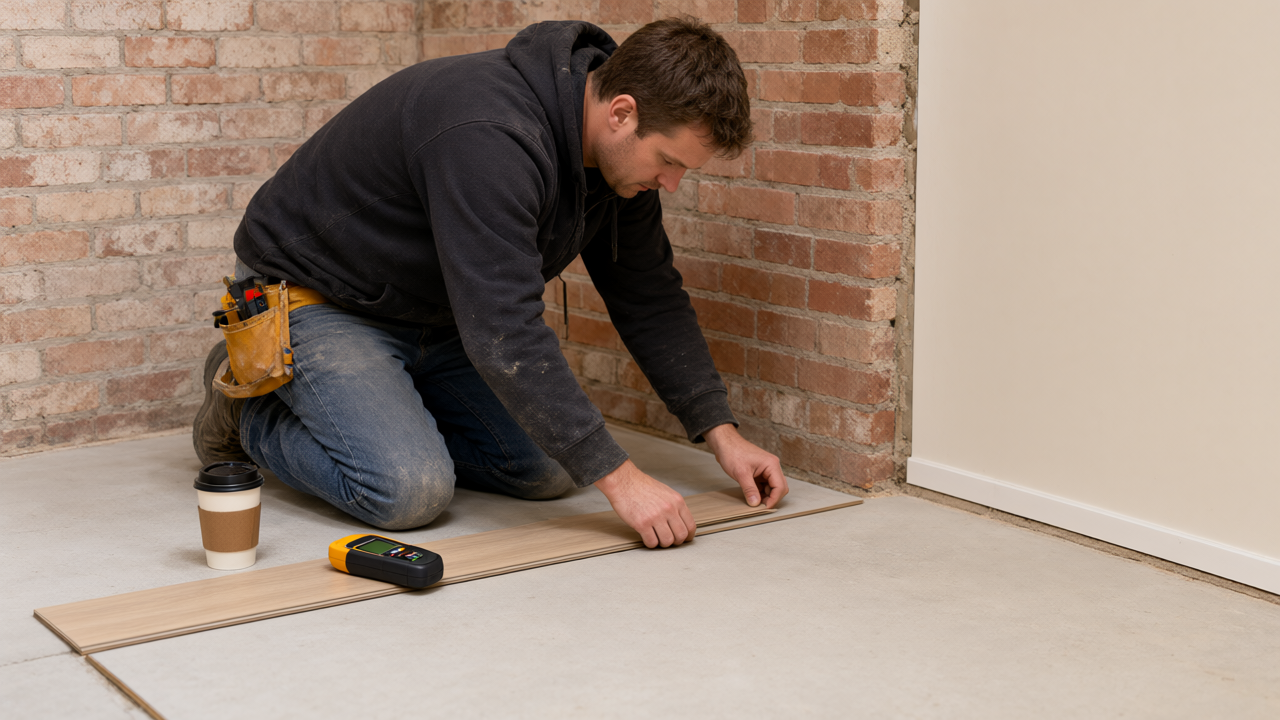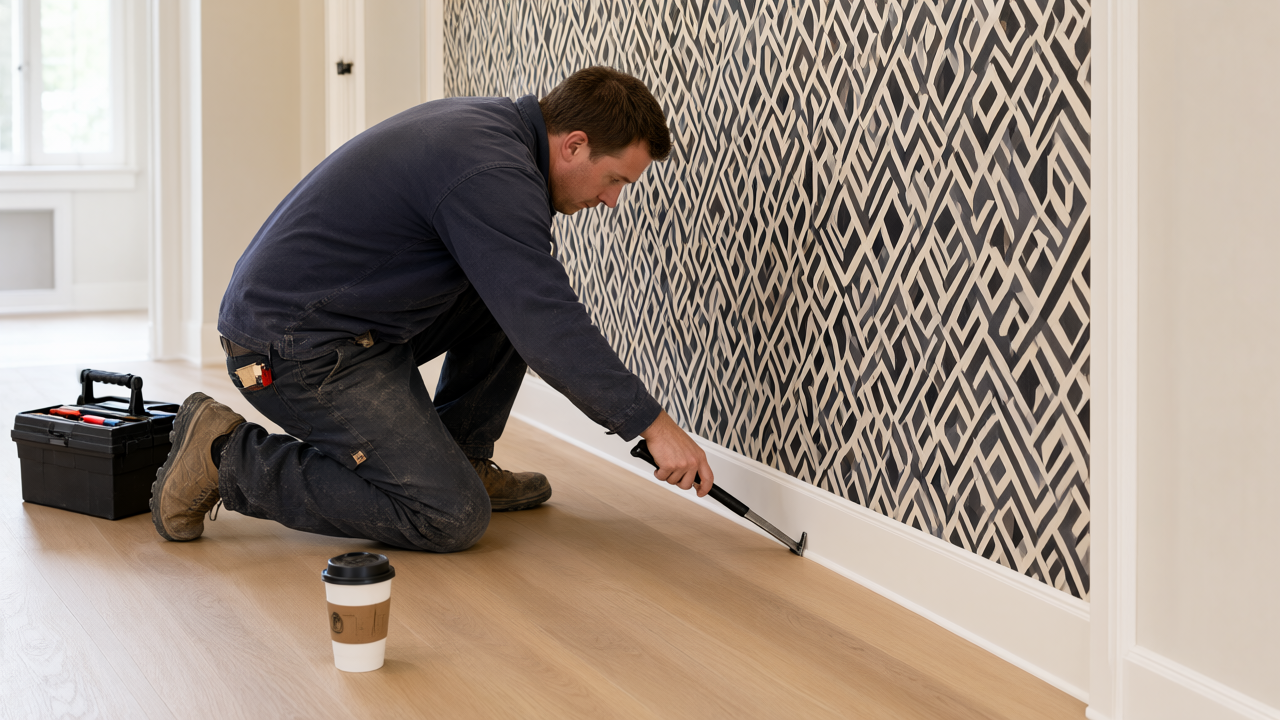
If you live in one of the older ranch homes off Three Oaks Road or near the Fox River in Cary, IL, you already know the sound. You hit a certain spot in the hallway and the floor announces your arrival. Laminate Flooring squeaks are one of the most common complaints Burns Carpentry hears from homeowners in Cary and across McHenry County, and here is the frustrating part: the squeak is almost never a laminate problem. It is a subfloor problem. The laminate is just the messenger. In this 2026 guide, you will learn exactly why your floor is talking back, how to diagnose the source in about 15 minutes, five fixes you can try yourself, and the point where calling a carpenter is the smarter move.
Why Laminate Floors Squeak: 5 Common Causes in Cary, IL Homes
Laminate is a floating floor. It is not nailed or glued to the subfloor. It sits on top of a thin foam or plastic underlayment and expands and contracts as a single unit. That design is why laminate is affordable and fast to install, and it is also why it squeaks when anything underneath it moves even a fraction of an inch.
In Cary specifically, we see five culprits over and over. First, subfloor deflection. Many homes built here between 1970 and 1995 have 1/2 inch plywood or particleboard subfloors that have absorbed decades of humidity swings. When a joist system flexes, the laminate moves with it and rubs against the underlayment or a neighboring plank. Second, loose or missing fasteners. Original subfloor screws back out over time, especially after our freeze and thaw cycles. Third, uneven joists or a sagging beam. A 1/8 inch dip across a 4 foot span is invisible but audible. Fourth, gaps at the perimeter. Laminate needs a 1/4 to 3/8 inch expansion gap at every wall. If it was installed tight against a baseboard, the floor has nowhere to go in July and no room to return in January. Fifth, underlayment failure. Cheap 2 millimeter foam compresses to nothing under furniture and stops doing its job.
Here is the counterintuitive truth most homeowners miss: the sound you hear is rarely coming from directly under your foot. Sound travels along the plank and through the subfloor. A squeak in your dining room can originate at a joist 6 feet away. That is why guessing and stepping on the noisy spot with your weight rarely solves the problem.
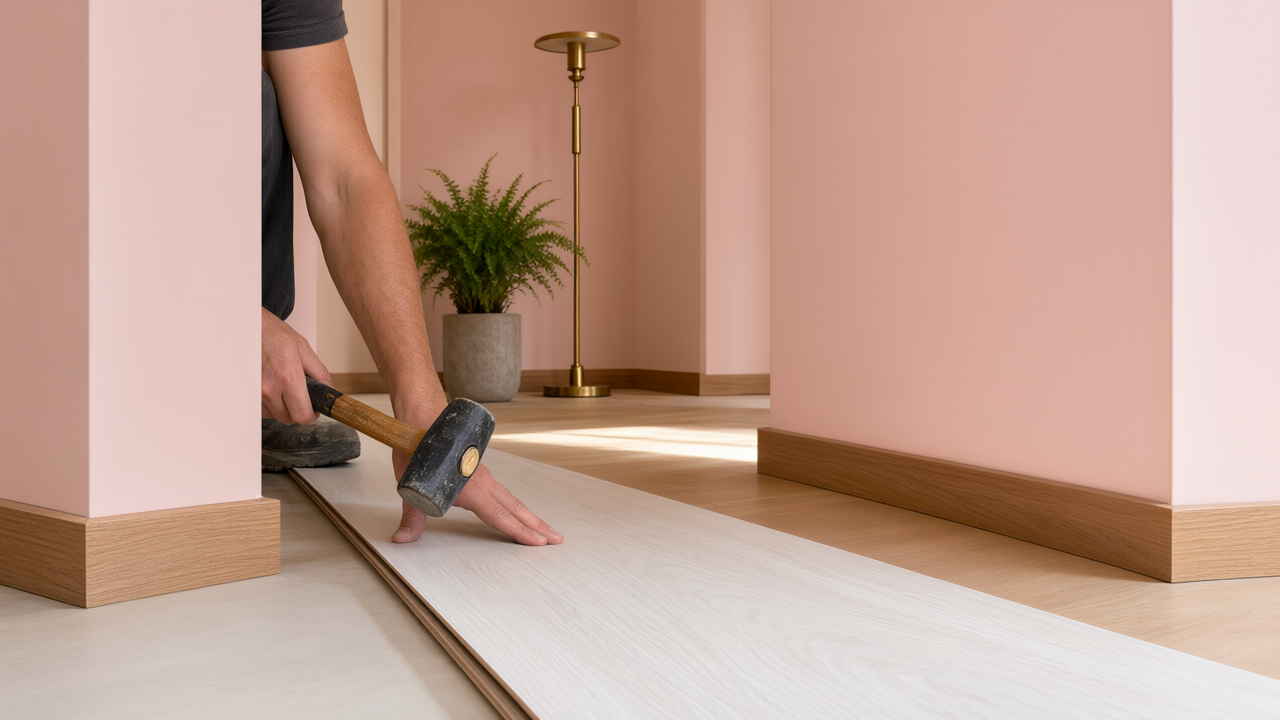
How to Diagnose Squeaks: From Walking Test to Subfloor Check
Before you spend a dollar, spend 15 minutes diagnosing. This step saves Cary homeowners hundreds because it separates a $40 fix from a $2,000 repair.
- The sock walking test. Put on thin socks and walk the entire floor slowly, heel first. Mark every squeak with a small piece of painter's tape. You are mapping the pattern, not chasing one spot.
- The weight transfer test. Stand 3 feet away from a marked squeak and press down firmly with your hand. If the squeak happens, the problem is deflection, not friction. If it only happens under your full body weight, it is likely a plank rubbing the underlayment.
- The temperature test. Note the date and the temperature. If the squeaks get worse in January and quiet down in May, you have a humidity and expansion issue, not a structural one. Cary homes swing from roughly 15 percent relative humidity in winter to 60 percent in summer.
- The crawlspace or basement check. If you have access below, look up. Bring a flashlight and check for a visible gap between the subfloor and joist, water staining, or a joist that has pulled away from the beam. Tap the subfloor from below with a screwdriver handle. A hollow sound means a fastener is loose.
- The furniture test. Move a heavy piece of furniture off the squeaky area and walk it again. If the squeak disappears, you have a deflection problem that will return the moment something heavy sits there again.
Write down what you find. When you call a carpenter, this information turns a two hour diagnostic visit into a 20 minute confirmation, and that saves you money.
5 DIY Fixes Cary Homeowners Can Try (and When to Call a Pro)
If your diagnosis points to friction or a minor gap, you can absolutely handle this yourself. Here are five fixes, ranked from easiest to most involved.
Fix 1: Powdered graphite or talcum powder. For squeaks that only happen when you walk on a specific plank, work a small amount of graphite powder into the seam with a stiff brush. Cost is under $10. It lubricates the plank edge against its neighbor. This is a temporary fix, typically good for 6 to 12 months, but it is the right first move.
Fix 2: Shim the expansion gap. If you can lift the baseboard or quarter round, slide a thin plastic shim into any gap that is too wide or too tight. Laminate needs that 1/4 inch breathing room. Reinstall the trim with finish nails, not construction adhesive, so the floor can still move.
Fix 3: Squeeze from below. If you have basement or crawlspace access, this is the best DIY option. Have a helper walk on the squeak above while you watch from below. When you see the subfloor move, drive a 2 inch construction screw up through the subfloor into the joist. Use a screw, not a nail, and pre drill to avoid splitting. Two screws per joist, 12 inches apart, will silence most deflection squeaks for good.
Fix 4: Replace compressed underlayment. This one requires pulling up a section of laminate, so plan on a full Saturday. Remove the affected planks, replace the foam with a 3 millimeter or thicker underlayment, and reinstall. If your laminate is more than 10 years old and the locking tabs are brittle, this fix can turn into a full floor replacement quickly.
Fix 5: Add a support beam or sister joist. If your walking test showed a long, wide squeak zone and your basement check revealed a sagging joist, this is structural. Stop here and call a professional. Attempting to jack or sister a joist without knowing your load path can crack drywall, damage plumbing, or worse.
When to call a pro: Call Burns Carpentry if the squeak returns within 60 days of a DIY fix, if you see water staining anywhere in the subfloor, if more than 20 percent of the floor squeaks, or if your home was built before 1978 and you have not tested for asbestos in old flooring adhesives. Also call if the laminate is lifting or buckling at the seams. That is not a squeak problem anymore. That is a moisture problem, and it gets expensive fast.
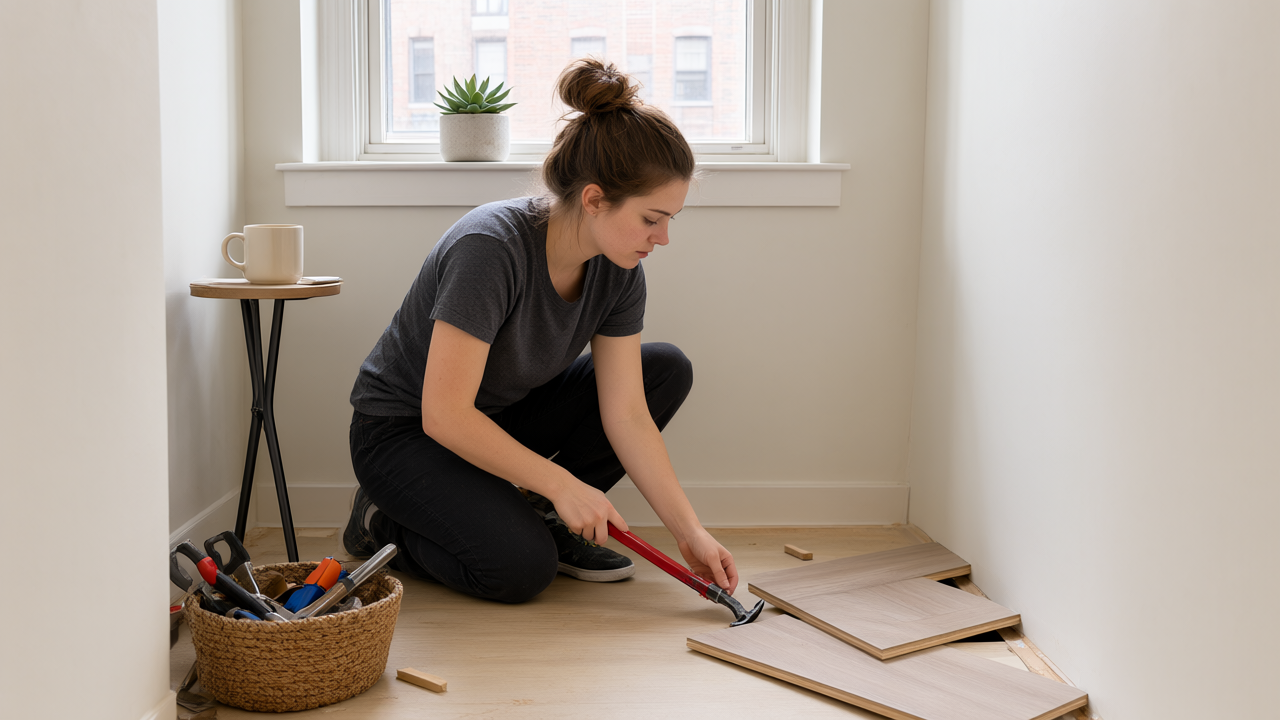
Professional Repair Options: Costs & Timelines for Cary, IL
When DIY is not the answer, here is what professional repair actually looks like in the Cary area in 2026. Burns Carpentry provides professional floor installation and laminate flooring services across Cary, Arlington Heights, Elgin, Palatine, Schaumburg, and the surrounding communities, and we see these projects constantly.
Targeted subfloor repair is the most common job. We lift the affected laminate, secure or sister the subfloor, replace the underlayment, and reset the planks. Typical cost runs $350 to $900 depending on square footage and access. Timeline is usually one day.
Partial floor replacement makes sense when underlayment has failed across a room or the laminate planks are damaged. Expect $1,200 to $3,200 for a 200 to 400 square foot room, including materials. Most projects take two to four days.
Full room or whole floor reinstall is the heavyweight option. If the subfloor needs leveling compound, joist repair, or moisture mitigation, and you are replacing the laminate at the same time, plan on $4,000 to $9,000 for a typical Cary home, with a timeline of one to two weeks. Burns Carpentry backs workmanship for a full two years, and materials carry their own manufacturer warranty.
One insider tip: ask any contractor for a written scope that lists exactly which joists or subfloor sections they are addressing. A vague estimate that says "fix squeaks" is a red flag. A good estimate tells you the linear feet of subfloor being secured and the underlayment product being used.
Preventing Future Squeaks: Subfloor & Installation Best Practices
The best time to prevent squeaks is before the first plank goes down. If you are planning new laminate Flooring Installation in 2026, insist on these four things and you will likely never hear a squeak.
First, screw down the entire subfloor, not just the loose spots. A good installer drives 1-5/8 inch construction screws every 6 inches along every joist. This adds roughly $150 to $300 in labor and materials to a typical room and eliminates 80 percent of future squeak calls.
Second, level the subfloor to within 1/8 inch over 6 feet. This is the industry standard and it matters more in Cary than in most places because our seasonal humidity swings are brutal on wood products. A self leveling compound or plywood patching does the job.
Third, use 3 millimeter or thicker underlayment with a moisture barrier. The 2 millimeter foam that comes free with discount laminate is not enough for Illinois. If your laminate is going over a basement slab, you need a true vapor barrier, full stop.
Fourth, acclimate the laminate for 48 to 72 hours in the room where it will be installed, with the HVAC running at normal household temperature. Skipping this step is the number one cause of buckling and gap squeaks we see on repairs.
If you are hiring for any carpentry project near me in Cary or the surrounding suburbs, ask one question: "How do you handle subfloor prep?" If the answer is vague, keep calling.
If your squeaks are beyond a quick fix, or you are ready to replace that tired laminate with something built to handle Illinois seasons, Burns Carpentry handles flooring installation, laminate flooring, Vinyl Flooring, Basement Finishing, and Deck Building for homeowners throughout Cary and McHenry County. Call for a free estimate. Andy Burns and the team will walk your floor, tell you honestly whether it is a DIY job or a repair, and give you a written scope before any work starts.
Frequently Asked Questions
How much does it cost to fix squeaky laminate floors in Cary, IL?
Most targeted repairs run $350 to $900 for a single room, including lifting the laminate, securing the subfloor, and resetting the planks. If underlayment has failed across a larger area, expect $1,200 to $3,200. Full subfloor leveling plus new laminate can reach $4,000 to $9,000.
Can I fix a squeaky laminate floor without pulling it up?
Sometimes, yes. Powdered graphite worked into the seams handles minor plank friction, and if you have basement or crawlspace access, screwing the subfloor from below solves most deflection squeaks without touching the laminate. If the squeak comes back within two months, the underlayment or subfloor needs attention and the floor has to come up.
Is it worth replacing laminate flooring instead of repairing it?
If your laminate is under 10 years old and the locking system is intact, repair is almost always the better value. If it is older, buckling, or has water damage, replacement usually wins. Laminate typically lasts 15 to 25 years, and repairs on aging planks often damage the locking tabs.
What should I look for when hiring a carpenter for flooring in Cary?
Look for a written scope that names the specific joists or subfloor sections being addressed, proof of licensing and insurance in McHenry County, and a workmanship warranty. Burns Carpentry backs workmanship for two years. If a contractor cannot tell you what underlayment they use, keep looking.
If your Cary home has a floor that announces every step, do not live with it another winter. Burns Carpentry can diagnose the squeak, tell you straight whether it is a DIY fix or a real repair, and handle the work if it is. Call for a free estimate and get a written scope before anything starts.