Laminate flooring over heated floors sounds like the perfect pairing: the warmth of radiant heat, the durability of laminate, and a price tag that undercuts hardwood. But here's what most Cary, IL homeowners find out the hard way. Roughly one in four laminate planks installed over radiant heat fails within the first three years, and it almost never happens because the flooring was cheap. It happens because the heat was turned up too fast, the wrong underlayment went down, or the product itself was never rated for radiant systems in the first place. Get those three things right and a heated laminate floor can last 20 years. Get them wrong and you'll be pulling up a floor you just paid to install.
How Radiant Floor Heating Works Under Laminate in Cary, IL Homes
Radiant heat doesn't blow warm air around the room. It runs warm water through tubing or electricity through a wire mesh, and that heat rises evenly through the floor surface. The result is a floor that sits at a steady 80 to 84 degrees Fahrenheit instead of the 68 to 72 degrees you'd feel on an unheated slab. There's no draft, no dust circulation, and no cold spot by the patio door.
That steady, low temperature is exactly why laminate can work over radiant heat. Laminate is a composite product, a high density fiberboard core with a photographic layer and a wear layer on top. It expands and contracts with temperature and humidity changes, but far less dramatically than solid hardwood. A solid oak plank might move a quarter inch across an eight foot run as the seasons shift. A quality laminate moves a fraction of that. The catch is the core itself. Heat and moisture are the two enemies of that fiberboard core, and radiant heat delivers a constant supply of the first one.
In Cary and the surrounding McHenry County area, we deal with a specific wrinkle. Our winters swing from 5 degrees outside to 72 degrees inside, and our summers push humidity past 70 percent. That means the subfloor slab or crawlspace underneath your laminate is working against you twice a year. Radiant heat adds a third variable. The system has to be balanced so the floor surface never climbs above the manufacturer's ceiling, usually 82 to 85 degrees, and never drops so low in summer that condensation forms under the planks.
One more thing worth knowing. Radiant heat is either hydronic (warm water in tubes, common in newer construction and basement remodels) or electric (a wire mat, more common in small rooms and retrofit work). Hydronic systems heat up and cool down slowly, which is gentler on laminate. Electric mats respond fast, which means they can spike a floor surface above its limit if the thermostat is set carelessly. If you don't know which system you have, that's the first thing to sort out before anyone orders flooring.
Which Laminate Flooring Products Are Approved for Radiant Heat in 2026
Not every laminate plank on the shelf at a big box store is rated for radiant heat, and the ones that aren't will tell you so in the fine print. As of 2026, the products that hold up best over heated floors share three traits: a high density core (typically 800 kg/m³ or denser), a thickness of 8mm to 12mm, and an explicit manufacturer approval for radiant systems with a stated maximum surface temperature.
Look for these markers on the box or spec sheet:
- "Approved for radiant heat" or "suitable for underfloor heating" printed on the carton, not just mentioned on a website
- A stated maximum temperature, usually 82°F to 85°F (27°C to 29°C). If the manufacturer won't name a number, walk away
- An AC rating of AC4 or higher for residential spaces, AC5 if the room gets heavy foot traffic
- A core density spec of 800 kg/m³ or better. Denser cores resist heat warping far better than light ones
- A warranty that specifically covers radiant heat installations. A general 20 year wear warranty means nothing if the heat clause voids it
Brands that consistently make the cut in 2026 include the higher end lines from Shaw, Mohawk, Mannington, and Pergo's premium collections, along with several European imports. What matters more than the logo is the spec sheet. We've seen a mid priced store brand outperform a name brand plank because the store brand actually published its temperature limit and the name brand buried it.
Here's the insider part. Some retailers will sell you laminate that's rated for radiant heat but pair it with an underlayment that isn't. Underlayment is the foam or cork layer between the plank and the subfloor, and it does double duty as a vapor barrier and a cushion. Most standard foam underlayments trap heat and create a hot pocket right under the plank, which is the fastest way to void a warranty. Radiant rated installs need either a thin, heat conductive underlayment approved by the flooring maker, or in some cases a direct glue down with no underlayment at all. Ask for the underlayment spec in writing. If the answer is vague, that's your red flag.
Installation Requirements: Vapor Barriers, Acclimation, and Temperature Limits
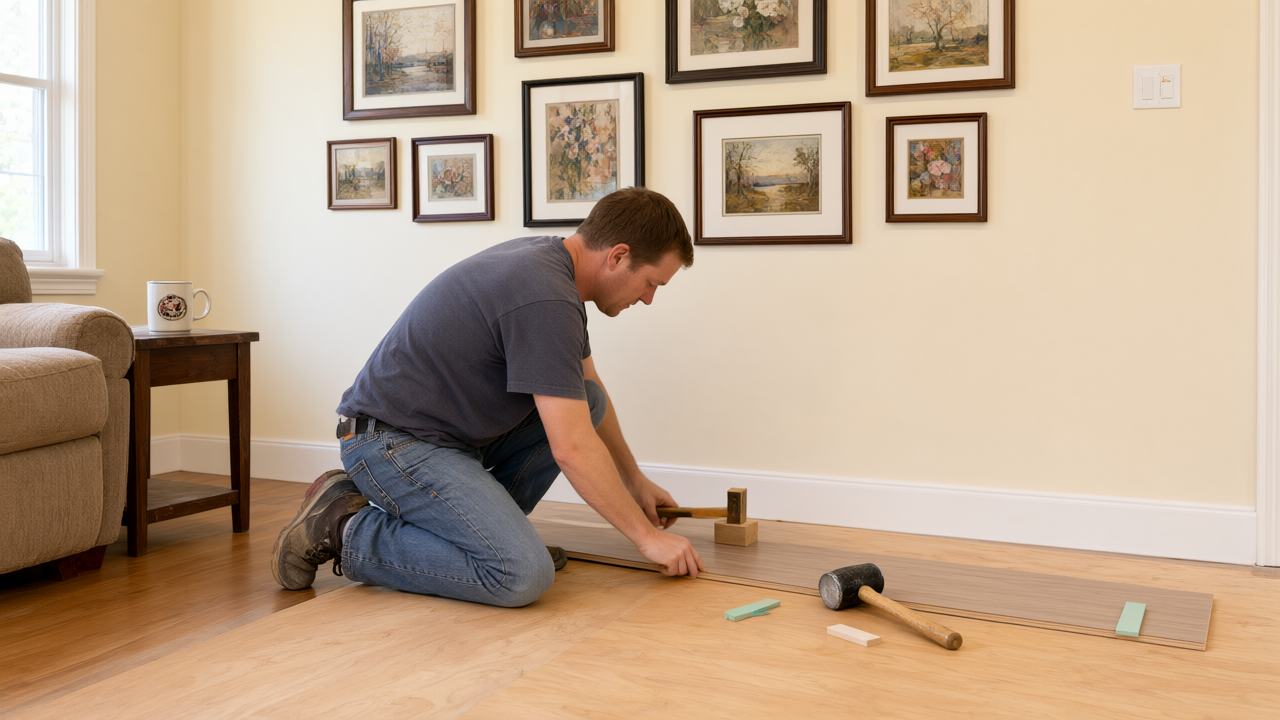
This is where heated laminate floors in Cary homes either succeed or fail, and it has almost nothing to do with how good the planks look coming out of the box. Installation over radiant heat follows a stricter set of rules than a standard floating floor, and skipping any of these steps is how you end up with cupped seams and gapping planks by February.
Here's the sequence that works:
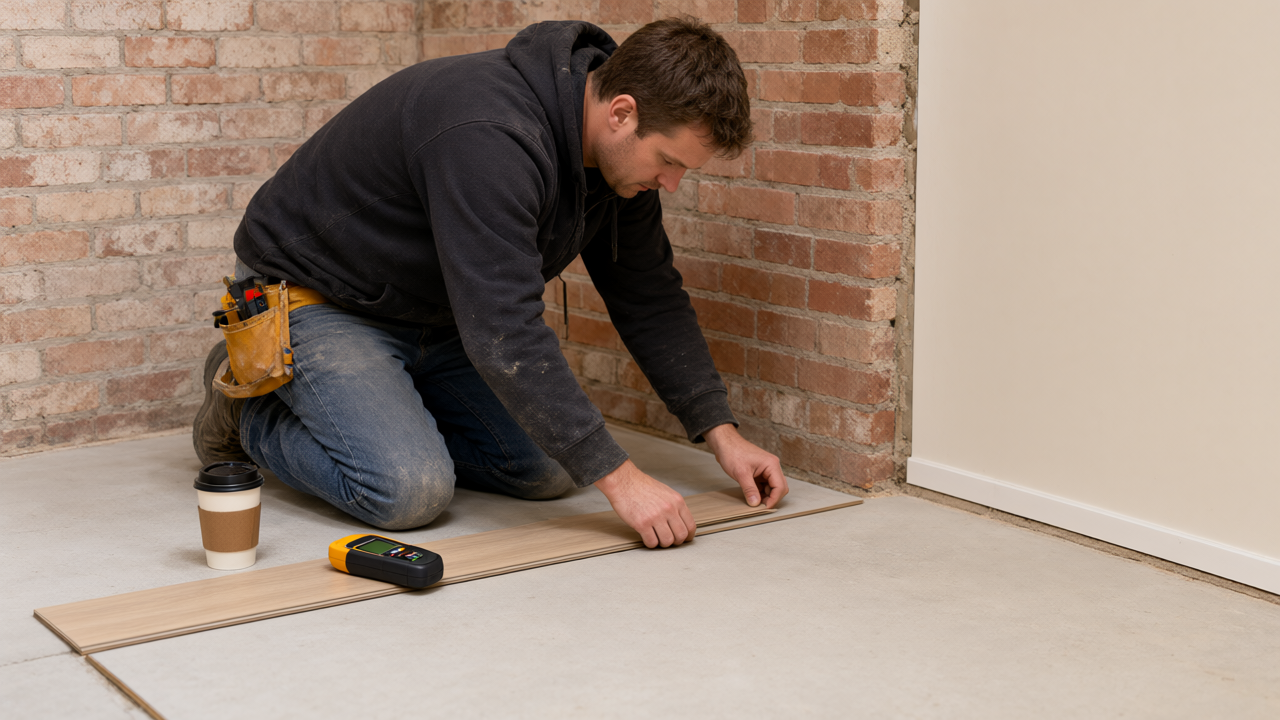
- Test the subfloor for moisture first. A calcium chloride test or a pin meter reading should come back under the manufacturer's limit, typically 3 to 5 pounds per 1,000 square feet. In Cary basements, we see readings double that on slabs without a proper barrier. Fix the moisture source before flooring goes down, not after
- Acclimate the planks for 48 to 72 hours in the room where they'll be installed, with the boxes opened and the HVAC running at normal living conditions. Radiant heat should be OFF during acclimation. A cold floor plus warm planks equals gaps
- Install the correct vapor barrier. Over a concrete slab, that's a 6 mil polyethylene sheet with lapped and taped seams. Over a wood subfloor with a basement or crawlspace below, you still want a barrier rated for the assembly
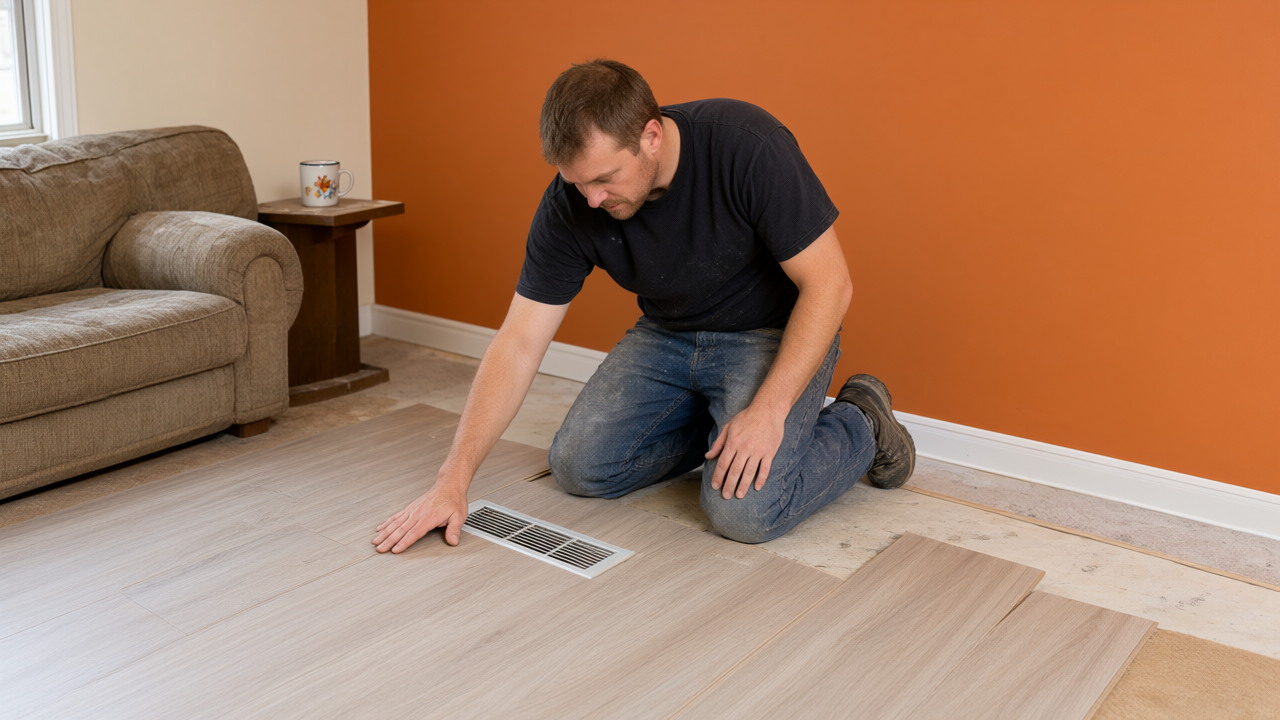
- Use a radiant approved underlayment or glue down per the manufacturer's instructions. Never stack two underlayments to save a trip to the store
- Bring the heat up slowly. After installation, wait 48 hours, then raise the thermostat 5 degrees per day until you reach your target. This is the step people skip and it's the one that matters most
- Set the maximum floor temperature at 82°F to 85°F and lock it. A programmable thermostat with a floor sensor, not just an air sensor, is worth the extra $80 to $150
One more Cary specific note. If your home sits on a slab and you're finishing a basement, the slab temperature in winter can sit in the low 50s before the heat kicks on. That's a big jump to 82 degrees, and the laminate needs to make it gradually. We've also seen homeowners run the radiant system at full blast to speed up cure time on a fresh install. Don't. It's the single most common cause of seam separation we get called out to fix.
Common Problems Cary Homeowners See With Heated Laminate (and How to Prevent Them)
The failures we see in this area fall into a handful of predictable categories. Knowing them ahead of time is the difference between a floor that lasts two decades and one that starts clicking underfoot by the second winter.
Gapping at the seams. This is the number one complaint, and it's almost always caused by acclimating the planks on a cold floor or by running the heat up too fast. The fix is prevention: full acclimation and a gradual ramp up over several days. Once planks have gapped, they usually won't close back up on their own.
Cupping or crowning. Cupping is when the edges of a plank curl up; crowning is when the center bows up. Both point to moisture. In Cary, this often traces back to a missing or compromised vapor barrier over a slab, or a humid summer with no dehumidifier in a finished basement. Keep indoor humidity between 35 and 55 percent year round and this problem largely disappears.
Hot spots and discoloration. If the radiant tubing or electric mat has an uneven layout, some areas of the floor run hotter than others. Over time, that shows up as faded or yellowed patches in the wear layer. A floor sensor thermostat and a heat map check before installation catch this before it becomes permanent.
Clicking or hollow sounds underfoot. Usually a sign the underlayment wasn't right for a radiant system, or the subfloor wasn't flat enough. Laminate needs a flatness tolerance of about 3/16 inch over a 10 foot span. Anything beyond that and the planks flex and click.
Here's the honest part. If you have a small bathroom or a single room with an existing electric mat and a level subfloor, and you're comfortable with a floating floor, you can absolutely handle this yourself. The acclimation and the slow heat ramp are things any careful homeowner can do. Where it gets risky is over a concrete slab with moisture issues, in a basement, or in a whole home installation where one mistake means pulling up thousands of square feet.
Cost Impact: Adding Radiant Heat to a Laminate Flooring Project in Cary, IL
Here's what the numbers typically look like in the Cary area in 2026. Standard laminate Flooring Installation by itself runs $3 to $6 per square foot installed, depending on the product tier and room complexity. Add radiant heat and you're looking at an additional $6 to $12 per square foot for an electric mat system, or $8 to $14 per square foot for hydronic, which involves more infrastructure and often a boiler tie in.
For a 400 square foot finished basement, that pencils out to roughly $10,000 to $18,000 total for heated laminate, or $3,500 to $6,500 if you're only adding the heat to an existing floor. A single 60 square foot bathroom with an electric mat runs $900 to $1,800 on top of the laminate itself.
What drives the range:
- System type. Electric mats are cheaper to install but cost more to run. Hydronic costs more upfront but is far more efficient across a whole floor
- Subfloor condition. Leveling, moisture remediation, or a new vapor barrier adds $2 to $5 per square foot
- Thermostat and controls. A quality programmable floor sensor thermostat runs $150 to $400 installed
- Room layout. Multiple rooms, odd angles, and closets all add labor time
Running cost matters too. An electric radiant system in a 400 square foot basement adds roughly $40 to $90 per month to your electric bill in a Cary winter, depending on how warm you keep it. Hydronic tied into an existing boiler often runs less than half that. If you're heating a large area, hydronic usually pays back the higher install cost within five to seven years.
Burns Carpentry handles Laminate Flooring and Flooring Installation across Cary and the surrounding suburbs, including Arlington Heights, Elgin, and Schaumburg. Andy Burns and the crew work with clients on material selection, verify the radiant rating before anything gets ordered, and handle the moisture testing and acclimation that make or break a heated install. Free estimates are available, and the team will tell you straight up if your existing system or subfloor makes heated laminate a bad idea. That's the conversation worth having before you spend a dollar on planks.
Frequently Asked Questions
Can you put laminate flooring over radiant floor heating?
Yes, but only if the specific laminate product is rated for radiant heat and installed with the correct underlayment or glue down method. The floor surface temperature must stay at or below the manufacturer's limit, usually 82°F to 85°F. Unrated laminate will warp, gap, or cup within a few heating seasons.
How much does heated laminate flooring cost in Cary, IL?
Expect $10,000 to $18,000 for a 400 square foot finished basement with a new electric radiant system and laminate, or $3,500 to $6,500 if you're adding heat under an existing floor. A single bathroom typically runs $900 to $1,800 for the heat portion.
What temperature should I set my radiant heat for laminate floors?
Keep the floor surface between 80°F and 84°F, and never exceed the maximum printed on your flooring's spec sheet. Use a thermostat with a floor sensor rather than relying on air temperature. After installation, raise the heat no more than 5 degrees per day.
Do I need a vapor barrier under laminate over heated floors?
Yes, especially over concrete slabs, which are common in Cary basements. A 6 mil polyethylene barrier with taped seams protects the fiberboard core from moisture that would otherwise cause cupping and seam failure. Skipping it is one of the most common reasons heated laminate floors fail early.
If you're planning a laminate floor over radiant heat in Cary or anywhere in McHenry County, get the product rating and the subfloor moisture checked before you order anything. Burns Carpentry does exactly this kind of work, and they'll tell you honestly whether your setup is a good candidate or a problem waiting to happen. Call them for a free estimate and save yourself the cost of a floor you'd have to redo.