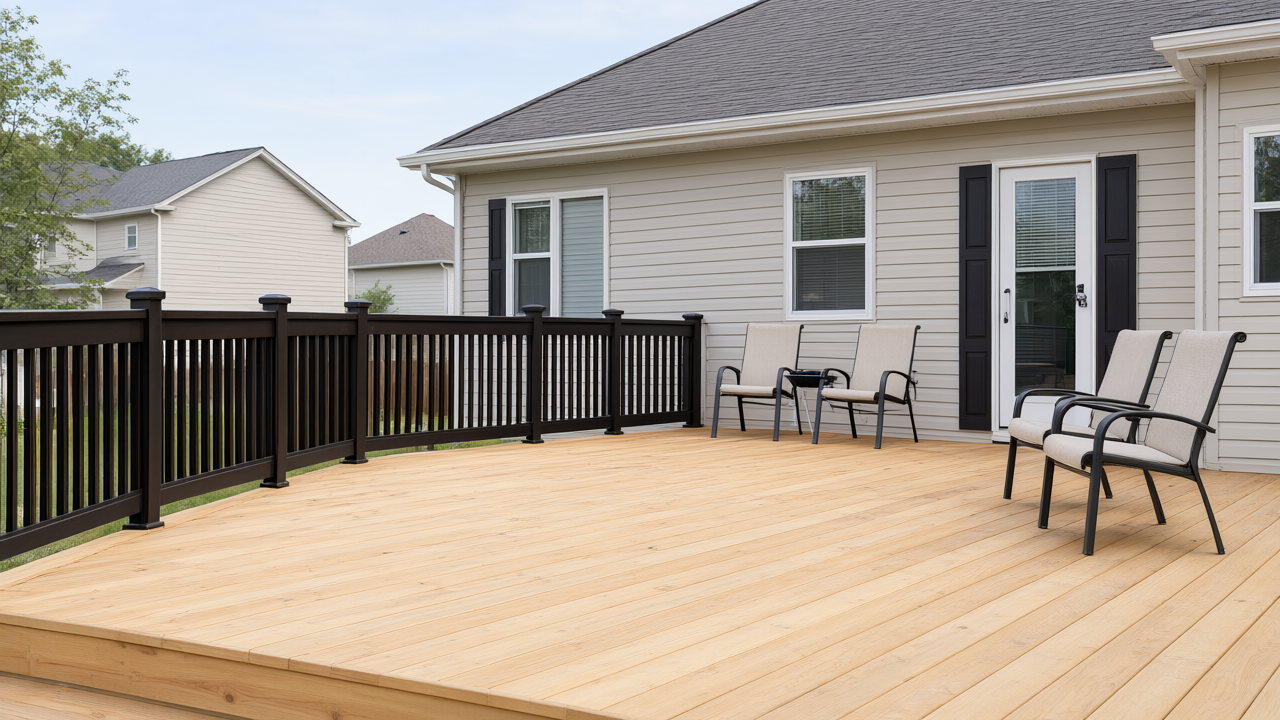
You signed the contract, picked the deck stain color, and imagined summer evenings on your new deck. But did you actually read the warranty? Most homeowners don't. In fact, a 2025 survey by the National Association of Home Builders found that only 34% of homeowners who had a deck built said they fully understood their warranty coverage before signing. That's a problem, because deck warranties in Cary, IL vary wildly from builder to builder, and the fine print can mean the difference between a free repair and a $4,000 bill. This guide breaks down Deck Building warranties in 2026 so you know exactly what's covered, what's not, and how to compare offers like a pro.
Deck Building Warranties: What's Covered and What's Not
Let's start with the basics: a deck warranty is actually two separate warranties. The first is the workmanship warranty from the builder. This covers the labor and installation. The second is the material warranty from the manufacturer, covering the decking boards, railing, posts, and fasteners. You need both to be fully protected, and they cover very different things.
Workmanship warranties typically cover issues like loose fasteners, warping due to improper installation, or structural failures caused by mistakes in framing. A good builder will offer at least a one year warranty, but a two year warranty is better. Burns Carpentry, for example, guarantees its workmanship for a full two years from the date of completion. That's a solid benchmark. Material warranties vary by product. Pressure treated wood usually comes with a 5 to 10 year warranty against rot and decay, but only if you maintain it with sealant. Composite decking brands like Trex and TimberTech offer 25 to 30 year warranties that cover staining, fading, and structural integrity, but they have strict maintenance requirements. PVC decking, like Azek, can go up to 50 years.
Here's what most warranties do NOT cover: normal wear and tear, damage from weather events like hail or tornadoes, improper maintenance, and damage from pests like termites or carpenter ants. Also, most warranties are void if the deck was not built to code or if you alter the structure yourself. In Cary, IL, that means if you decide to add a hot tub or a second story without consulting a structural engineer, don't expect the warranty to cover the resulting sag.
The most common warranty claim we see is for loose railings or popping screws, and that's almost always a workmanship issue. But we also see homeowners who voided their material warranty by not cleaning their composite deck at least twice a year. It's in the fine print, and it matters.

How to Compare Deck Builder Warranties in Cary, IL
When you get quotes from three different deck builders in Cary, you'll likely see three different warranty structures. One might offer a 5 year workmanship warranty but use a cheap material that only carries a 10 year warranty. Another might offer a 1 year warranty but install premium composite with a 30 year material warranty. So how do you compare apples to apples?
First, ask for the exact warranty documents before you sign. Don't accept a verbal promise like "we stand behind our work." Get it in writing. Second, look for these three things: the length of the workmanship warranty, the specific defects it covers, and the process for filing a claim. A warranty that requires you to pay a $500 inspection fee or that forces you to use a specific repair company is less valuable than one that's straightforward.
Here's a quick checklist to use when comparing quotes:
- Workmanship warranty length: 1 year is minimum, 2 years is good, 5 years is excellent.
- Material warranty length: 25 years or more for composite, 10 years for wood (but read the maintenance clause).
- Transferability: Is the warranty transferable if you sell your home? Many are, but some require a fee or a transfer form within 30 days.
- Labor coverage: Does the material warranty include labor costs for replacement? Some do, some only cover the cost of the board itself.
- Exclusions: Look for the word "or" as in "staining, fading, or chalking" because it means they can deny a claim for any of those.
One thing to watch for in Cary specifically: some builders will try to upsell you a "premium" warranty that costs extra. In 2026, a typical extended warranty on a deck runs $300 to $800 depending on the size. But if the builder already offers a solid 2 year workmanship warranty and uses reputable materials, you likely don't need to pay extra. The material warranties are already included in the price of the decking boards, so any "extended" warranty is just for the labor, and that's rarely worth the cost.
Deck Material Warranties: Wood vs. Composite vs. PVC
Choosing the decking material is the biggest factor in what your warranty will cover. Each material has a different warranty profile, and what's right for your home depends on your budget and how much maintenance you're willing to do.
Wood decks (pressure treated pine or cedar) are the traditional choice in Cary, and they come with the shortest warranties. Typically, you'll get a 5 to 10 year warranty against rot and termite damage, but only if you seal or stain the wood every 1 to 2 years. In Illinois, where we get freezing winters and humid summers, Wood Decks can crack and split faster than in drier climates. That's why many homeowners in McHenry County are switching to composite. The material warranty on wood is also pro-rated, meaning after year 2, the coverage drops by a certain percentage each year. By year 8, you might only get 20% of the original cost back.
Composite decks (like Trex, TimberTech, or Fiberon) are the middle ground. They carry 25 to 30 year warranties that cover staining, fading, and structural integrity. But there's a catch: the warranty requires you to clean the deck at least twice a year with a mild soap and water, and you can't use a pressure washer on high power because it can damage the boards. If you fail to do that simple maintenance, your warranty claim for fading or staining can be denied. In Cary, where pollen and tree sap are a fact of life, you'll want to make sure you're prepared to keep up with that cleaning schedule.
PVC decks (like Azek) are the premium option, with warranties up to 50 years. They are the most resistant to moisture, mold, and scratching, and they never need staining or sealing. The tradeoff is cost: PVC runs $10 to $15 per square foot for materials alone, compared to $6 to $10 for composite and $3 to $5 for pressure treated wood. But if you plan to stay in your home for decades, the 50 year warranty can be worth it. Just know that PVC expands and contracts more with temperature changes, so the installation has to allow for that, which is a workmanship issue that falls on the builder. That's why you want a builder who has experience with PVC specifically, not just someone who mostly builds wood decks.

5 Warranty Mistakes Cary Homeowners Make in 2026
Even with a solid warranty, homeowners in Cary manage to void it or miss out on coverage. Here are the five biggest mistakes I've seen in 2026:
- Not registering the material warranty. Many manufacturers, especially Trex and TimberTech, require you to register your warranty online within 90 days of installation. If you don't, the warranty is still valid but the claims process is much harder. It takes five minutes, so do it the day the deck is finished.
- Ignoring maintenance requirements. As mentioned, composite warranties require regular cleaning. But wood warranties also often require you to reseal the wood every year or two, and they may ask for proof. Keep a log of when you cleaned or sealed, and take photos. That evidence can be the difference between a free replacement and a denied claim.
- Assuming the builder's warranty covers the whole deck. If the builder installs a defective railing that's a manufacturer defect, that might be covered by the railing warranty, not the builder's workmanship warranty. Know who to call for what. In most cases, you'll file the claim with the manufacturer yourself, not through the builder.
- Not understanding the "pro-rated" clause. Many material warranties are pro-rated, meaning the coverage decreases over time. For example, a 30 year warranty might cover 100% for the first 5 years, then drop 3% per year. If your deck fails in year 10, you might only get 70% of the replacement cost. Read the pro-ration schedule before you choose a material.
- Waiting too long to file a claim. If you notice a board warping or a railing getting loose, don't wait until the warranty expires to call. Most warranties require you to report issues within a reasonable time. In 2026, manufacturers are stricter than ever. I've seen claims denied because the homeowner waited 14 months to report a stain that should have been reported in 90 days.
Questions to Ask Your Deck Builder Before Signing
Before you sign any contract, you need to ask these five questions. The answers will tell you a lot about the builder's confidence in their work and how they handle problems.
- "Can you show me your license and insurance?" This is non negotiable. In Cary, a deck builder must be licensed by the state of Illinois, and they need to carry liability insurance and workers' comp. Burns Carpentry is fully licensed and insured for all of McHenry County, and any reputable builder will be happy to show you their credentials.
- "What does your workmanship warranty cover specifically?" Don't accept "we stand behind our work." Ask for a written list of what's covered, like loose fasteners, structural defects, and installation errors. Also ask what's not covered, like damage from your dog chewing on the railing.
- "Will you handle the building permit?" In Cary, you need a permit for any deck over 30 inches off the ground. A builder who says you don't need a permit is a red flag. The best builders, like Burns Carpentry, handle the permit process for you, which ensures the deck is inspected and meets code. That also protects your warranty, because an unpermitted deck can void your homeowner's insurance.
- "What is the timeline and what happens if it rains?" A typical deck build in Cary takes 3 to 5 weeks. But if we get a week of heavy rain, that can push things out. Ask if the contractor has a weather clause in the contract. A good one will build in buffer time, so you're not paying penalties for weather delays.
- "Can you give me references from the last two years?" Don't just ask for references, ask for references from decks built in the last two years. That way you can see how the deck has held up through two Illinois winters. A builder who's been in business for 10 years but can't give you a recent reference is a red flag.
One more thing: if you're handy and your deck is just a few years old, you might not need a builder at all. If you're just replacing a few boards or tightening screws, that's a weekend DIY project. But if you're dealing with structural issues, like a sagging beam or rot in the posts, that's when you need a professional. The cost of a repair is typically $800 to $2,500, but if you ignore it, the repair can turn into a full rebuild costing $15,000 or more. So don't wait.
Frequently Asked Questions
How much does a deck warranty cost in Cary, IL?
A standard workmanship warranty is included in the price of your deck, usually 1 to 2 years. Extended warranties can cost an extra $300 to $800, but they're rarely worth it if the builder uses quality materials. Material warranties are always included in the cost of the decking boards, so you don't pay extra for them.
What is the best deck material for Illinois weather?
For Cary's cold winters and hot, humid summers, composite decking is the most popular choice because it resists moisture, doesn't crack, and requires little maintenance. PVC is even more durable but costs more. Wood is cheaper but needs yearly sealing and has a shorter warranty.
Can I transfer my deck warranty if I sell my house?
Yes, most composite material warranties are transferable, but you need to notify the manufacturer within 30 days of the sale and pay a transfer fee (usually $50 to $150). Workmanship warranties from the builder are rarely transferable, so ask before you sign.
If you're in the Cary area and you're ready to build a deck you can trust, Burns Carpentry has the experience and the warranty to back it up. They'll walk you through the warranty documents, handle the permits, and build a deck that's made for Illinois weather. Give them a call. They'll tell you straight up whether you need a new deck or just a repair, and they won't push you into a bigger project than you need.