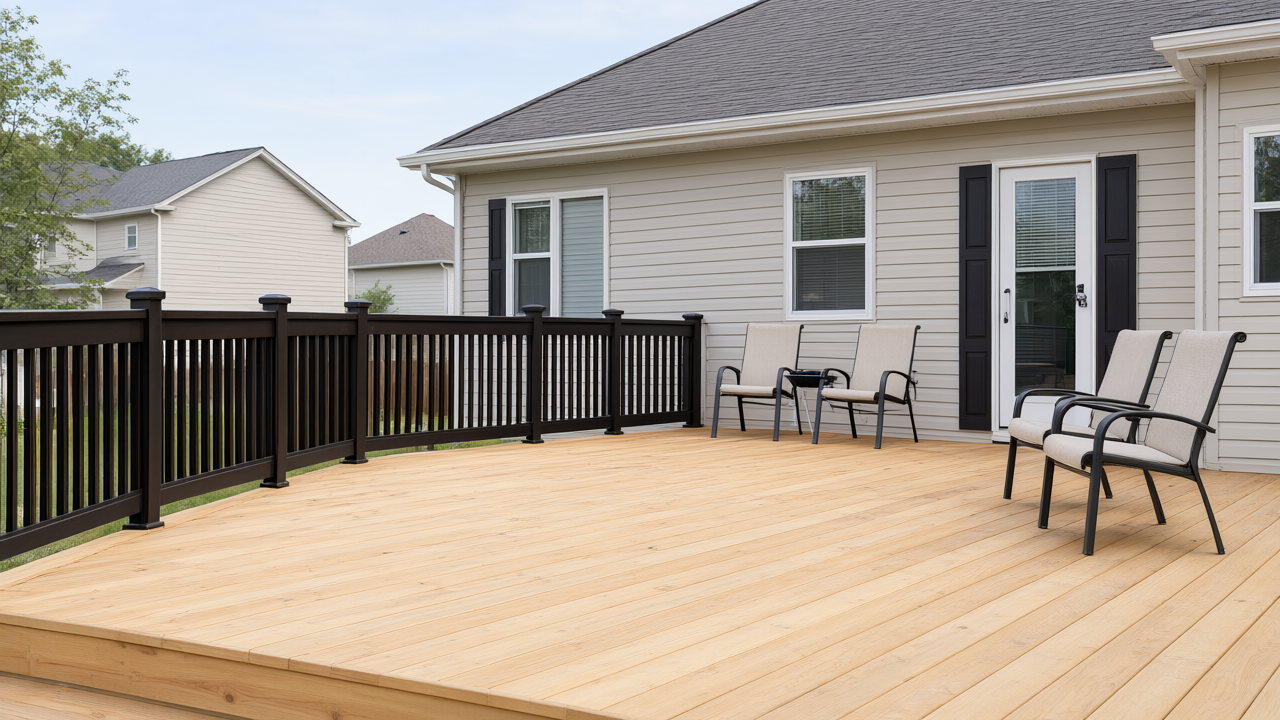
Most Cary homeowners don't realize their deck is more likely to cause a nighttime injury than a daytime one. According to the Consumer Product Safety Commission, over 60% of deck-related falls happen after sunset, often because the homeowner couldn't see the edge of a step or a raised board. Good deck lighting isn't just about making your backyard look pretty for evening gatherings. It's about making sure your family and guests can move safely from the house to the grill to the yard without a twisted ankle or worse. For Deck Building in Cary, integrating the right lighting plan is just as important as the materials you choose.
Why Deck Lighting Matters for Safety and Ambiance in Cary, IL
Think about how you actually use your deck. In Cary, the prime season runs from late May through October, and the best hours are often after the sun goes down and the temperature drops to something tolerable. That's when you're carrying plates of food, holding a drink in one hand, and trying to navigate a dark set of stairs. A single misstep on a dim stair edge is the most common deck accident, and it's entirely preventable with proper illumination.
Beyond the safety factor, lighting changes the entire character of the space. A well lit deck feels like an extension of your home, not just a wooden platform attached to it. It creates depth, highlights architectural features like pergola posts or railing caps, and sets the mood for everything from a quiet cup of coffee in the morning to a full backyard barbecue. The right fixtures can also make a modest sized deck feel larger and more inviting. In the Cary climate, where we get roughly 4,500 hours of darkness per year, your deck lighting will be used more often than you might think.

7 Deck Lighting Options for Your Cary, IL Deck
Before you buy anything, understand that there are three basic categories of deck lighting: functional, accent, and decorative. Functional lighting helps you see where you're walking. Accent lighting highlights specific features. Decorative lighting adds style and visual interest. The best deck designs layer all three. Here are the seven most effective options we recommend to clients, ranked by their impact on both safety and ambiance.
1. Post Cap Lights: The Foundation of a Safe Deck
Post cap lights sit on top of your deck's railing posts. They're the most popular choice for a reason: they provide ambient light at standing height, which illuminates the entire deck surface without glare. Most units are LED and run on low voltage, which keeps energy costs around $1 to $2 per month for an entire system. They're also incredibly easy to retrofit onto an existing deck, making them a great first upgrade. Expect to pay $25 to $60 per cap depending on the material and finish. If you have a composite deck with hollow posts, the wiring can be routed internally for a clean look. On a wood deck, you'll typically run the wire along the inside of the frame.
2. Step Lights: Protecting Against the Most Common Injury
Stairs are where accidents happen. Step lights, also called riser lights, are mounted directly into the vertical face of each stair. They cast a pool of light on the tread below, making the edge of every step unmistakable. A typical deck has 3 to 5 steps, and a quality set of step lights runs $15 to $35 per light. For maximum safety, position them on both sides of the stairway. This is non negotiable for any homeowner over 50 or anyone who hosts older guests. The contrast between the lit tread and the dark edge below is what prevents falls.
3. Under Rail Lighting: The Modern Ambient Glow
Under rail lighting is installed on the underside of your top railing, casting light downward across the deck surface. This creates a soft, even glow that's perfect for entertaining. It eliminates harsh shadows and makes the entire deck feel safe to walk across. This option is slightly more expensive, typically $10 to $20 per linear foot installed, but it's the most effective way to light a large deck area. It's a popular choice for the Premium Outdoor Living Package that many Cary homeowners are investing in this year.
4. Post Mounted Lanterns: The Classic Look
If your deck has a pergola or a roof, post mounted lanterns offer a more traditional aesthetic. These are essentially outdoor light fixtures mounted on top of a post or column. They provide strong, direct light that's ideal for dining areas or spots where you need to see clearly, like a built in grill station. You can choose from modern, farmhouse, or craftsman styles to match your home's architecture. Hardware stores in the Cary area carry a wide selection, but be sure to check the IP rating to make sure the fixture is rated for damp or wet locations.
5. String Lights: The Affordable Ambiance Layer
String lights are the cheapest way to add warmth and charm, but they're purely decorative. They do not provide adequate task lighting for safety. Use them as a secondary layer over your functional lights. A standard 48 foot string of outdoor rated LED bulbs costs $30 to $50 and can be hung from the pergola or between posts. They're perfect for creating a festive atmosphere for a summer party. Just remember to take them down before the first hard frost, as ice can damage the sockets and wiring.
6. In Deck Lights: The Built In Safety Feature
In deck lights, also known as flush mount lights, are installed directly into the decking boards. They're useful for illuminating specific zones like the top of the stairs or the edge of a raised platform. They're also a stylish way to highlight a change in elevation or a seating area. In deck lights run $40 to $80 each and require careful planning during installation because they need to be cut into the decking material. This is one area where the expertise of a professional deck building team is essential to avoid damaging the structural integrity of the boards.
7. Bollard and Path Lights: Bridging Deck to Yard
Your deck doesn't end at the steps. The path to your yard, fire pit, or garden is a common trip hazard. Low level bollard lights, which are short, pillar like fixtures, can line a walkway to guide people safely. Solar powered options are available for as little as $20 each, but they provide inconsistent light in the fall and winter months. For reliable performance in the Cary climate, low voltage wired path lights are a better investment. They cost about $50 to $100 per fixture installed, but they'll work every night regardless of how much sun you got that day.
How to Choose the Right Deck Lighting for Your Needs
Choosing the right lighting comes down to a simple question: how do you use your deck? If you only use it for grilling and the occasional dinner, a combination of post cap lights and step lights will cover your needs perfectly. If you host large gatherings or have an outdoor kitchen, you'll want under rail lighting for general illumination and post mounted lanterns for task lighting over prep areas. Start by making a list of the three main activities you do on your deck, then match the lighting to those activities.
Next, consider the power source. Low voltage (12V) systems are the industry standard. They're safe, efficient, and easy to install. You'll need a transformer to step down the standard 120V household current. Make sure your transformer is sized correctly for the total wattage of your lights. A good rule of thumb is to add up the wattage of all your bulbs and multiply by 1.25 to get the minimum transformer capacity. If you have 20 lights at 5 watts each, that's 100 watts, so you'd need at least a 125 watt transformer.
Finally, think about the color temperature of the bulbs. Warm white (2700K to 3000K) is the most flattering for skin tones and creates a cozy, inviting atmosphere. Cool white (4000K to 5000K) is brighter and better for task lighting, but it can feel clinical and harsh. For a residential deck in Cary, we almost always recommend warm white. It's more forgiving on imperfections and matches the glow of indoor lighting, making the indoor outdoor transition feel seamless.

Deck Lighting Installation: DIY vs. Professional in Cary, IL
Let's be honest: some deck lighting is a perfectly reasonable DIY project. If you're handy and you're just adding post cap lights to an existing deck, you can probably handle it over a weekend. The key is to make sure you're working with a low voltage system, which carries no shock risk. You'll need a drill, a screwdriver, a wire stripper, and a basic understanding of how to make waterproof connections. There are plenty of tutorials online, and the risk of a costly mistake is low.
However, there are times when you should absolutely hire a professional. If your lighting plan requires running wires through the framing, cutting into decking boards, or adding new circuits to your home's electrical panel, it's time to call in the experts. A professional carpenter will also make sure that the fixtures are rated for the local climate. In Cary, we deal with high humidity in the summer and freezing temperatures in the winter. The seals on cheap fixtures will fail in these conditions, leading to corrosion and shorts. A professional will spec fixtures that are built to last.
Another reason to go professional is the design phase. A skilled carpenter will know exactly where to place lights to eliminate dark spots and shadows. They'll consider the roof overhang, the location of your outdoor furniture, and the natural flow of foot traffic. If you're building a new deck with Burns Carpentry, the lighting is integrated into the overall deck construction plan from the very beginning. This is far more efficient and looks better than adding lights later. When you hire us for deck building in Cary, we handle all the rough electrical work and coordinate with a licensed electrician for the final connections, ensuring everything meets the local building codes.
Maintaining Your Deck Lighting: Tips for Cary, IL Homeowners
Deck lighting is a low maintenance investment, but it's not a zero maintenance one. The biggest enemy is moisture. In the humid Illinois summers, condensation can build up inside the fixtures. Most quality LED fixtures are sealed, but the connections are the weak point. Every spring, take a few minutes to inspect the wire connections. Look for any signs of corrosion, loose connections, or cracked insulation. A quick visual check of your fixtures can prevent a short circuit that could take out your entire system.
Cleaning is also important. Dust, pollen, and spider webs can reduce light output by up to 30% over a season. Use a soft cloth and a mild soapy water solution to wipe down the lenses. Avoid harsh chemical cleaners, which can cloud the plastic or strip the finish off metal fixtures. For post cap lights with clear lenses, a simple wipe with a microfiber cloth will restore their brightness.
Here's a practical maintenance checklist to follow each season:
- Spring: Inspect all fixtures and wiring for damage. Clean all lenses with soapy water. Test the transformer and replace any burnt out bulbs.
- Summer: Trim any landscaping that may be encroaching on your fixtures. Check that the lights are still angled correctly after any parties or furniture moves.
- Fall: Before the first freeze, disconnect and store any portable lights. Check the seals on hardwired fixtures to ensure they're watertight.
- Winter: If you clear snow off your deck, be careful not to hit the fixtures with a shovel. Ice can crack lenses, so address any buildup gently.
If you find yourself constantly replacing bulbs or dealing with dead zones in your lighting, it might be time for an upgrade. Older halogen systems are energy hogs and generate significant heat. Switching to modern LED fixtures will cut your energy use by 80% and they last up to 25,000 hours, which means you'll likely never change a bulb again. This is a smart upgrade if your deck is more than ten years old.
Frequently Asked Questions
How much does it cost to add lighting to an existing deck?
For a typical deck in the Cary area, you can expect to pay between $400 and $1,200 for a complete DIY low voltage kit, or $1,500 to $3,500 for a professionally installed system. The final price depends on the number of fixtures, the type of lights you choose, and whether any wiring needs to be routed through walls or framing.
Are solar deck lights good enough for safety?
No. Solar lights are fine for decorative accenting, but they don't provide consistent, reliable illumination. On cloudy days or in shaded areas, the batteries won't charge fully, and you'll be left with dim or non functional lights exactly when you need them most. For safety critical areas like steps and walkways, always use wired low voltage lighting.
Can I use regular indoor string lights on my deck?
You should never use indoor lights outdoors. They aren't sealed against moisture and pose a serious shock and fire hazard. Always look for lights that are UL listed for outdoor use. The packaging will clearly state if they are suitable for wet locations, which is what you need for an uncovered deck exposed to the elements.
How do I know if my deck is safe to work on?
Before doing any DIY lighting work, give your deck a thorough inspection. Look for loose railings, rotting boards, or corroded fasteners. If you find any structural issues, stop. A deck that isn't structurally sound needs professional Deck Repairs before you add any electrical components. Burns Carpentry specializes in deck repairs and can assess the safety of your structure.
Ready to light up your Cary backyard? Whether you're building a new deck and want lighting designed in from the start, or you need to upgrade an existing structure, Burns Carpentry has the expertise to get it done right. We specialize in deck building in Cary and the surrounding areas, and we can help you plan a lighting scheme that's safe, beautiful, and built to last through every Illinois season. Give us a call for a free estimate and let's talk about how to make your deck the best lit spot on the block.