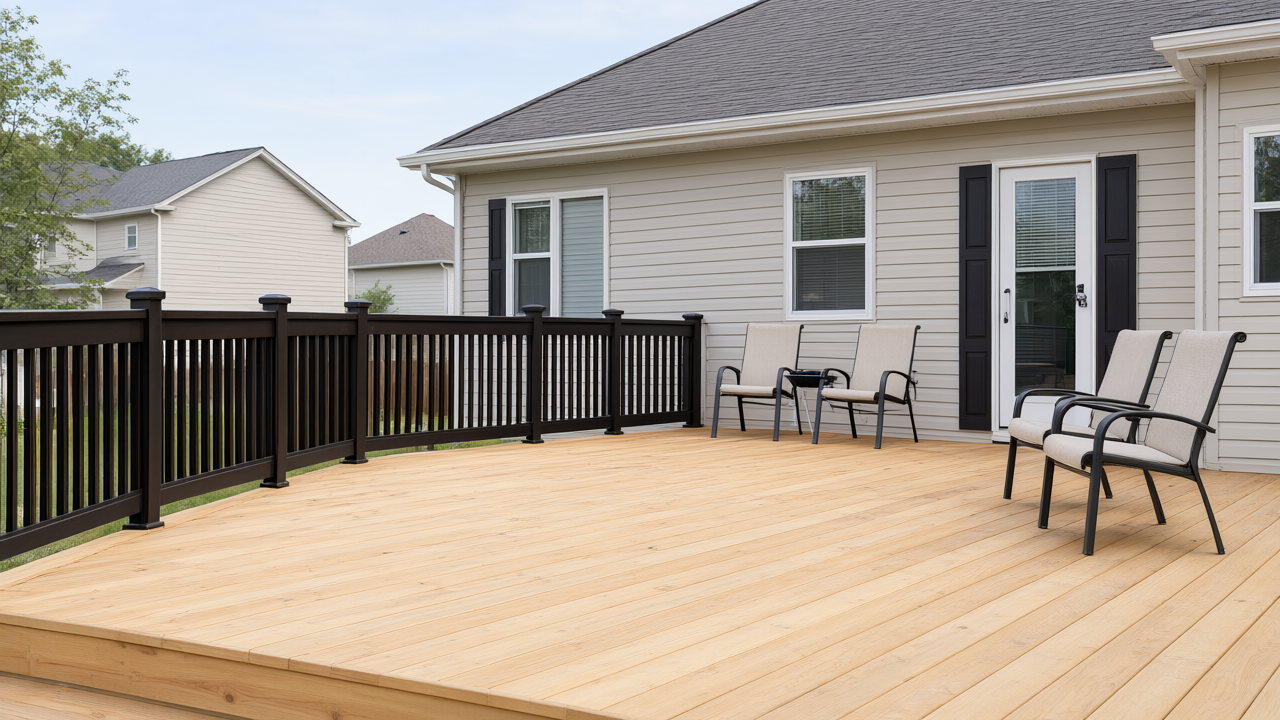
Homeowners across the Chicago suburbs spend roughly 40 hours and $300 to $600 on materials every few years trying to keep their deck looking sharp, yet most of them unknowingly make the same deck staining mistakes that actually shorten the life of their wood. The most common culprit isn't a bad product or a cheap brush, it's applying the stain at the wrong time or skipping the prep work that determines whether the finish lasts two seasons or ten. If you have a wood deck in Cary, IL, and you're planning to stain it this year, understanding these seven mistakes before you open that bucket of stain will save you from the frustration of peeling, blotchy, or prematurely faded wood.
Why Staining Your Deck Isn't Just About Looks: Protection & Longevity
A fresh coat of stain does transform the appearance of a tired deck, but treating it as a purely cosmetic upgrade is the first mistake many Cary homeowners make. The real job of a stain is to act as a sacrificial barrier between the wood and the elements. In Illinois, that means protecting against freezing winter temperatures, heavy spring rains, intense summer UV rays, and the freeze-thaw cycles that cause wood to expand, contract, and eventually crack.
Water is the primary enemy of an outdoor wood structure. When moisture penetrates the surface of unprotected lumber, it creates the perfect environment for rot, mold, and mildew to take hold. Over time, this leads to structural issues like warped boards, loose railings, and spongy spots that require costly repairs. A high quality stain that's applied correctly can prevent this moisture intrusion for years, which is why a $60 gallon of stain is one of the cheapest insurance policies you can buy for a structure that cost thousands to build.
The difference between a deck that lasts 25 years and one that needs replacing in 10 is almost always the finish applied in the first few years of its life.

Mistake #1: Staining Too Soon After Installation or Pressure Washing
Patience is not just a virtue when it comes to deck staining, it's a technical requirement. Newly installed wood, especially pressure treated lumber, is saturated with moisture. Most manufacturers and experienced contractors recommend waiting a full 4 to 6 weeks, sometimes longer in cooler months, before applying any finish. If you stain wet wood, the finish cannot penetrate properly. It will sit on the surface, form a film, and eventually peel off in large flakes within a single season.
The same logic applies after you pressure wash an older deck. It can be tempting to stain on a sunny afternoon right after the wood looks clean and dry, but looks can be deceiving. The surface might feel dry to the touch while the internal moisture content is still far too high. A simple test is to sprinkle a few drops of water onto the deck boards. If the water beads up instead of soaking in, the wood isn't ready for stain. You should wait at least 48 to 72 hours after washing, and ideally check the weather forecast to ensure you have a few consecutive dry days before you start.
Mistake #2: Choosing the Wrong Stain Type for Cary's Climate
Not all stains are created equal, and the type you choose needs to match the exposure of your deck and your tolerance for maintenance. There are three main categories to consider: transparent, semi-transparent, and solid. Transparent stains offer the least UV and moisture protection because they contain minimal pigment. They look beautiful for about a year but break down quickly under the harsh Illinois sun, often requiring a fresh coat every 12 months.
Semi-transparent stains are the sweet spot for most homeowners. They contain enough pigment to block a significant amount of UV radiation, which prevents the wood from graying, while still allowing the natural grain to show through. These typically last 2 to 3 years on a horizontal surface like a deck floor. Solid stains, which look like paint, offer the highest level of protection and can last 5 to 7 years. However, they hide the wood grain entirely and can be difficult to remove if you ever decide to go back to a transparent finish.
For Cary's climate, with its high humidity in the summer and freezing temperatures in the winter, an oil based semi-transparent stain is often the most reliable choice. Oil based products penetrate deeper into the wood fibers, providing protection from within, and they are less likely to crack or peel in freezing temperatures compared to some water based films. If you're unsure which product is right for your specific deck, a professional consultation can save you from buying the wrong thing.

Mistake #3: Ignoring Wood Prep , Sanding and Cleaning Essentials
The single biggest difference between a professional grade finish and a homeowner's finish is the preparation work. A stain will not hide imperfections; it will magnify them. Dirt, pollen, mildew, and old peeling finish all act as a barrier that prevents new stain from bonding to the wood. You simply cannot skip this step and expect good results.
Proper prep starts with a thorough cleaning. A pressure washer can be effective, but it's very easy to gouge the wood if you hold the nozzle too close or use too high a pressure setting. A safer approach for most decks is a deck cleaner or brightener applied with a stiff brush, followed by a gentle rinse. After the deck is clean and dry, you need to sand. This isn't about making the wood perfectly smooth, it's about opening up the pores and roughing up the surface so the stain can penetrate evenly. A quick pass with 80 to 100 grit sandpaper over the entire surface, paying special attention to any areas with old finish or water stains, is usually sufficient.
Here is a quick checklist of prep steps before you even open the stain can:
- Remove all furniture, planters, and rugs from the deck surface.
- Sweep away all loose debris, leaves, and dirt from between the boards.
- Apply a wood cleaner to remove embedded grime and kill any mildew spores.
- Allow the deck to dry completely, at least 48 hours of good weather.
- Sand the entire surface with 80 to 100 grit paper to open the wood pores.
- Vacuum or sweep away all sanding dust, and wipe the surface with a tack cloth.
- Check the weather forecast for 3 clear days with low humidity.
Mistake #4: Applying Stain in Direct Sunlight or High Humidity , Timing Matters
Even with perfect prep and the right product, you can ruin a stain job by choosing the wrong day to apply it. Direct sunlight is a major problem. When the sun beats down on a dark deck, it heats the wood surface significantly. This causes the stain to dry too quickly, leading to lap marks, uneven color, and a finish that looks patchy. The ideal conditions are overcast, mild days when the wood is cool to the touch.
High humidity is another silent enemy. If the air is too humid, the water in a water based stain cannot evaporate at the right rate, extending the drying time and creating a sticky, tacky surface that collects dust and bugs. In Cary, the summer months often bring high humidity, making early morning or late afternoon the best times to work, before the heat and moisture peak. Aim for a day with temperatures between 50 and 75 degrees Fahrenheit and humidity below 60 percent for the best results.
Also, pay attention to where you start. Begin at the far end of the deck and work your way back toward an exit so you don't paint yourself into a corner. Work in manageable sections, and have a second person follow behind you to help spread the stain evenly. Never stop mid-board for a break, as this creates a visible overlap line that is nearly impossible to fix.
How to Avoid These Mistakes: When to Call a Professional in Cary, IL
Staining a deck is a satisfying weekend project, but it's also physically demanding work that requires a keen eye for detail and a tolerance for repetitive motion. If you have a large deck, a two story structure, or you simply don't have the time to dedicate to proper prep and application, hiring a professional is often the more economical choice in the long run. A botched DIY job can cost you hundreds in wasted product and countless hours of labor to correct.
If you're in the Cary area and want a finish that's done right the first time, Burns Carpentry can handle the entire process, from surface prep to the final coat. Our team understands the specific challenges of Illinois weather and knows exactly which products will stand up to our winters and summers. We build custom Wood Decks that are designed to last, and we can restore and refinish existing structures to bring them back to life. Whether you need a full deck repair or a complete refinishing job, we have the experience to deliver a result that protects your investment for years to come.
We also handle a wide range of other projects for homes across McHenry County and the surrounding areas, including composite deck installation, Pergola Building, Basement Finishing, and Flooring Installation. Our goal is to be your trusted partner for all your home improvement needs, providing honest advice and high quality workmanship on every project.
Frequently Asked Questions
How long should I wait to stain a new pressure treated deck?
You should wait at least 4 to 6 weeks for pressure treated lumber to dry out, depending on the weather. The wood needs to reach a moisture content of around 15 percent or less. A simple water test will help you know when it's ready.
What is the best time of year to stain a deck in Illinois?
The best time is late spring or early fall, when temperatures are mild and humidity is lower. Aim for a day between 50 and 75 degrees with no rain in the forecast for at least 48 hours.
Is it better to use a sprayer or a roller for staining a deck?
A sprayer is faster for large areas, but you must back-roll the stain with a roller to ensure even penetration and coverage. A roller or brush is more reliable for smaller decks and provides better control to avoid pooling.
If you're staring at a faded, peeling deck and dreading the weekend labor, or if you're planning a new build and want a wood deck that's built to handle Cary's climate, give Burns Carpentry a call. We'll give you a straight answer on whether your deck needs a simple refinish or a more extensive repair, and we'll handle the job with the care it deserves. Contact us for a free estimate and let's get your outdoor space looking its best.