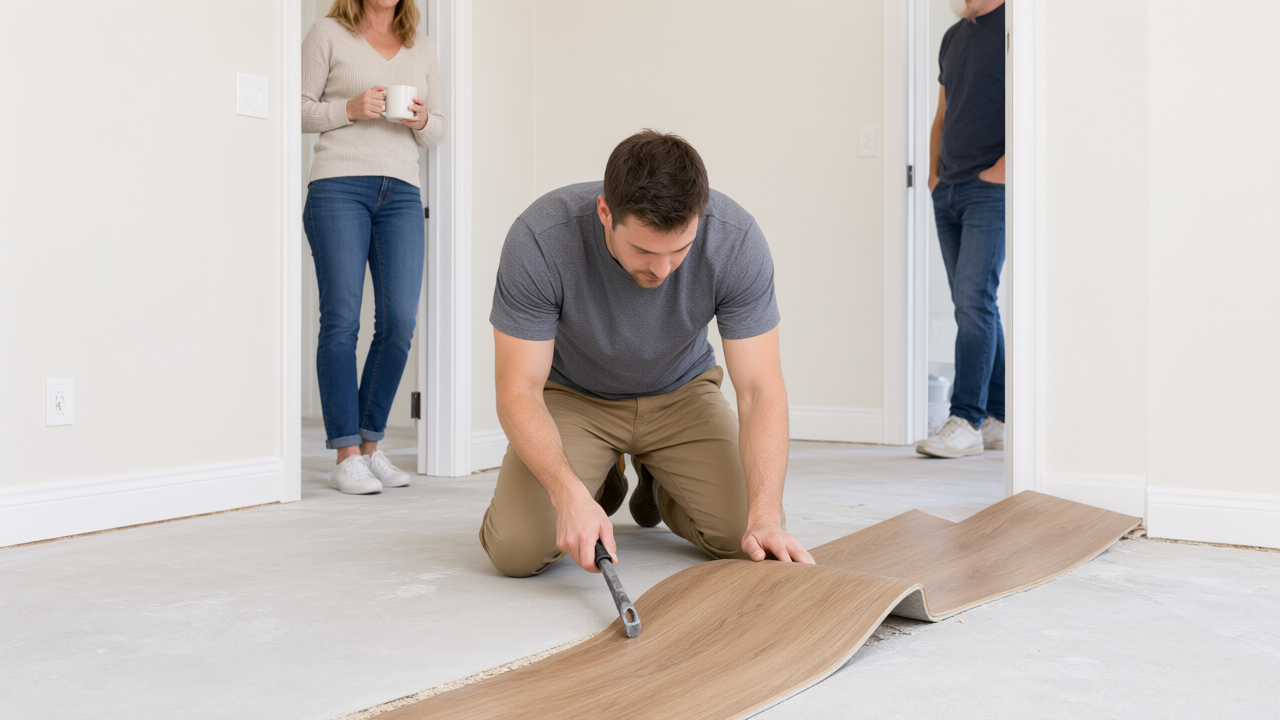
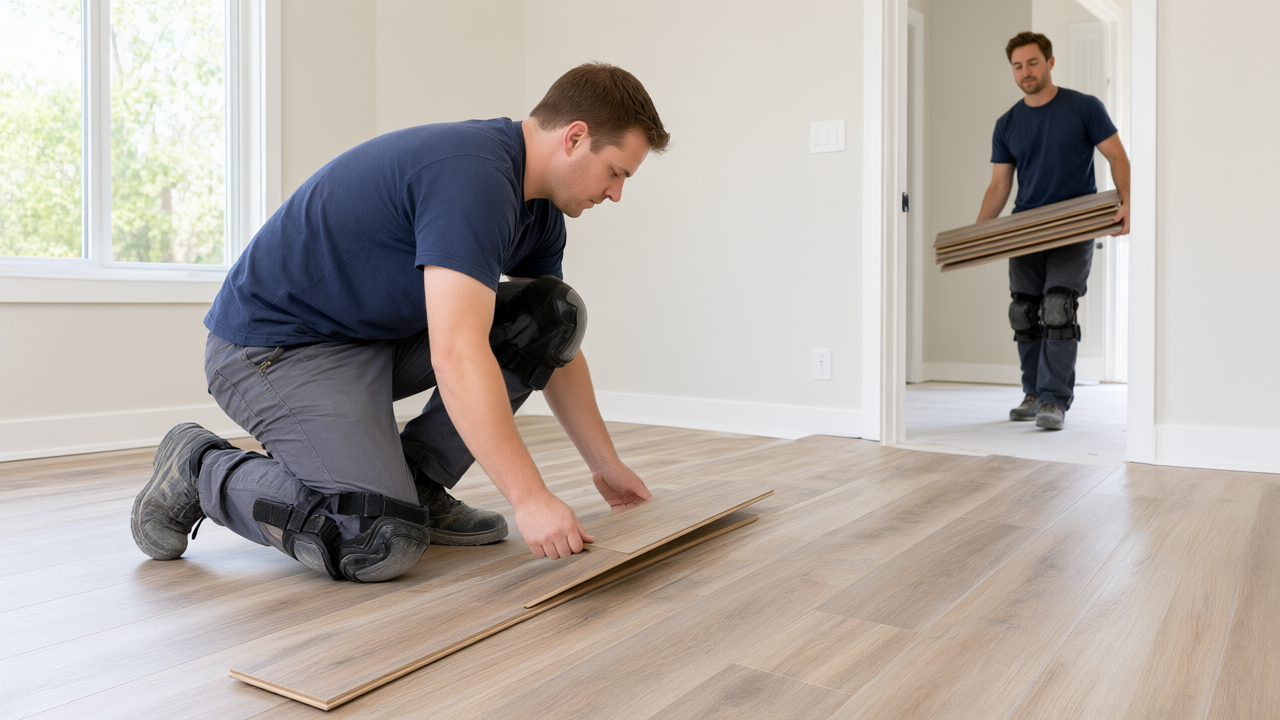
Most flooring problems that show up in February were installed in December. That's the dirty secret of winter Flooring Installation in Cary, IL. Laminate and vinyl planks get delivered on a 15-degree morning, carried into a house with the thermostat set at 68, and nailed down before the material has any idea what room temperature feels like. Three weeks later the seams open up, the planks cup at the edges, and the homeowner is calling someone to figure out what went wrong. The material wasn't defective. The installation schedule was. Here are five things that separate a winter floor that lasts 20 years from one that starts failing before the snow melts.
Why Winter Flooring Installation Is Different in Cary, IL
Cary sits in McHenry County, which means January lows that regularly hit minus 10 to minus 15 degrees Fahrenheit, and a frost depth that runs about 42 inches in this part of northern Illinois. Your house is sitting on ground that is frozen solid for four months. That matters for flooring because the slab and the subfloor move differently in winter than they do in June. Concrete slabs shrink slightly in cold weather, wood subfloors dry out from forced-air heat running constantly, and the gap between the two widens.
Then there's the indoor side. A Cary home in January with the furnace running is typically sitting at 20 to 30 percent relative humidity. In July, that same house runs 50 to 60 percent. That swing is brutal on flooring materials that absorb and release moisture. Laminate is basically a wood composite core, so it expands and contracts with humidity. Vinyl plank is more stable, but the cheap stuff with a thin core still moves enough to pop seams if it's installed tight against a wall.
This is why the calendar matters more than most homeowners realize. A flooring installation in Cary that happens in October or November has time to settle before the dry indoor air of deep winter hits it. A floor installed in the middle of January needs to be handled differently from day one. Neither is impossible. Both require the installer to actually think about the season instead of running the same playbook they use in May.
Acclimating Laminate and Vinyl Flooring in Cold Cary Homes
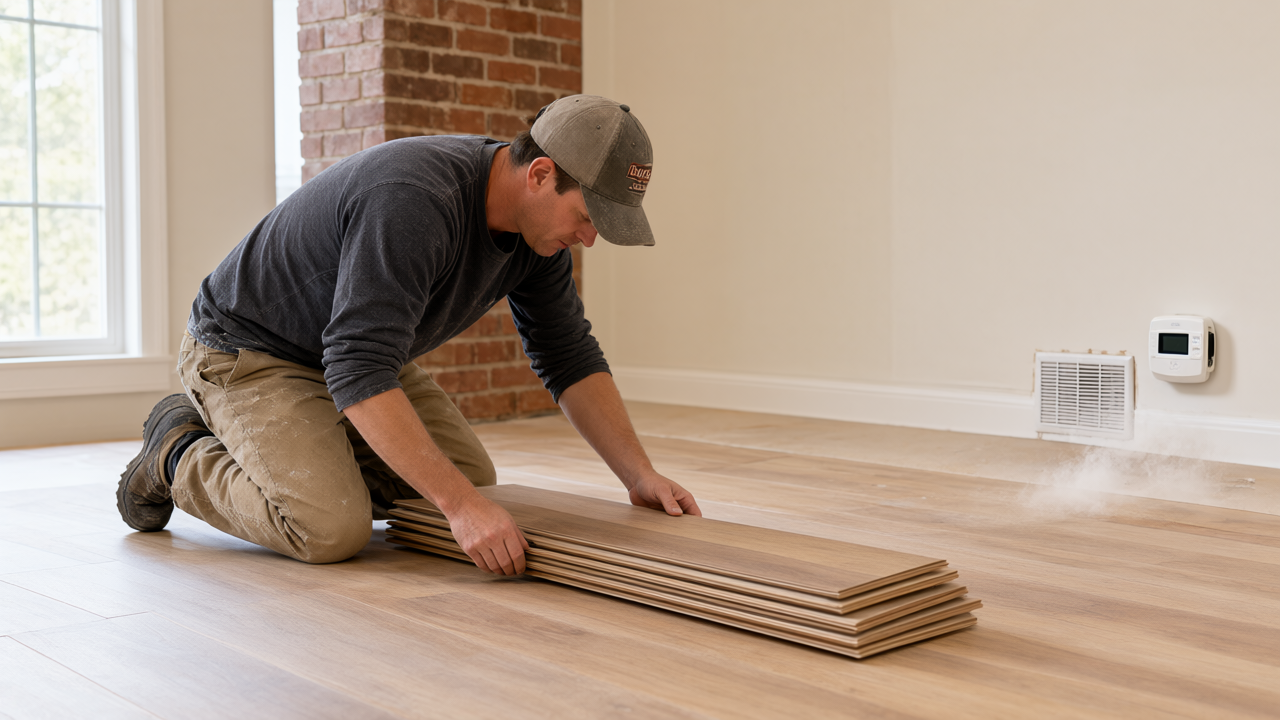
Acclimation is the step homeowners skip and installers rush. It is also the number one reason winter floor installations fail. The rule of thumb for laminate in a northern Illinois winter is 48 to 72 hours of acclimation inside the home, with boxes laid flat and stacked no more than three high so air circulates around them. Vinyl plank needs less time, usually 24 to 48 hours, but it still needs to sit in the room where it will be installed, not in a cold garage or an unheated mudroom.
Here is the part most people get wrong. Acclimation does not mean leaving the boxes in the truck overnight and bringing them in the morning of the install. That is not acclimation. That is a countdown to a callback. The material needs to reach the temperature and humidity of the room it will live in. In a Cary home in January, that means the thermostat stays at its normal setting, ideally 65 to 70 degrees, for the full acclimation window. If you are running the heat lower than usual to save money, the flooring will acclimate to that lower temperature and then expand when you turn the heat back up.
A practical checklist for Cary homeowners before installation day:
- Bring the flooring inside 48 to 72 hours early and stack boxes flat in the installation room, not the garage.
- Keep the thermostat steady at 65 to 70 degrees for the entire acclimation period. No vacation setbacks.
- Open the boxes the night before so the planks can breathe and adjust to the room.
- Check the moisture content of your subfloor if it is wood. Anything above 12 percent needs to dry before flooring goes down.
- Do not store material on a cold concrete slab in the basement. Put down a pallet or a couple of scrap 2x4s.
If an installer shows up and starts laying planks the same day the material was delivered in freezing weather, that is a red flag. Ask them directly how long the material has been acclimating. A good answer includes a number of hours and a room temperature. A bad answer is something vague about it being fine.
Managing Indoor Humidity for a Trouble-Free Winter Install
Humidity is the invisible variable in every winter flooring job. The target for a laminate or vinyl installation in a Cary home is 35 to 55 percent relative humidity, measured in the room where the flooring is going down. Below 35 percent, laminate planks shrink and the seams open up. Above 55 percent, they swell and the floor can buckle at the edges. In January, most homes in this area are running closer to 20 percent, which is why a humidifier is not a luxury during a winter install. It is a tool.
A whole-house humidifier tied to your furnace is the cleanest solution, and it typically costs $400 to $800 installed in the Cary area. If that is not in the budget, a couple of portable room humidifiers running in the installation area will do the job. You want to see a hygrometer, which is a $15 device you can buy at any hardware store, sitting between 35 and 55. Check it morning and night during the acclimation window and for the first week after installation.
There is also a moisture barrier question that comes up constantly with basement flooring. If you are installing laminate or vinyl over a concrete slab in a finished basement, you need a vapor barrier underneath, period. In northern Illinois, slab moisture is real even in winter. Burns Carpentry handles Basement Finishing and flooring installation across Cary and the surrounding McHenry County area, and the moisture control conversation happens before a single plank gets laid. Skipping the barrier to save $80 on a roll of 6-mil polyethylene is how you end up with a floor that smells musty by spring.
Cold weather does not ruin floors. Cold weather plus a rushed schedule ruins floors.
Scheduling and Site Prep: What Cary Homeowners Should Do Before Installers Arrive
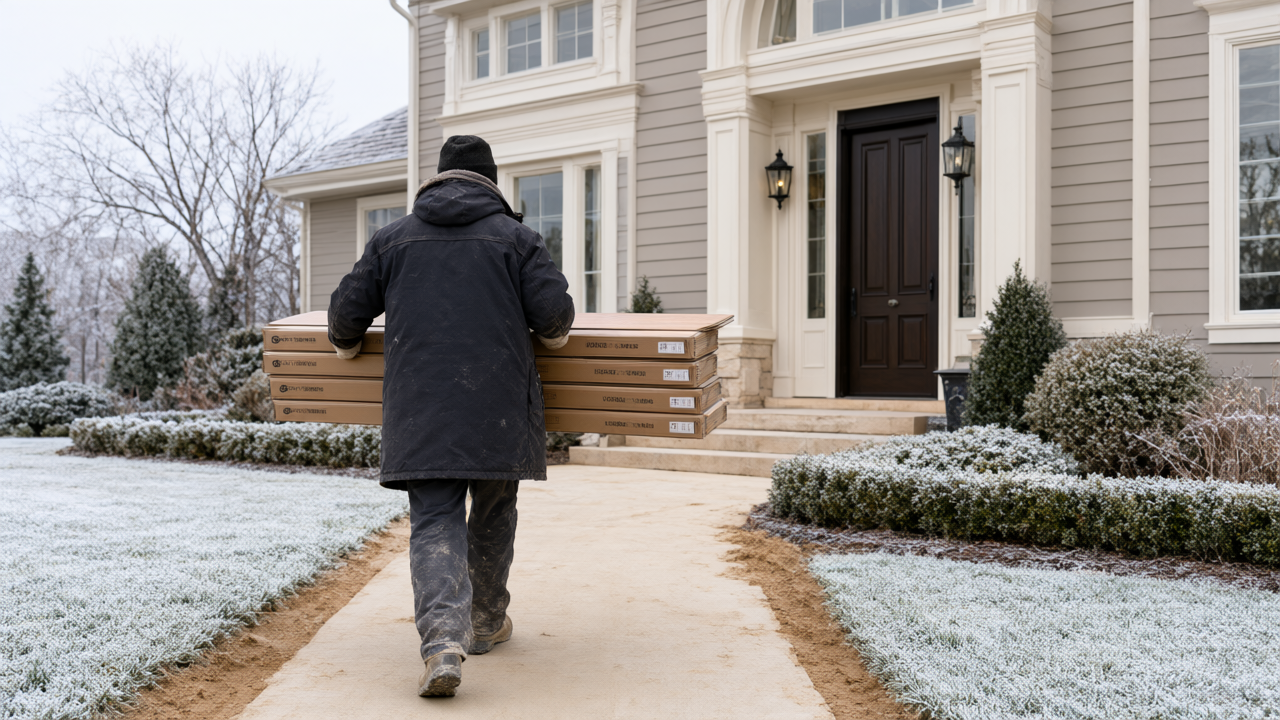
The best winter installations are the ones that were scheduled with the season in mind. In Cary, the smart window for a winter flooring project runs from late October through mid-December, or after the worst of the cold breaks in late February. The two weeks on either side of Christmas are the busiest and the most likely to have scheduling problems. If you can wait until after the first week of January to start, you get better installer availability and less holiday disruption.
Before the crew arrives, do these things:
- Clear the room completely. Furniture, area rugs, wall art, curtains, everything. Installers can move a couch, but they bill for it and it slows the job.
- Remove old flooring if you are comfortable doing it. Pulling up carpet and tack strips is a two-hour job for most homeowners and saves $200 to $400 in labor. Leave the adhesive and underlayment for the pros.
- Plan for your home to be disrupted for 2 to 5 days. That is the typical window for a standard flooring installation in Cary, according to Burns Carpentry's own project timelines. Larger jobs with multiple rooms run longer.
- Set up a staging area near the installation room for tools and material. A garage or a hallway works. The crew will need space to cut and stack.
- Ask about the permit situation. Most flooring installs in Cary do not require a permit, but basement finishing that includes flooring often does. Burns Carpentry handles the permit process with the Cary municipal offices when one is needed.
One insider tip: ask the installer what they plan to do about the transition strips at doorways. In winter, when the subfloor is dry and the new flooring is still settling, transition strips can end up slightly proud or slightly recessed. A good installer will account for that. A rushed one will nail them down and move on.
Post-Installation Care: Protecting New Floors Through the Rest of Winter
The first 30 days after installation are the most important. Your new floor is still adjusting to the indoor environment, and the salt and grit tracked in from Cary's winter streets will do more damage in three months than normal foot traffic does in three years. Rock salt is the enemy. It scratches laminate and vinyl, and the residue is abrasive enough to dull a finish over a single season.
Put mats at every exterior door. A coarse outdoor mat plus an absorbent indoor mat catches most of the grit before it hits the flooring. In the entryway, a waterproof tray for wet boots costs $25 and saves the finish. Sweep or vacuum at least every other day during the winter months, and use a microfiber mop with a pH-neutral cleaner once a week. Skip the vinegar and water mix that circulates on social media. Vinegar is acidic and will dull a laminate wear layer over time.
Watch for these warning signs in the first month:
- Gaps wider than 1/8 inch between planks usually mean the indoor humidity has dropped too low. Add moisture.
- Cupping or crowning at the seams points to moisture from below or from above. Check for leaks and check the vapor barrier.
- Squeaks or soft spots after installation mean the subfloor was not prepped properly. Call the installer back inside the warranty window.
Burns Carpentry guarantees workmanship for two full years from project completion, which is longer than most flooring contractors in the area offer. If something moves or fails in that window, that guarantee is what you are paying for. Use it. A reputable installer would rather come back and fix a small issue in month two than have you live with a problem for a decade.
One more honest note. If you are installing a small floating vinyl floor in a single powder room, you probably do not need a professional. That is a weekend project for a confident DIYer with a utility knife and a straightedge. Where it makes sense to bring in a pro is anything over 300 square feet, anything going over concrete, anything in a basement, and anything where the subfloor needs leveling. Those are the jobs where a $600 mistake in material turns into a $3,000 mistake in rework.
Frequently Asked Questions
How much does flooring installation cost in Cary, IL?
For laminate, most Cary homeowners pay $3 to $7 per square foot installed, including material and labor. Vinyl plank runs $4 to $9 per square foot installed depending on the thickness and wear layer. A standard 400 square foot room typically lands between $1,600 and $3,600 total. Basement installations cost more because of moisture barriers and subfloor prep.
Can you install flooring in winter in Illinois?
Yes, and it is done all the time. The catch is acclimation and humidity control. The material needs 48 to 72 hours inside the home at normal room temperature, and the indoor humidity needs to stay between 35 and 55 percent during and after installation. Skip either step and the floor will likely fail within the first season.
How long does a flooring installation take in a Cary home?
A typical project takes 2 to 5 days, depending on square footage and whether old flooring needs to be removed. A single room can be done in a day. A whole first floor with stair nosing and transitions usually runs four to five days. Your home stays usable throughout, though the installation area will be off limits.
Do I need a permit to install flooring in Cary, IL?
Standard flooring replacement usually does not require a permit. If the flooring is part of a larger basement finishing or remodeling project, a permit is typically required. Burns Carpentry manages the permit application with the Cary municipal offices so you do not have to deal with the paperwork.
If your Cary home is due for new flooring and you want it done before the deep freeze sets in, Burns Carpentry handles laminate and vinyl installation across Cary, Elgin, Palatine, and the surrounding McHenry County area. They will tell you straight whether your project needs a pro or whether it is a weekend DIY job. Call for a free estimate and get it on the schedule before the January rush hits.