Here's the number that surprises most homeowners in Cary: by the time water stains show up on your ceiling or the edges of your flooring start to curl, the subfloor beneath has usually been wet for 48 to 72 hours. That's the window when mold colonizes, when particleboard underlayment turns to mush, and when a $2,000 repair quietly becomes a $12,000 Flooring Installation after water damage. The good news is that a lot of Cary floors can still be saved if you know what you're looking at. The bad news is that most of the advice online was written for Arizona.
How to Tell If Your Cary, IL Flooring Is Salvageable After Water Damage
Cary sits in McHenry County, which means our water problems look different from the rest of the country. We get roughly 36 inches of rain and 38 inches of snow in a typical year, our frost depth runs about 42 inches, and a huge share of the housing stock was built between 1975 and 2000 with slab on grade construction or shallow crawlspaces. That combination means water doesn't just come from a burst pipe. It comes up through the slab during a February thaw, seeps in at the sill plate after an ice dam, and backs up through floor drains when the Fox River watershed gets a three inch rain in six hours.
Before you call anyone, do this yourself. It takes twenty minutes and it tells you whether you're looking at a repair or a replacement.
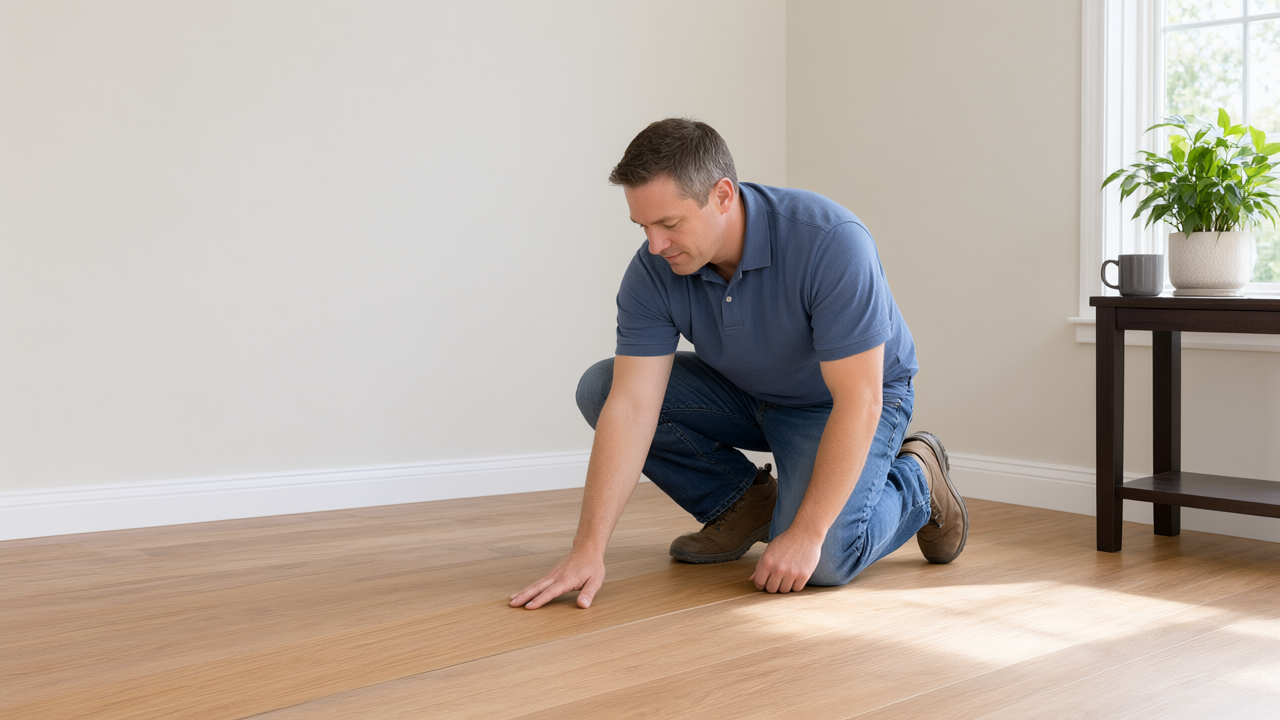
- Press a dry paper towel against the floor at the wettest point. If it wicks up water, the material is still saturated and you need to stop and dry before anything else.
- Look for cupping and crowning. Cupping is when the edges of each plank sit higher than the center, like a shallow bowl. Crowning is the opposite. Cupping means moisture came from below. Crowning usually means moisture sat on top and the top surface swelled.
- Check for a musty smell within 24 hours. That smell is microbial growth, not just dampness. If you smell it, assume mold is already present and plan for testing.
- Test a plank you can sacrifice. Pull up one board in a closet or behind the fridge. If the subfloor underneath crumbles in your hand, it's particleboard or OSB that has failed and the whole area comes up. If it's plywood and it holds together, you may be able to dry it in place.
What's usually salvageable: ceramic and porcelain tile (the tile itself survives almost anything, it's the grout and the underlayment that fail), sheet vinyl with a glued seam, and solid hardwood if it's dried within about 48 hours with professional air movers and dehumidifiers. What's almost never salvageable: laminate, engineered hardwood with an MDF or HDF core, and any floating floor. Laminate swells at the seams and never comes back. We've watched homeowners spend $800 trying to save a $1,400 laminate floor and end up replacing it anyway six weeks later when the edges lifted.
One honest note: if you have a small spill, a leaky dishwasher line, or a toilet overflow that you caught within an hour, you probably don't need a professional. Towels, a fan, and a dehumidifier running for 48 hours will handle it. Call someone when the water came from below, when the affected area is larger than about 10 square feet, or when you can't identify where it came from.

Flooring Options That Handle Moisture Best in Cary, IL Homes (2026)
Once you've accepted that the old floor is coming up, the real question is what goes down. Cary basements and lower levels are the toughest environment in the house, and the material that looks best in a showroom is often the worst choice for a below grade slab.
Luxury vinyl plank (LVP) is the workhorse. Modern rigid core LVP is 100% waterproof, handles slab moisture vapor up to about 5 pounds per 1,000 square feet per 24 hours with the right underlayment, and runs $4 to $8 per square foot installed in the Cary area. It's the right call for basements, laundry rooms, and any space that has flooded once, because it will survive the next one. Porcelain tile is the bulletproof option at $9 to $18 per square foot installed depending on tile size and pattern. It's cold underfoot, which matters in a Cary January, but it will outlive the house.
Where homeowners get talked into the wrong thing: engineered hardwood in a basement. It's beautiful, it's expensive, and its plywood core is a sponge. Same story with laminate, despite what the box says about water resistance. If your heart is set on a wood look below grade, Burns Carpentry installs Laminate Flooring and Vinyl Flooring with moisture barriers and vapor retarders specified for the specific slab, and the crew will tell you straight up when a product isn't rated for your situation rather than selling it to you anyway.
Above grade, you have more freedom. Solid hardwood, engineered, or LVP all work on a main floor over a conditioned crawlspace or a second floor. The variable is humidity swing. Cary homes see indoor relative humidity drop to 20% in January and climb past 60% in July, which is why a whole home humidifier set between 35% and 45% is the single best thing you can do for any wood floor. Skip it and you'll be looking at gaps in winter and cupping in summer, no matter how good the installation was.
Insurance, Permits & Mold Checks: What Cary Homeowners Must Handle First
This is the part people skip, and it's the part that costs them money.
Document before you demo. Take photos and video of the standing water, the damaged flooring, and any ruined belongings before a single plank comes up. Your adjuster needs to see the loss, not the cleanup. Keep a written log of dates, times, and who said what. Most homeowner policies will cover sudden and accidental discharge, like a supply line failure, but many exclude gradual seepage and repeated backup. If your policy has a separate backup of sewer and drain endorsement, that's the one that covers the floor drain scenario, and it's usually a $50 to $100 annual add on that people decline at signing and regret later.
Get a mold assessment if the water sat more than 48 hours or if you can smell it. A licensed Illinois mold inspector typically charges $300 to $600 for a proper assessment with air sampling and a written report. That report is what your insurance company wants, and it's what protects you if you sell the house. Remediation, if needed, runs $1,500 to $6,000 for a typical basement. Do not install new flooring over a mold problem. You will pay for it twice.
Permits depend on scope. A straight like for like floor replacement in Cary generally does not require a building permit. But if the work involves structural repair to joists, replacing a subfloor over a crawlspace, adding a floor drain, or finishing a previously unfinished basement, you're into permit territory with the Village of Cary, and you'll want inspections at the framing and final stages. Burns Carpentry handles the permit application with the Cary municipal offices as part of the project, so you're not the one standing in line at Village Hall trying to explain what a vapor retarder is.
Ask any contractor these three questions before you sign anything: Are you licensed and insured for work in McHenry County? Who pulls the permit, you or me? And what happens if mold is found after the floor comes up? A straight answer to the third one separates the pros from the people who will disappear when the job gets complicated.

Step-by-Step Reinstallation Timeline for Water-Damaged Cary, IL Floors
Here's what a realistic schedule looks like for a 400 square foot basement floor replacement in Cary, assuming the space is dried and remediated first. Total elapsed time is usually two to three weeks, with the actual installation taking two to five days.
- Days 1 to 3: Dry out. Professional air movers and dehumidifiers run continuously. This is non negotiable and cannot be rushed. Moisture readings need to hit acceptable levels before anything new goes down.
- Day 3 to 5: Assessment and material selection. Confirm subfloor condition, choose your flooring, and order material. LVP and tile are usually in stock. Specialty hardwood can take two to four weeks.
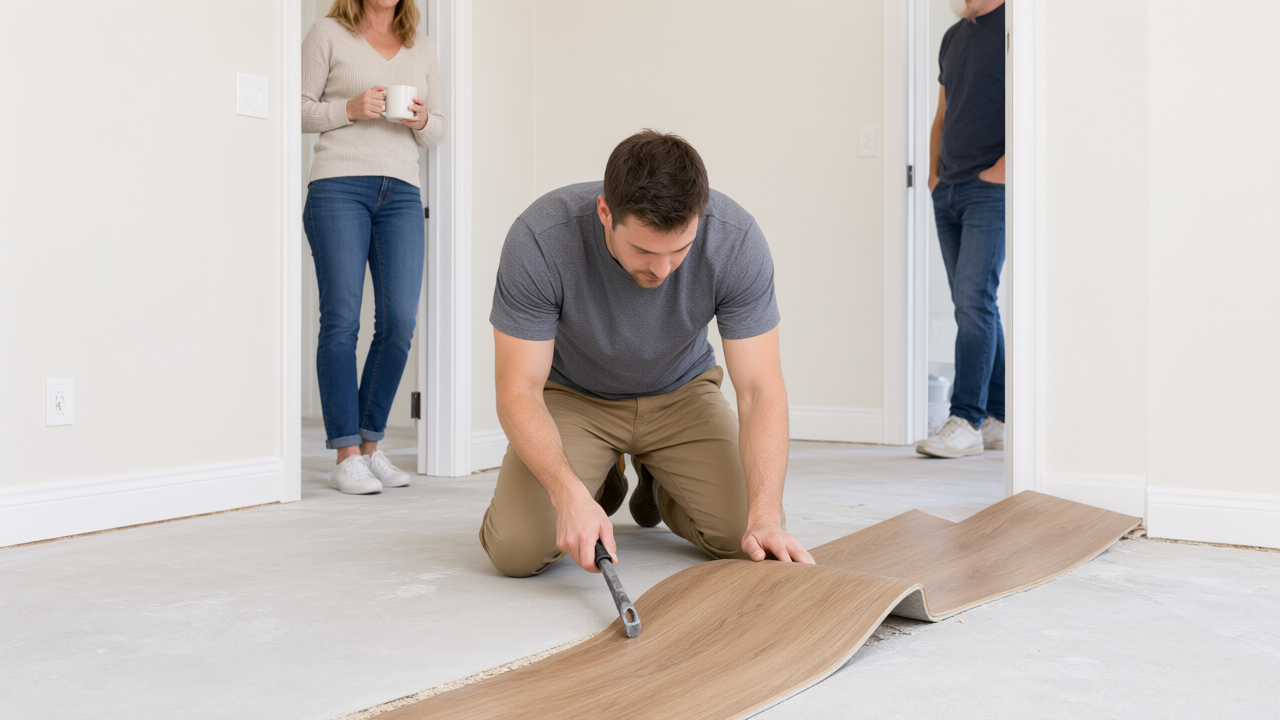
- Day 5 to 7: Demolition and disposal. Old flooring comes up, failed underlayment comes out, and the crew checks the slab or subfloor for cracks, efflorescence, and residual moisture.
- Day 7 to 9: Subfloor prep. This is the step cheap installers skip. Self leveling compound, patching, and a moisture barrier or vapor retarder go down. On a Cary slab, this is where the job is won or lost.
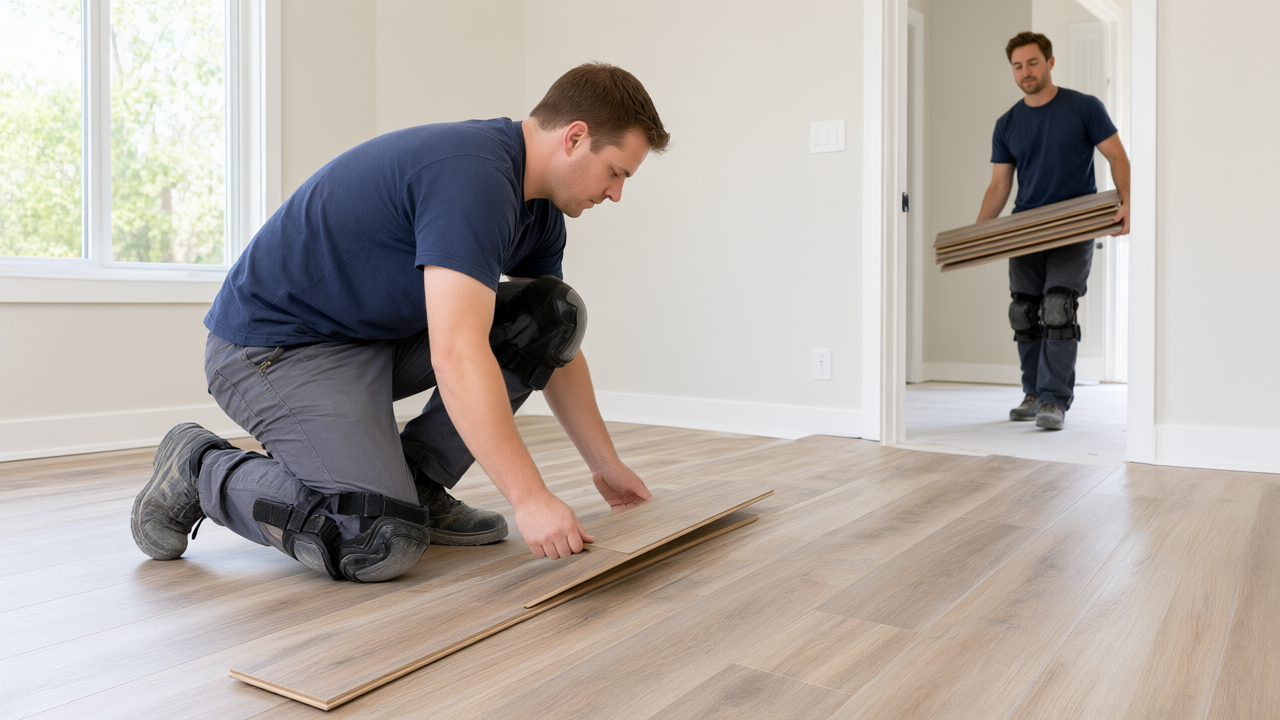
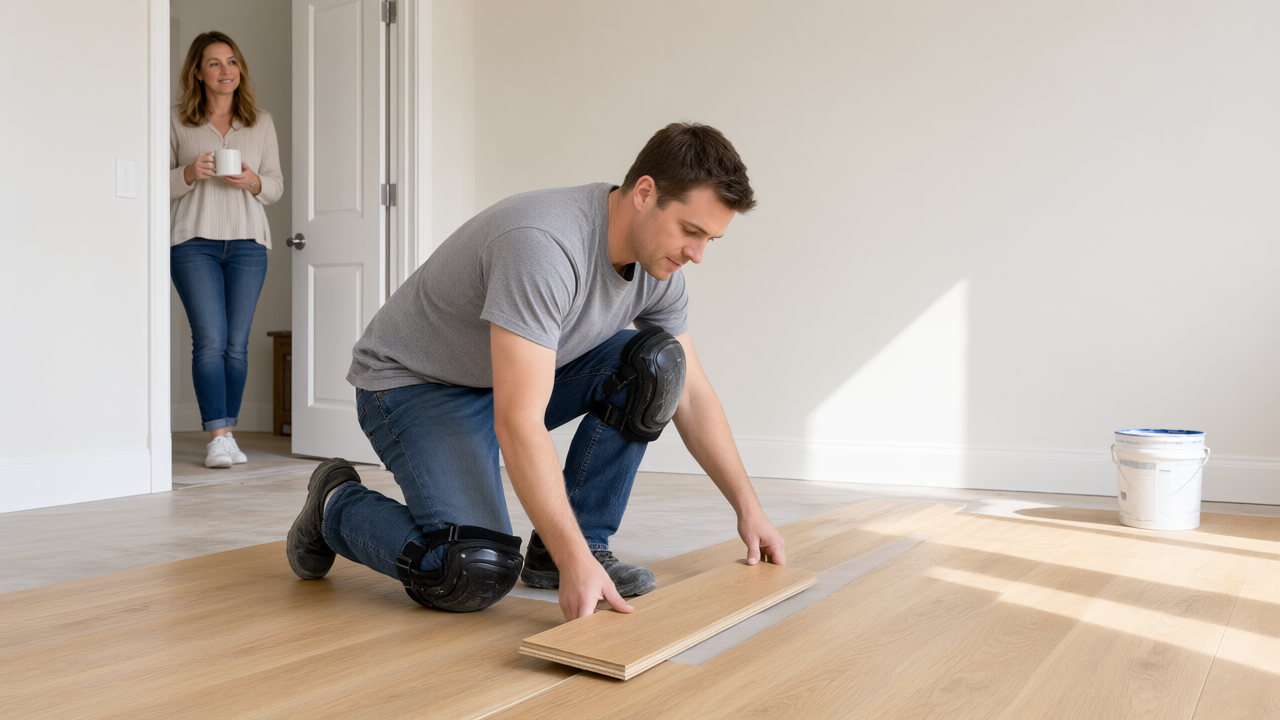
- Day 9 to 13: Installation. LVP and laminate go fast, often 300 to 500 square feet per day. Tile takes longer because of thinset cure time and grouting.
- Day 13 to 15: Trim, transitions, and punch list. Baseboards, thresholds, and a final walkthrough.
During installation, your home stays usable. Furniture gets moved to one side of the room and shifted as the crew works, and Burns Carpentry schedules the work to keep at least one path and one bathroom accessible at all times. If you have pets or small kids, plan for the loudest days to be the demolition and the subfloor prep.
Preventing the Next Flood: Subfloor & Drainage Upgrades for Cary Homes
Replacing the floor without fixing the reason it flooded is the most expensive mistake in this entire process. Here's where the money actually goes.
- Sump pump with battery backup: $600 to $1,500 installed. If you have a basement in Cary and no battery backup, this is the first check you write. Power outages during summer storms are exactly when you need it.
- Interior drain tile and vapor barrier: $3,000 to $8,000 for a typical basement. It's a big number, but it's less than one more flood.
- Slab moisture testing before any new floor: $150 to $400. Always do this. A calcium chloride test tells you the actual vapor emission rate so you can spec the right barrier instead of guessing.
- Grading and downspout extensions: $200 to $800. Water should leave your foundation, not sit against it. Downspouts should discharge at least 6 feet from the wall.
- Whole home humidifier: $500 to $1,200 installed. Protects every wood floor in the house and pays for itself the first winter.
If you're already finishing or remodeling a basement, the smart move is to do the moisture work and the flooring as one project. Burns Carpentry handles Basement Finishing, Basement Remodeling, and flooring installation, which means the vapor barrier, the subfloor, and the finished floor all get specified together instead of three different contractors blaming each other when something goes wrong.
Frequently Asked Questions
How much does flooring installation cost after water damage in Cary, IL?
For a typical 400 square foot basement, expect $2,500 to $6,000 for LVP installed, or $4,500 to $9,000 for porcelain tile, plus $1,500 to $6,000 if mold remediation is needed. Subfloor replacement, if the OSB has failed, adds roughly $2 to $5 per square foot. Insurance often covers a portion of this if the loss was sudden and accidental.
Can I install new flooring over a subfloor that got wet?
Only if it dried properly and passed a moisture test. Plywood that dried within 48 hours is usually fine. Particleboard and OSB that swelled, crumbled, or stayed wet for days needs to come out. Installing over compromised subfloor is the number one cause of callbacks, because the new floor telegraphs every soft spot and fails within a year.
How long does it take to replace a water damaged floor?
Plan on two to three weeks from the day you call to the day the trim is back on. Drying takes three days minimum, material lead time is three to five days for stock products, and installation runs two to five days depending on square footage and material. Tile adds time for cure and grout.
Do I need a permit to replace flooring in Cary, IL?
Straight replacement of finished flooring generally does not require a permit. Structural repairs, new subfloor over a crawlspace, floor drain additions, and basement finishing do. Burns Carpentry manages the permit process with the Village of Cary when the scope requires it, so you're not guessing.
If your Cary home has water damaged flooring and you're past the point where a fan and a towel will fix it, Burns Carpentry handles flooring installation, laminate flooring, vinyl flooring, and the subfloor prep that makes all of it last. They'll tell you honestly whether your existing floor can be saved, and if it can't, they'll walk you through the moisture work first so you're not back here in two years. Call for a free estimate and get a straight answer before you spend a dime.