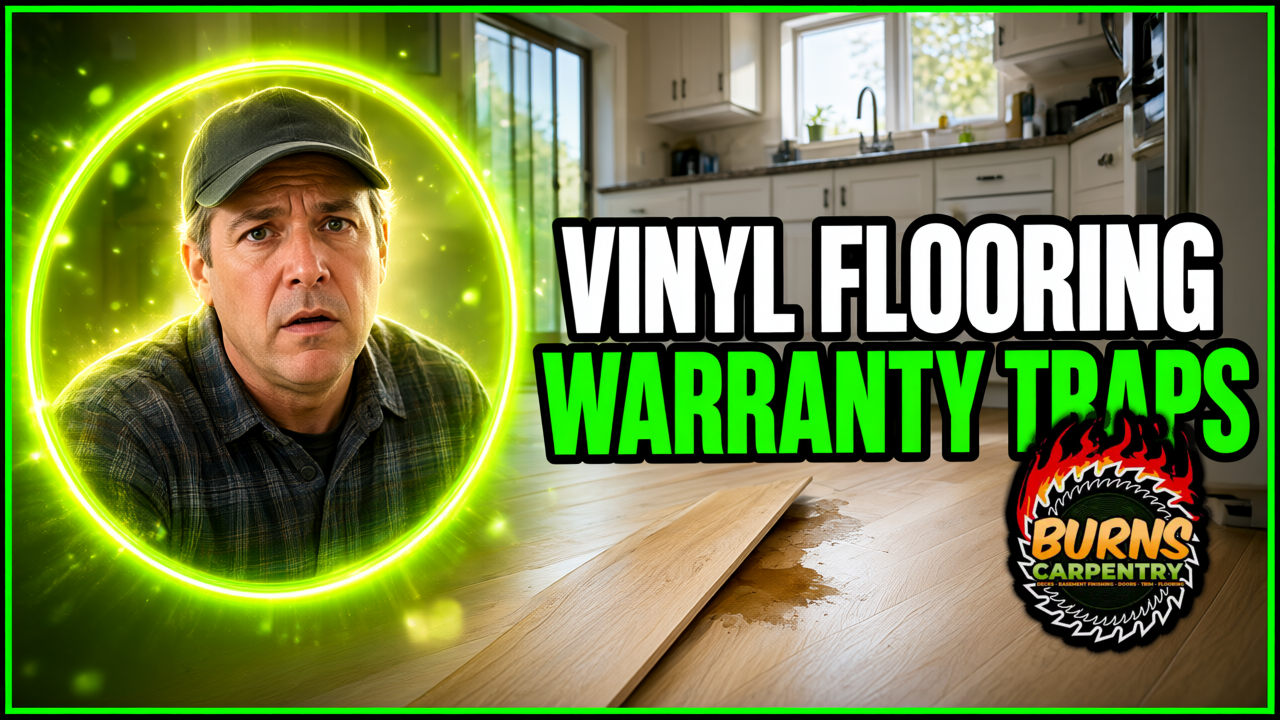
The average luxury vinyl plank floor in a Cary home runs $2,800 to $6,500 for materials and installation. The warranty attached to that purchase usually promises 20 years to lifetime coverage against wear, fading, and water damage. Then a pipe under the kitchen sink lets go, or a dog bowls through the laundry room, or the sliding door bakes the planks near it into a warped mess, and the homeowner learns the hard way that most of what they thought was covered falls into the exclusion column. Vinyl Flooring in Cary, IL is a smart choice for a lot of reasons, but the warranty is only as good as the fine print and the crew that installed it. Here are five protections that genuinely hold up, and the traps that void them.
What Vinyl Flooring Warranties Actually Cover (And What They Don't)
Manufacturers split their coverage into two buckets: the wear layer warranty and the structural warranty. The wear layer warranty protects the clear topcoat from wearing through under normal foot traffic. The structural warranty covers manufacturing defects like delamination, where the plank layers separate, or a locked joint that fails when nobody abused it. Those are real protections, and they last. A quality plank from Shaw, Mohawk, or Mannington commonly carries 15 to 25 years on the wear layer for residential use, sometimes lifetime on premium lines.
What they don't cover is almost everything else. Vinyl warranties are written by lawyers for manufacturers, and the exclusion list is longer than the coverage list. Damage from standing water, pet accidents, appliance leaks, improper installation, subfloor movement, heat, sunlight, and cleaning products all sit firmly outside the promise. The warranty covers the floor failing on its own. It does not cover the floor failing because something happened to it.
There's a second layer of coverage most homeowners forget: workmanship. Burns Carpentry guarantees installation work for two full years from project completion. That matters because roughly 40% of vinyl flooring failures trace back to installation, not the plank itself, and a manufacturer will deny a claim in a heartbeat if the installer skipped the moisture test or laid planks over a dirty, uneven subfloor.

5 Warranty Exclusions Cary Homeowners Miss: Water, Sun, Pets, Installation and Subfloor
Here's where the money gets lost. These five exclusions account for the overwhelming majority of denied claims, and every one of them is avoidable with the right installation and a little knowledge.
1. Standing Water and Appliance Leaks
Waterproof vinyl is a marketing phrase, not a warranty promise. The plank itself won't swell like laminate, but water that sits under the floor or seeps into the seams can lift adhesive, warp the locking joints, and trap moisture against the subfloor. A dishwasher supply line that drips for three weeks or a basement that takes on an inch during a July storm is not a covered event. Most warranties explicitly exclude any damage from standing water or flooding. If a pipe bursts, that's a homeowner insurance claim, not a flooring claim.
What you can control: run a moisture test on the slab or subfloor before installation. Cary homes with below grade basements and older slabs are prone to elevated moisture readings, and a good crew will test with a meter and record the numbers. A reading above 5 to 6 pounds per 1,000 square feet on a concrete slab means a vapor barrier or moisture mitigation is required before any plank goes down.
2. Sun Fading and Heat Damage
Illinois summers deliver real UV exposure through south and west facing windows, and vinyl is not immune. Manufacturers will cover fading under normal conditions, but a floor with a sun baked rectangle near a sliding door is often classified as excessive heat exposure, which voids the claim. The fix is cheap: blinds, UV film on the glass, or a runner in the hot spot. Keep the receipt for the film. It's evidence you took reasonable steps.
3. Pet Damage
Dog nails, cat accidents, and chewed corners are almost universally excluded. A few premium brands now offer limited pet coverage on scratch resistance, but it's narrow and usually requires the pet claim to be reported within a set window. If you have a large dog, ask the specific question: does this line cover pet scratches, and what's the proof requirement? Get the answer in writing before you buy.
4. Improper Installation
This is the big one. Every manufacturer requires installation per their written guidelines. Skip the expansion gap at the wall, install over a subfloor with more than a 3/16 inch variance across 10 feet, or lay planks without acclimating them for 48 hours, and the warranty is void on the spot. A DIY install can look perfect for two years and then buckle at a doorway because the gap was too tight.
5. Subfloor Problems
Vinyl is thin and unforgiving. Every hump, dip, and nail head telegraphs through within a season. Manufacturers exclude damage caused by subfloor movement, deflection, or contamination. A proper install starts with prep: grinding high spots, filling low spots with patching compound, sweeping and vacuuming until the surface is clean. That prep is where cheap bids get cheap, and it's the first thing a warranty inspector looks at when a claim comes in.
How to File a Vinyl Flooring Warranty Claim in Cary, IL
Filing a claim is a paperwork exercise, and homeowners who keep records win far more often than those who don't. Here's the process that works.
- Document everything before you call. Photograph the damaged area with a ruler or coin in frame for scale. Note the date you first noticed it and the approximate square footage affected.
- Pull your paperwork. You need the original receipt, the product name and SKU, the installation date, and the warranty document. If a contractor installed it, get their invoice and license number.
- Contact the installer first. If the issue is within two years, call the crew that laid the floor. Burns Carpentry handles workmanship claims directly during the two year guarantee window.
- File with the manufacturer. Most brands have an online claim portal. Expect a response in 10 to 30 days, and expect an inspector to be scheduled. Keep the damaged planks in place until they've seen them.
- Keep a paper trail. Save every email, claim number, and inspection report. If the claim is denied, ask for the denial in writing with the specific exclusion cited. That's your leverage for an appeal.
One insider tip: claims move faster when the installer is on your side. A manufacturer that hears from a licensed, insured contractor with documented moisture readings and prep photos is far more likely to approve a replacement than one hearing from a homeowner alone.

Warranty Backed Installation: What to Ask Your Cary Carpentry Contractor
The warranty is only as strong as the crew behind the floor. When you're vetting a contractor for vinyl Flooring Installation in Cary, bring these questions and don't settle for vague answers.
- "Will you test and document subfloor moisture before installation?" If they say no, walk. This single step protects your claim.
- "What's your workmanship guarantee, and in writing?" Two years is a solid standard. One year is thin. Lifetime is marketing.
- "Do you acclimate the planks before laying them?" The answer should be yes, with a stated timeframe.
- "Will you handle the warranty claim if something fails?" A good contractor advocates for you. A bad one points at the manufacturer and disappears.
- "Are you licensed and insured for McHenry County?" Verify it. Uninsured installs void manufacturer coverage fast.
Burns Carpentry is fully licensed and insured for Cary and the surrounding Illinois areas, and the team handles the moisture testing, prep, and acclimation steps that keep warranties intact. For a homeowner comparing bids, the cheapest quote is usually the one that skips the prep and hands you a floor with no real coverage behind it.
And a candid note: if you're replacing a single damaged plank in a small closet, you probably don't need a contractor. A confident DIYer can handle that. Call a pro when the floor is failing across a room, when moisture is involved, or when the subfloor needs work.
Extending Your Vinyl Flooring's Life Beyond the Warranty Period
A 20 year warranty sounds generous until you realize most vinyl floors start showing real wear around year 12 to 15 if they're treated carelessly. The good news is that the habits that protect your warranty also stretch the floor well past it.
Keep the temperature inside the house stable. Illinois winters swing hard, and a Cary home that drops to 55 degrees while the family's away puts stress on the planks and the adhesive. Felt pads under every piece of furniture cost about $10 for a pack and prevent the scratches that void scratch coverage. Use a pH neutral cleaner, never a steam mop, and never a vinegar solution. Steam and acidic cleaners are two of the fastest ways to void a wear layer warranty.
Schedule a walkthrough about once a year. Check the seams near the dishwasher, the fridge, and the exterior doors. Catching a lifted edge in month three is a five minute fix. Catching it in year four is a plank replacement. That's the difference between a floor that outlives its warranty and one that becomes a claim.
Frequently Asked Questions
How long does a vinyl flooring warranty last?
Residential wear layer warranties typically run 15 to 25 years, with premium lines going to lifetime. Structural coverage is usually shorter, often 10 to 15 years. Workmanship coverage from the installer is separate and usually runs one to two years.
Does vinyl flooring warranty cover water damage?
No. Waterproof vinyl resists water on the surface, but standing water, appliance leaks, and flooding are excluded from virtually every manufacturer warranty. Those situations fall under homeowner insurance, not the flooring warranty.
What voids a vinyl flooring warranty?
Improper installation, subfloor moisture, standing water, pet damage, sun and heat damage, and using the wrong cleaning products are the most common voids. Missing documentation is the silent killer, since a claim without a receipt and install record is usually denied.
Is it worth hiring a professional for vinyl flooring installation in Cary?
For a full room or an entire floor, yes. Professional prep, moisture testing, and acclimation are what keep the warranty valid, and Burns Carpentry backs installation work for two years. For a single plank swap in a closet, a careful homeowner can handle it.
If you're in Cary or anywhere across McHenry County and you want a vinyl floor installed the way the warranty demands, Burns Carpentry handles the moisture testing, subfloor prep, and documentation that keep your coverage intact. Call them for a free estimate and ask the warranty questions before you sign anything. They'll tell you straight up what your floor needs and what it doesn't.