Here is the number that catches Cary homeowners off guard: Vinyl Flooring failures almost never start with the plank. They start underneath it. In a town built on the heavy clay soils of McHenry County, where summer humidity pushes 80 percent and winter brings freeze-thaw swings that move foundations, the subfloor is doing more work than most people realize. A $2,200 vinyl Flooring Installation in Cary, IL can look flawless on day one and start telegraphing every bump, dip, and moisture pocket within 18 months if the prep gets skipped. The fix is not complicated. It just has to happen before the first plank clicks into place.
Why Cary's Clay Soil and Humidity Make Subfloor Prep Non-Negotiable
Start with what is under the house. Much of Cary sits on glacially deposited clay, the kind that swells when wet and shrinks when dry. That movement transfers straight up through a foundation slab or a crawlspace beam system. A slab that was dead flat in 2019 can develop a 3/8 inch hump by 2026, and vinyl plank, especially the rigid core products most homeowners pick now, does not flex over humps. It rocks. It separates at the seams. Then the complaints start.
Humidity is the second half of the problem. Illinois sits in a climate where indoor relative humidity swings from roughly 25 percent in January to over 70 percent in July without mechanical control. Wood subfloors expand and contract across that range. Concrete slabs wick moisture from the clay below, and vinyl is a vapor barrier by design, so any moisture trapped under the plank has nowhere to go except into the adhesive or the locking joint. That is how you get a floor that cups, curls, or smells musty by the second summer.
This is why flooring installation in Cary is really a moisture and flatness job first, a pretty surface second. The 2026 IRC and manufacturer warranties both hinge on documented subfloor conditions. Skip the prep and you have voided your warranty before the boxes are even open.
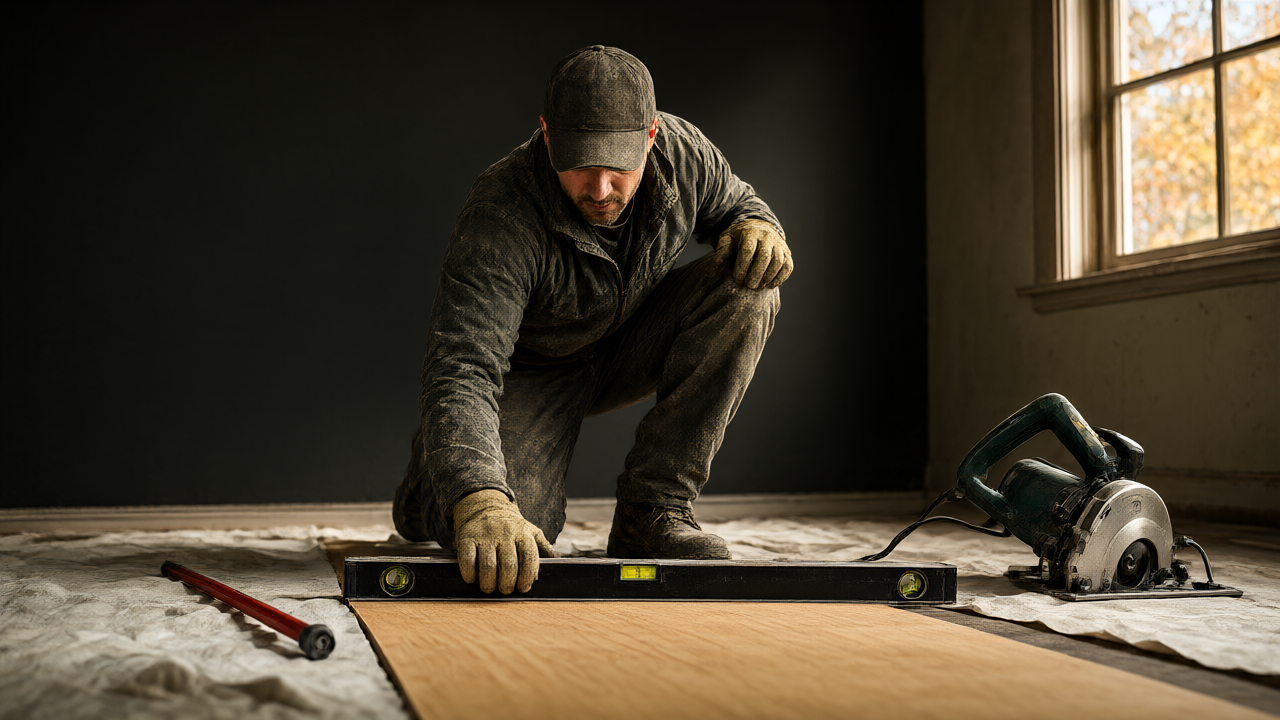
5 Subfloor Problems That Ruin Vinyl Flooring (and How to Spot Them)
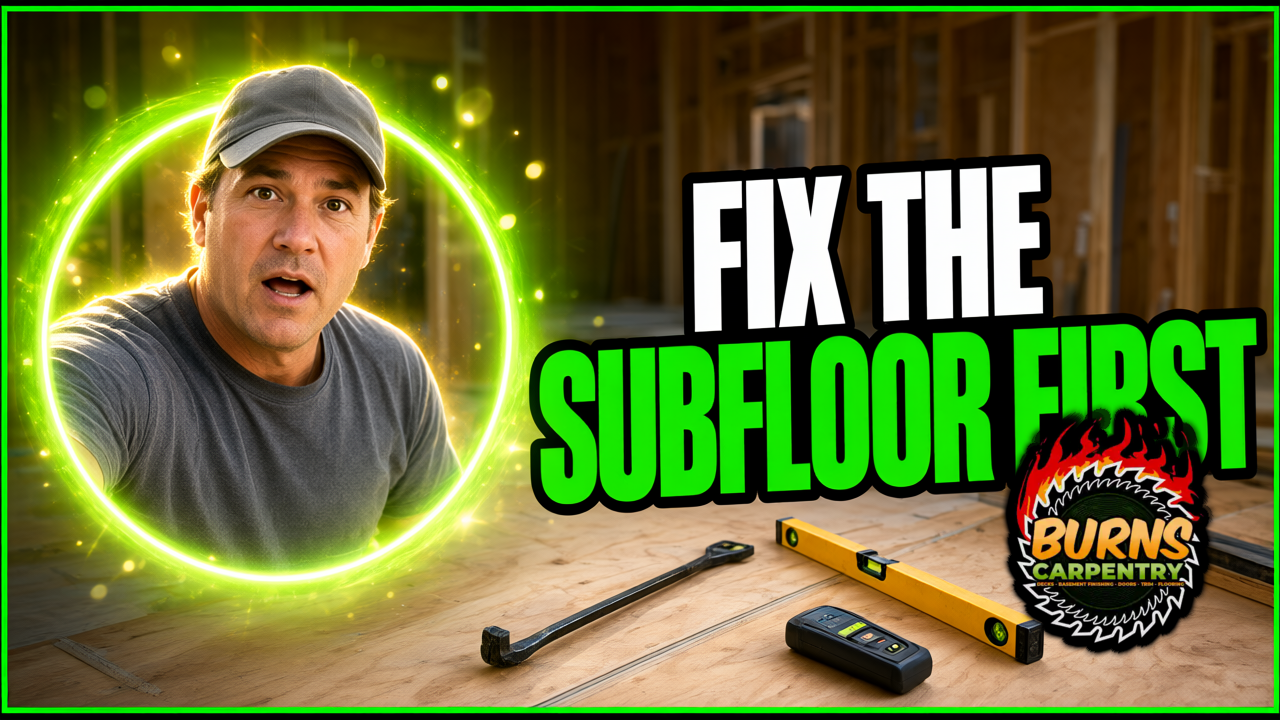
Walk any Cary home with a level, a moisture meter, and a flashlight, and you will find at least one of these five issues. Catch them early and the repair is cheap. Catch them after installation and you are paying twice.
- High spots and humps. Run an 8 foot straightedge across the floor in every direction. Any gap over 3/16 inch in 10 feet (the standard for most vinyl plank) needs grinding or planing. A 1/4 inch hump in the middle of a kitchen is common over a slab pour seam.
- Low spots and dips. Same straightedge, look for daylight under the middle. A dip deeper than 1/8 inch will let plank flex and crack the locking tabs. Self leveling compound fixes this, but only after the slab is clean and primed.
- Loose or squeaking wood panels. Walk the floor in socks. Every squeak is a fastener backing out or a panel rubbing a joist. Re screw every 6 to 8 inches and replace any panel with water staining or delamination.
- Concrete moisture. Tape a 2 foot square of plastic sheeting to the slab, seal the edges, and wait 24 hours. Condensation under the plastic means the slab is emitting moisture. A calcium chloride test will give you the actual pounds per 1,000 square feet per 24 hours, and most vinyl adhesives want that under 5 to 8.
- Cracks and control joints. Hairline cracks are usually cosmetic. Anything wider than 1/8 inch, or any active control joint, needs a crack isolation membrane or the vinyl will telegraph the crack line within a year.
Here is the honest part: if you have a small dip in a spare bedroom and you are laying a loose lay vinyl plank, you may not need to do anything. Most floating vinyl tolerates minor imperfections. The problems start when you glue down, when the room is large and open, or when the hump sits right where a chair rolls. Match the fix to the product and the room, not to a blanket rule.
Leveling Compounds vs. Plywood Overlays: Which Fix Fits Your Cary Home
Once you have identified the problem, you have two real repair paths, and the choice usually comes down to what is under the floor and how much height you can afford to lose.
Self leveling compound is a pourable cementitious mix that flows into dips and cures dead flat. It is the right call over concrete slabs and over plywood that is sound but uneven. Cost runs roughly $3 to $6 per square foot installed in the Cary area, and it adds only 1/8 to 1/2 inch of height. The catch: the substrate has to be clean, primed, and structurally sound. Pour leveler over a spongy subfloor and it cracks. It also will not fix a hump, only fill a valley.
Plywood overlay means screwing down a new layer of 1/4 to 1/2 inch plywood or underlayment panel over the existing subfloor, bridging the imperfections. This is the better fix for wood subfloors with squeaks, loose panels, or old vinyl and adhesive that would be a nightmare to scrape. Cost is typically $2 to $4.50 per square foot in materials and labor, and it adds height, which matters at doorways, toe kicks, and where the floor meets a dishwasher. In a Cary split level with a low ceiling in the finished basement, that half inch can mean trimming doors.
For most homes, the decision tree is simple. Concrete slab with dips? Self leveler. Wood subfloor with movement or old adhesive? Plywood overlay. Both problems? Fix the structure first, then level. Burns Carpentry's vinyl flooring team evaluates this on site before quoting, because the wrong choice here is the single most common reason a vinyl floor fails early.

Moisture Testing Concrete and Wood Subfloors Before Vinyl Goes Down
Moisture is the quiet killer, and it is the test most DIY installs skip. Here is the sequence that matters before any vinyl flooring goes down in a Cary home.
- Concrete: Run a calcium chloride test or an in situ relative humidity probe. Most vinyl manufacturers want the slab at or below 75 to 80 percent RH, or under 5 pounds per 1,000 square feet per 24 hours on the calcium chloride test. If the slab reads high, a moisture barrier or epoxy coating goes down first.
- Wood: Check the moisture content of the subfloor with a pin meter. It should be within 2 to 4 percent of the flooring material and ideally between 6 and 10 percent. In a Cary basement in October, wood can read 14 percent after a wet summer, and that number has to come down before installation.
- Crawlspace: If your home has one, look for standing water, efflorescence, or a vapor barrier that has failed. A crawlspace at 70 percent RH will keep the floor above it damp no matter how good the vinyl is.
- Grade and drainage: Check that exterior grading slopes away from the foundation at roughly 1 inch per foot. Poor drainage is a leading cause of slab moisture that no amount of leveler will fix.
If the moisture readings are borderline, the honest answer is to wait or to install a vapor barrier, not to push ahead and hope. A failed vinyl floor is a $3,000 to $6,000 tear out in most Cary homes, and the moisture problem will still be there underneath it.
What Subfloor Repairs Add to Your Vinyl Flooring Project Timeline and Budget
Most vinyl flooring installations in Cary take two to five days from start to finish. Subfloor prep adds to that, and it adds to the budget. Realistic numbers for 2026:
- Minor leveling or patching: $300 to $900, adds half a day
- Full self leveling over a slab: $1,200 to $3,000 for a typical 400 square foot room, adds one to two days of cure time
- Plywood overlay: $800 to $2,200 for the same area, adds one to two days
- Moisture mitigation (barrier or epoxy): $500 to $1,800, adds one day
- Structural repair (rotted panel, joist sistering): $600 to $2,500, adds one to three days
Add it up and a typical Cary subfloor repair runs 10 to 25 percent of the total vinyl flooring project cost. That sounds high until you price a tear out. The homeowners who skip prep are the ones calling back in 18 months, and the second invoice is always bigger than the first.
Here is where you can save money. If you have a sound, flat subfloor and you are installing a floating vinyl plank in a small room, you probably do not need a full prep package. A quick level check and a moisture test may be all it takes. Ask for that. A good contractor will tell you when the prep is optional, and Burns Carpentry will say so plainly rather than pad the quote.
Frequently Asked Questions
How much does vinyl flooring installation cost in Cary, IL?
Most Cary homeowners pay between $3.50 and $7 per square foot installed for vinyl plank, including materials, labor, and standard prep. Subfloor repairs are typically quoted separately and can add 10 to 25 percent to the total. Get a written quote that separates prep from installation so you can compare bids honestly.
Do I really need a moisture test before installing vinyl flooring?
Yes, especially over a concrete slab or in a basement. Vinyl traps moisture, and a slab reading above 75 to 80 percent relative humidity will cause adhesive failure, cupping, or mold within a year or two. The test costs $50 to $150 and takes 24 hours. It is the cheapest insurance in the whole project.
Can you install vinyl flooring over existing tile or old vinyl?
Sometimes. A sound, well bonded tile floor can be leveled and covered, and some old vinyl can be encapsulated with an underlayment panel. Loose tile, cracked grout lines, or peeling vinyl have to come out. Have the existing floor evaluated before you buy material, because the answer changes the budget.
How long does a vinyl flooring project take in Cary?
A typical installation takes two to five days. Subfloor prep, leveling compound cure time, and moisture mitigation can add one to three days on top of that. Plan for the room to be out of service for about a week total, and keep pets and furniture off the new floor for 24 hours after the last plank goes down.
If you are in Cary and your subfloor is anything less than dead flat and dry, the smartest call you can make is to have it looked at before the boxes arrive. Burns Carpentry handles vinyl flooring installation and the subfloor work that makes it last, and they will tell you straight up whether your floor needs prep or whether you are fine to proceed. Call them for a free estimate and get the honest answer before you spend a dime on material.