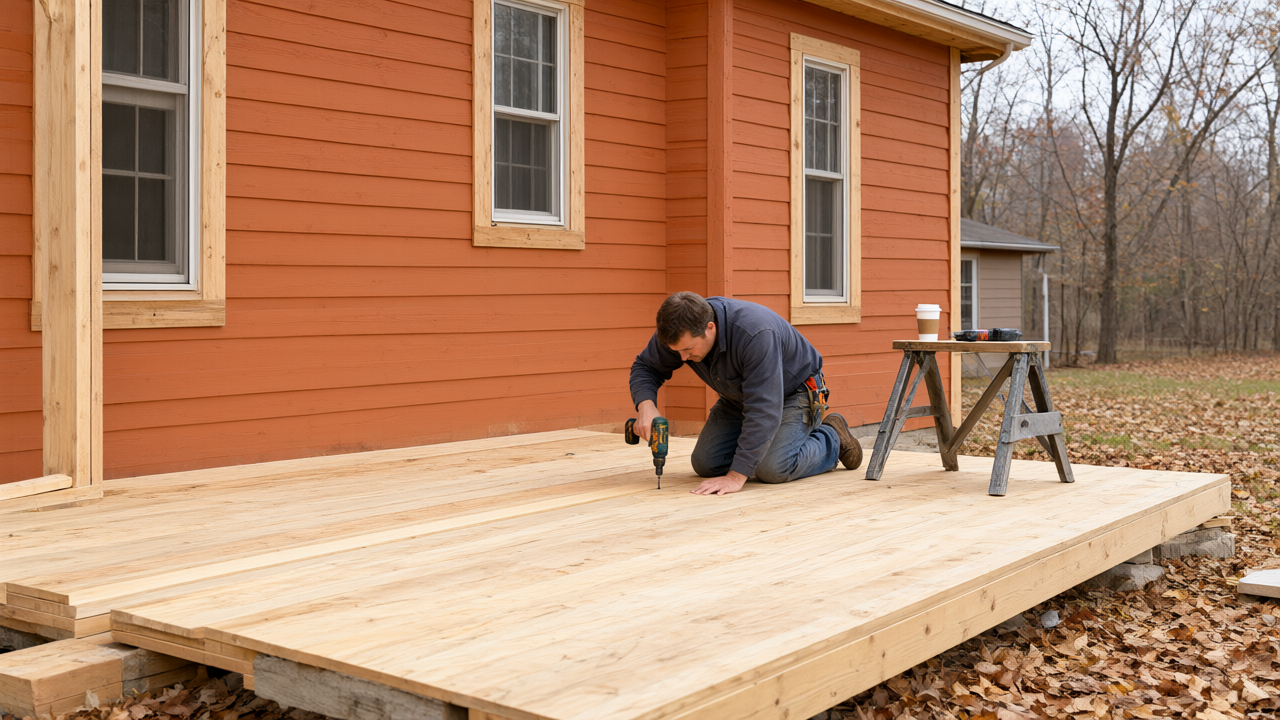
Most Schaumburg homeowners assume Deck Building and Basement Finishing are strictly summer projects. The truth runs the other way. Between November and March, contractors' calendars open up, material lead times drop by weeks, and a finished basement in Schaumburg becomes the only livable escape from a January that regularly drops to minus 10°F or colder. The catch is that cold weather construction has real rules, and a carpenter who ignores them will hand you a deck that heaves by spring or a basement that smells like a wet towel by July. Here is what actually changes below 40°F, how to sequence a winter deck and basement project so both wrap before spring 2027, and the questions that separate a real cold weather carpenter from someone who just needs the work.
Why Schaumburg Homeowners Schedule Deck Building and Basement Finishing in Late Fall and Winter
There is a simple economic reason. During peak season, a good carpenter in the Schaumburg area is booked six to ten weeks out, and lumber yards are quoting two to three week delivery windows on specialty decking. Call the same company in December and you are often looking at a start date inside two weeks and material on site in days. That compressed schedule is worth real money when you are trying to get a project done before graduation parties and backyard season start in May.
There is also a labor quality argument that most homeowners never hear. Winter crews are usually the smaller, more experienced core team, not the seasonal hires that get added in June. Andy Burns and the crew at Burns Carpentry work year round in Schaumburg and the surrounding suburbs, which means the person framing your deck in February is the same person who has framed decks in Arlington Heights and Palatine for years, not a temp who started in May.
The third factor is that you get your home back on your own terms. A basement finishing project means weeks of noise, dust, and strangers in your house. Doing it in winter, when you are already spending more time indoors and hosting fewer people, is far less disruptive than ripping up a basement in July while the kids are home from school and you are trying to use the space.
The tradeoff: cold weather adds constraints. Concrete footings, adhesives, composite expansion, and curing times all behave differently below 40°F. None of it is a deal breaker. All of it matters.
Deck Building in Cold Weather: Material Behavior, Timelines, and What Changes Below 40°F
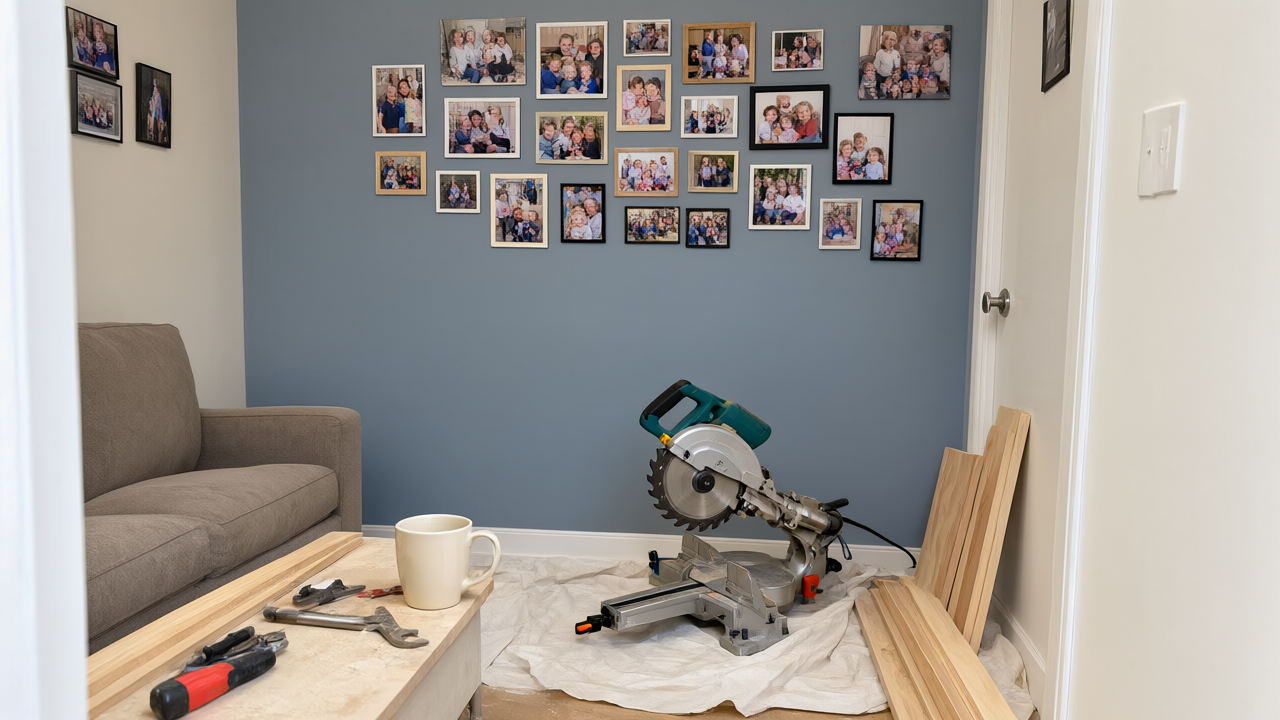
Here is the counterintuitive part. Wood framing in cold weather is actually fine. Lumber does not care if it is 20°F outside. What cares is everything around the wood: concrete, adhesives, fasteners, and the person installing them. A deck built correctly in January in Schaumburg is indistinguishable from one built in June, provided the carpenter respects four things.
Footings and concrete. Deck footings in Illinois must sit below the frost line, which runs roughly 42 to 48 inches deep in this part of Cook County and the surrounding area. That depth does not change in winter, but curing does. Concrete that freezes before it sets loses up to 50% of its compressive strength and will crack. A cold weather pour needs either heated water and accelerators in the mix, insulated blankets over the forms, or a wait until temps climb above freezing for a 24 to 48 hour window. Ask any carpenter how they handle winter footings and listen carefully. If the answer is vague, walk away.
Composite decking expands and contracts. Composite boards move more in temperature swings than wood, and the gap you leave at the end of a board matters more when that board swings from 20°F in February to 95°F in July. Boards installed tight in January will buckle in July. Boards installed with the correct end gap and fastener spacing will not. This is one of the fastest ways to tell a real composite installer from a generalist. Ask what end gap they use and whether they adjust it for installation temperature.
Adhesives and sealants stop working. Most construction adhesives stop curing below 40°F, and many sealants become brittle. Wood Decks that get stained or sealed need temperatures above 50°F for 24 to 48 hours, which means a December stain job in Schaumburg is usually a bad idea. Composite Decks sidestep this entirely, which is one reason they are so popular for winter installs. If you want a wood deck stained, budget for the build in winter and the stain in April.
Timeline reality. A typical deck building project in the Schaumburg area runs three to five weeks from consultation to final walkthrough. In winter, add a few days of weather buffer. A simple 12x16 wood deck can go up in under two weeks of actual work. A 20x24 composite deck with stairs, railing, and a pergola is a four to six week project. Ask for a schedule in writing with weather contingency days built in, not a handshake promise.
Basement Finishing During Winter: Moisture Control, Heating, and Dust Management in Schaumburg Homes
Basements are the sleeper winter project, and for good reason. You are working indoors, weather does not stop you, and the space is naturally cooler in summer and stays comfortable in winter once it is insulated. But Schaumburg basements have specific issues that a carpenter needs to address before framing a single wall.
Moisture comes first, always. Illinois has clay heavy soil that holds water, and a basement that has never leaked can still show moisture through the slab or block walls. Before any framing, a proper basement finishing project assesses the space for existing water issues, checks the floor for efflorescence and musty odor, and addresses any drainage or sump concerns. If a contractor starts framing without talking about moisture, stop them. Finished walls hide problems, and hidden problems become mold.
Heating a work zone. Basement finishing in winter requires temporary heat, both to keep the crew working and to let materials acclimate. Drywall, flooring, and adhesives all want to sit at 60 to 70°F for at least 48 hours before installation. If your basement is 50°F and the flooring goes down cold, you will see gaps and lifted seams within a year. A good crew brings space heaters, monitors temperature, and lets materials sit before installing them.
Dust and air management. Cutting drywall, framing lumber, and flooring generates dust that will find its way into the living space above if it is not contained. Plastic zip walls, negative air machines, and daily cleanup are the difference between a project you barely notice and one that coats your kitchen in fine white powder for two months. Ask how they contain dust and where they stage materials. If they cannot answer in detail, expect to be cleaning for weeks.
Flooring choices matter in winter.Laminate Flooring and vinyl Flooring Installation both work well in cold weather basements because they are dimensionally stable and can be installed over properly prepped concrete with a moisture barrier. Engineered hardwood is a reasonable option too. Solid hardwood is the wrong call for a below grade space in Illinois, regardless of season.
How to Sequence a Winter Deck and Basement Project So Both Finish by Spring 2027
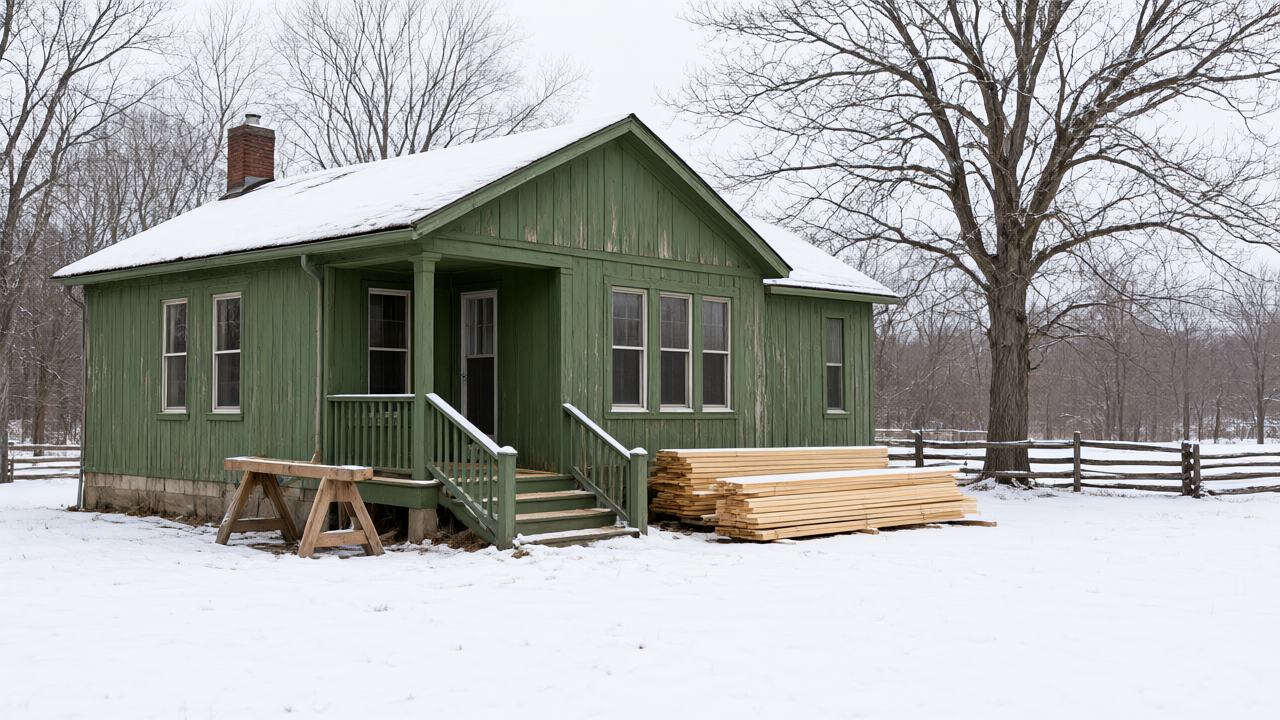
Running both projects at once is possible but rarely smart. The better play is to stagger them so one crew is always productive and your household is never fully upside down. Here is the sequence that works for most Schaumburg homeowners starting now in late 2026.
- Late October to early November 2026: Book consultations for both projects. Get a written scope, a schedule, and a fixed or capped price for each. Confirm permit timelines with the village, since deck and basement permits in Schaumburg and neighboring towns can take two to four weeks to process.
- November to December 2026: Start the basement. Framing, electrical rough in, HVAC, and plumbing rough in happen first, and these trades are easier to schedule in winter when other projects have slowed. Get the rough in inspections done before the holidays if possible.
- December 2026 to January 2027: Insulation, drywall, and taping. This is the dustiest phase and the one that benefits most from being indoors during the coldest weeks of the year.
- January to February 2027: Deck framing and footings. Cold weather slows concrete, so plan the footing pours around forecast windows above freezing. Composite decking can be installed in almost any temperature with correct gaps.
- February to March 2027: Finish the basement. Flooring, trim, paint, fixtures, and final inspection. Simultaneously, finish the deck railings, stairs, and lighting. Pergola Building, if you are adding one, can run alongside the deck finish.
- April 2027: Stain or seal the deck if it is wood. Warm enough for proper curing. Then host the first backyard cookout of the season in a house that just gained a whole new floor.
This schedule assumes permits are pulled in November and that you have selected a contractor by then. Slipping the start to January pushes the basement finish into late spring and the deck into summer, which defeats the entire point.
5 Questions to Ask Your Schaumburg Carpenter Before Booking a Cold-Weather Project
These are the questions that separate a real cold weather crew from someone filling a slow calendar. Ask them directly and listen to how specific the answers are.
- How do you handle concrete footings below 40°F? Look for accelerators, heated water, insulated blankets, or a plan to wait for a thaw window. Vague answers are a red flag.
- What end gap do you leave on composite decking, and does it change with installation temperature? A real composite installer has a number and adjusts it. A generalist guesses.
- How do you control moisture before framing a basement? They should talk about slab testing, wall inspection, drainage, and a moisture barrier before anything else. If they start with framing, keep looking.
- What is your warranty on workmanship? Burns Carpentry guarantees workmanship for two full years from project completion, and materials carry the manufacturer's warranty. Anything less than a year is a warning sign.
- Who is actually on the crew, and how long have they worked for you? Winter crews should be experienced, not seasonal. Ask for names and years with the company.
One honest note: if your deck just needs a few boards replaced or a railing tightened, you probably do not need a full rebuild. Burns Carpentry handles Deck Repairs and can tell you straight whether it is a repair or a replacement. Same with a basement that just needs a fresh coat of paint versus a full remodel. A good carpenter will talk you out of work you do not need.
Frequently Asked Questions
How much does deck building cost in Schaumburg in 2026?
Most Schaumburg area decks run $35 to $65 per square foot installed for wood and $50 to $90 per square foot for composite, depending on railing, stairs, and site access. A 12x16 wood deck typically lands between $7,000 and $13,000. Composite with hidden fasteners and aluminum railing pushes toward $15,000 to $22,000 for the same footprint.
Can you finish a basement in winter in Illinois?
Yes, and it is often the best time to do it. Indoor work is unaffected by snow and cold, crews are more available, and the space is ready to use by spring. The key is managing moisture before framing and keeping the work zone heated to at least 60°F for materials and finishes.
Is composite decking better than wood for a Schaumburg winter install?
For a winter build, composite is usually the better call. It does not need staining or sealing, which cannot be done properly below 50°F, and it handles freeze thaw cycles well. Wood is a fine choice if you are willing to wait until spring to seal it.
Do I need a permit for a deck or basement in Schaumburg?
Yes, both typically require permits through the village. Burns Carpentry manages the entire application process with the local municipal offices, which keeps the project compliant and avoids inspection delays that can add weeks to a winter schedule.
If you are in Schaumburg, Arlington Heights, Palatine, or anywhere in the northwest suburbs and you want a deck or finished basement ready before spring 2027, the time to call is now, not March. Burns Carpentry builds custom decks, composite decks, pergolas, and finished basements all winter long, and Andy Burns will tell you straight whether your project fits a cold weather schedule or should wait. Free estimates, a two year workmanship guarantee, and a crew that has been doing this in Illinois weather for years. Give them a call and get on the calendar before the spring rush fills it.