
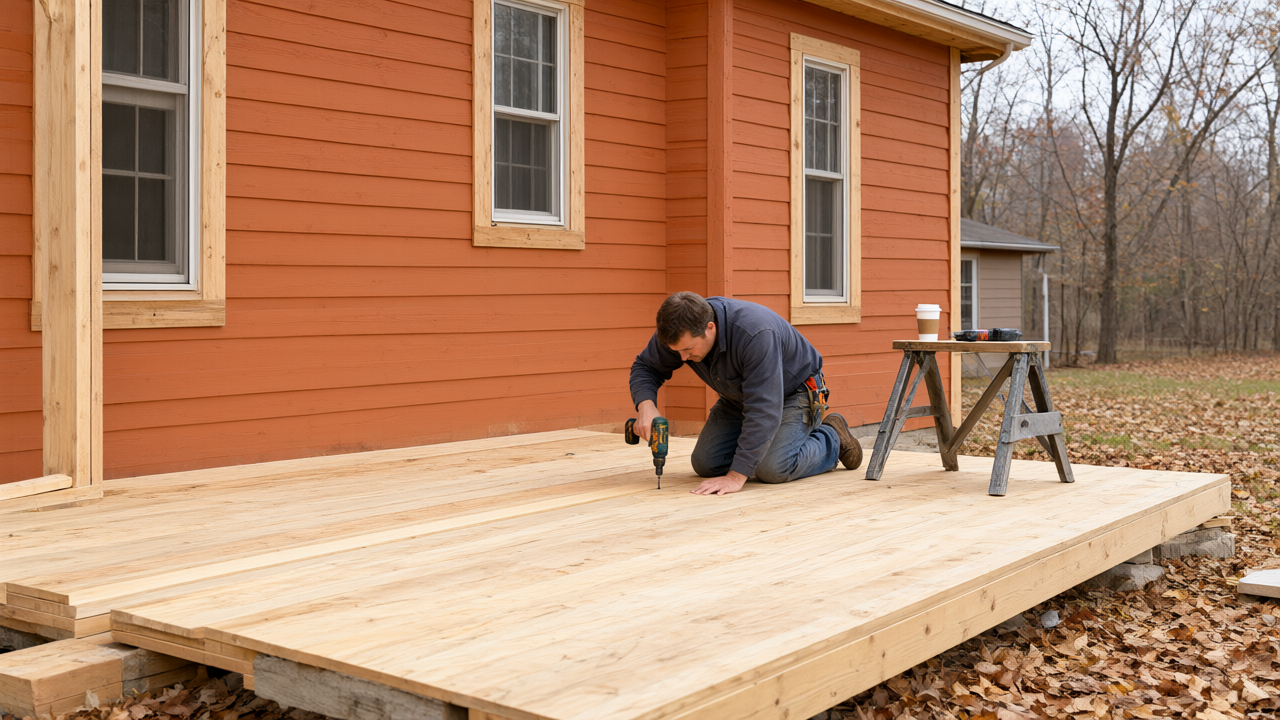
A deck in Schaumburg can add real resale value and give you four extra months of usable outdoor space every year, but only if it's built right. Here's the problem: two bids for the same deck can differ by $7,000, and the cheaper one often hides shortcuts you won't notice until the second or third winter. After years of building and repairing decks across the northwest suburbs, Burns Carpentry has seen exactly where cheap carpentry fails. This guide walks you through the five craftsmanship details that separate a deck that lasts 25 years from one that starts sagging in five, plus the licensing and bid checks every Schaumburg homeowner should run before signing anything in 2026.
What Separates a Quality Deck Builder from a Cheap One in Schaumburg
Walk into any Schaumburg backyard built in the 1990s and you'll see the difference immediately. The decks still standing after 30 years share a few things: proper footing depth, real flashing, and hardware that wasn't bought at the lowest possible price. The ones that have been torn out and rebuilt? Usually failed for reasons the original homeowner never saw, because they were buried under the surface.
The honest truth is that Deck Building is not complicated. It's just unforgiving of shortcuts. A contractor who shaves $2,000 off a bid isn't inventing new techniques. They're using a thinner joist, skipping the joist tape, or nailing instead of screwing. Each of those decisions looks fine on day one. They show up as a sagging, wobbly, or rotting deck in year six or seven, right around when the original warranty has expired.
Cost matters, and nobody should overpay. A typical wood deck in the Schaumburg area runs $35 to $55 per square foot installed, and a composite deck typically lands between $55 and $85 per square foot. A 16 by 20 foot deck (320 square feet) usually comes in around $12,000 to $17,000 for wood and $18,000 to $27,000 for composite. When you see a bid at $8,000 for the same footprint, the difference isn't efficiency. It's missing materials or missing labor. Ask specifically where the $4,000 went.
5 Craftsmanship Details to Inspect Before You Hire
You don't need to be a carpenter to evaluate a deck builder. You need to know where to look. Ask any contractor you're considering to show you a project they finished at least three years ago, and inspect these five things. If they hesitate to arrange that visit, that's your answer.
1. Joint Work and Layout
Look at where boards meet. Quality carpentry keeps seams tight, consistent, and aligned. Cheap work shows gaps of a quarter inch or more, boards that wander out of parallel, and stair stringers that don't match. On a composite deck, board spacing matters even more: most manufacturers require a specific gap (typically 3/16 to 1/4 inch) for expansion, and getting it wrong voids the material warranty. Ask the builder what gap they use and why.
2. Fasteners and Hardware
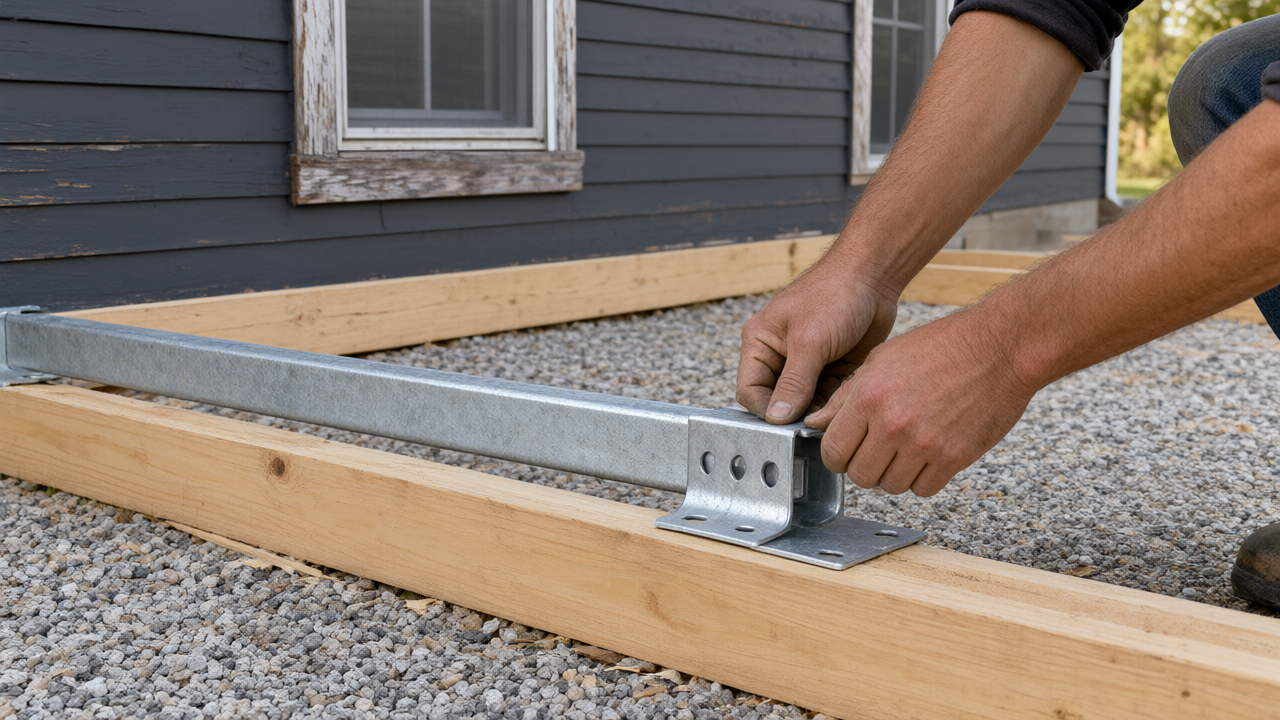
Stainless steel or hot dipped galvanized fasteners are the standard for any deck that will see Illinois weather. If a bid says "nails" or doesn't specify, walk away. Hidden fastener systems cost more upfront but eliminate the popped nail heads and rust streaks that plague cheap decks. Also check the joist hangers and structural screws. A quality builder uses Simpson Strong-Tie or equivalent connectors, not generic brackets from a big box store.
3. Flashing and Water Management
This is where the vast majority of deck failures start. Water gets behind the ledger board, rots the rim joist of your house, and by the time you see the damage the repair is $3,000 to $8,000 of structural work on the house itself. Proper flashing means metal flashing tape over the ledger, a gap between the deck and siding, and drainage that moves water away. Ask to see the flashing detail on a finished job, and ask how the builder handles the ledger connection specifically.
4. Footings and Frost Depth
Illinois code requires deck footings to extend below the frost line, which in this part of Cook County is typically 42 inches deep. A cheap builder pours a shallow footing, and every spring thaw the ground heaves and shifts the deck. Ask how deep the footings will be and whether they'll be inspected. If the answer is "about two feet," the deck will move within a few seasons.
5. Finish and Edge Details
The final 10% of a project tells you everything. Look at how the builder handles the fascia, the stair risers, the picture frame border, and the railing post connections. On a wood deck, ask about the stain and seal schedule: most Illinois Wood Decks need re-sealing every two to three years. A quality builder will tell you that upfront, not sell you a "maintenance free" wood deck that isn't.
Licensing, Insurance & Warranty Checks for Schaumburg Carpentry Contractors in 2026
Illinois does not require a statewide general contractor license, which means anyone with a truck and a nail gun can claim to be a deck builder. Schaumburg and Cook County have their own permit and inspection requirements, and any legitimate contractor will pull permits and schedule inspections without being asked. If a builder suggests skipping the permit to save money, that's not a favor. That's a liability you inherit the day you sell the house.
Ask for three documents before you sign anything:
- Certificate of general liability insurance with at least $1 million in coverage, listing your address as the project site
- Workers compensation coverage for every crew member who steps on your property (if they're hurt on your deck and aren't covered, your homeowner's policy can be on the hook)
- A written workmanship warranty with a specific duration, in writing, signed by the owner
Burns Carpentry guarantees workmanship for a full two years on every project and passes through the manufacturer warranties on materials, which typically run 25 years on composite and 10 to 15 years on pressure treated wood. That's the standard to expect. If a contractor offers a "lifetime warranty" with no paperwork, it's a marketing line, not a commitment.
Confirm the builder is registered with the Illinois Secretary of State and check for complaints with the Better Business Bureau and the Cook County consumer protection office. It takes fifteen minutes and it's the cheapest insurance you'll ever buy.
Red Flags in Schaumburg Deck Building Bids: Lowball Pricing, Vague Timelines, No Permit Talk
Most bad deck experiences start with a bid that looked great on paper. Here are the patterns to watch for.
Lowball pricing. If the bid is more than 25% below the others, something is missing. Common culprits: no flashing, undersized joists, cheap fasteners, no permit, or a "deposit" that turns into a vanishing act. Never pay more than 30% upfront, and never pay in cash.
Vague timelines. A real bid states a start date and a completion date. A vague bid says "sometime in the spring." A typical deck project in this market takes three to five weeks from consultation to completion, with most of that being permits, materials, and weather delays. If the builder can't commit to a schedule, they're overbooked or disorganized, and you'll be the one waiting.
No permit talk. Permits for a deck in Schaumburg typically cost $150 to $400 depending on size and scope, and the process takes one to three weeks. A legitimate contractor brings it up in the first conversation. If you have to ask, that's a problem.
"The homeowner who asks the most questions before the build is almost always the happiest customer after it. The ones who just want the lowest number are the ones we end up repairing two years later."
Questions to Ask on the Walkthrough: A Schaumburg Homeowner's 2026 Checklist
When a contractor walks your yard, this is your chance to evaluate them. Bring a notebook and ask these questions. The quality of the answers matters more than the answers themselves.
- What's the footing depth and will it be inspected? (Looking for: below the frost line, yes)
- How will you flash the ledger board against the house? (Looking for: specific product name and method)
- What fasteners and joist hangers are you using? (Looking for: stainless or HDG, brand name)
- What's the board gap on composite, and does it meet manufacturer spec? (Looking for: 3/16 to 1/4 inch, yes)
- Who pulls the permit and who pays for it? (Looking for: builder handles it, cost is in the bid)
- Can I see a project you finished three or more years ago? (Looking for: an immediate yes)
- What's your workmanship warranty, in writing? (Looking for: at least two years)
- What's the payment schedule? (Looking for: no more than 30% upfront, balance tied to milestones)
When you're talking to a builder about wood versus composite, ask honestly about maintenance. If you want to spend a few weekends a year staining and sealing, a pressure treated wood deck is a great value and lasts decades when built right. If you'd rather not think about it, composite costs more upfront but skips the resealing cycle entirely. There's no wrong answer, just a wrong expectation.
One last thing: you don't always need a contractor. If your existing deck has a loose board, a wobbly railing, or a stair tread that's pulling up, a handyman can often handle it for $200 to $600. But if you see soft spots in the wood, sagging joists, or rusted-through hangers, that's structural, and patching it yourself is a safety risk. Burns Carpentry handles Deck Repairs and full rebuilds across Schaumburg and the surrounding suburbs, and the team will tell you straight whether a repair is worth it or whether you're better off replacing. Getting that honest answer is worth the phone call.
Frequently Asked Questions
How much does it cost to build a deck in Schaumburg in 2026?
Most wood decks in the Schaumburg area run $35 to $55 per square foot installed, and Composite Decks typically run $55 to $85 per square foot. A 16 by 20 foot deck usually lands between $12,000 and $17,000 for wood and $18,000 to $27,000 for composite, depending on railing, stairs, and site access.
Do I need a permit to build a deck in Schaumburg?
Yes, decks in Schaumburg require a permit and at least one inspection, and the process usually takes one to three weeks. A legitimate contractor pulls the permit as part of the project. If a builder suggests skipping it, that's a red flag.
How long does a deck build take from start to finish?
A typical deck project takes three to five weeks from the initial consultation to final walkthrough. Most of that time is permits, material lead times, and weather. The actual on site build for a standard deck usually runs one to two weeks.
Is composite decking worth the extra cost in Illinois?
For most homeowners, yes. Composite skips the staining and sealing that wood decks in Illinois need every two to three years, and it holds up better to freeze and thaw cycles. Wood is still a great value if you don't mind the maintenance and want to save $6,000 to $10,000 upfront on a typical deck.
If you're in Schaumburg or anywhere in the northwest suburbs and you're ready to get a real number on a deck, Burns Carpentry will walk your yard, answer every question on this list, and give you a written estimate with no pressure. They build wood decks, composite decks, pergolas, and handle deck repairs across Schaumburg, Palatine, Arlington Heights, and the surrounding towns. Give them a call and ask the hard questions. A builder who welcomes them is the one you want.


