Choosing the wrong basement flooring in Cary, IL isn't just a style mistake. It's a $4,000 to $12,000 gamble against our region's unique climate. The average Cary basement sits on soil with a high water table, and the temperature swing from a humid July to a frigid January can buckle planks and peel tiles that work perfectly on your main floor. This guide will walk you through the 2026 realities of how to choose the right flooring for your Cary, IL basement, cutting through the marketing hype to focus on what actually lasts.
Why Basement Flooring Needs Are Different in Cary, IL
Your basement isn't just another room. It's a concrete slab in direct contact with the ground, which in our part of McHenry County, is rarely bone dry. The primary enemy isn't flooding (though that's a risk), but vapor transmission and thermal dynamics. Concrete is porous. Even without visible water, it constantly emits moisture vapor at a rate measured in pounds per 1,000 square feet per day. In a typical Cary basement, that can be 5 to 15 pounds of moisture pushing upward every 24 hours.
Then there's the temperature. A finished basement in Cary might be a comfortable 68 degrees where you're standing, but the concrete subfloor can be as cold as 55 degrees in winter. This creates a "thermal break" where warm, moist air from your living space meets the cold slab, causing condensation. This hidden moisture is what ruins most DIY flooring jobs. It leads to mold under carpets, cupping in laminate, and adhesive failure in tiles. The solution isn't just picking a "waterproof" product. It's creating a system that manages both vapor and temperature, which starts long before the first plank is laid.

5 Critical Factors for Basement Flooring Selection
Forget aesthetics for a moment. Before you fall in love with a sample, you must audit these five non negotiable conditions. Getting this wrong makes even the best flooring fail.
1. Moisture & Vapor Control: This is the foundation of everything. You need a quantitative test, not a guess. The plastic sheet test (tape a 2'x2' square of clear plastic to the concrete for 48 hours) is a good start, but for a permanent installation, a professional moisture meter reading is better. Acceptable levels for most floating floors are under 3-4% moisture content. If your slab reads higher, or if you see condensation under the plastic, you need a vapor barrier. Not just a 6-mil plastic sheet, but a proper dimpled underlayment or a poured epoxy sealant that creates a continuous capillary break.
2. Subfloor Condition & Flatness: Concrete is almost never level. It has high spots, low spots, and cracks. Most rigid core flooring requires the subfloor to be flat within 3/16 of an inch over a 10-foot span. If it's not, the locking mechanisms will stress, gaps will appear, and the floor will feel spongy. Self leveling compound is often necessary, adding $1.50 to $3.00 per square foot to your project cost but preventing thousands in call backs.
3. Temperature Stability: Will the space be climate controlled year round? If your basement is used sporadically and you turn down the heat in winter, the floor temperature can plummet. This causes some materials to contract significantly, opening gaps. If you're installing a floor that requires adhesive, the manufacturer will specify a minimum installation temperature (often 65 degrees) for the subfloor, air, and the flooring itself for 48 hours before and after.
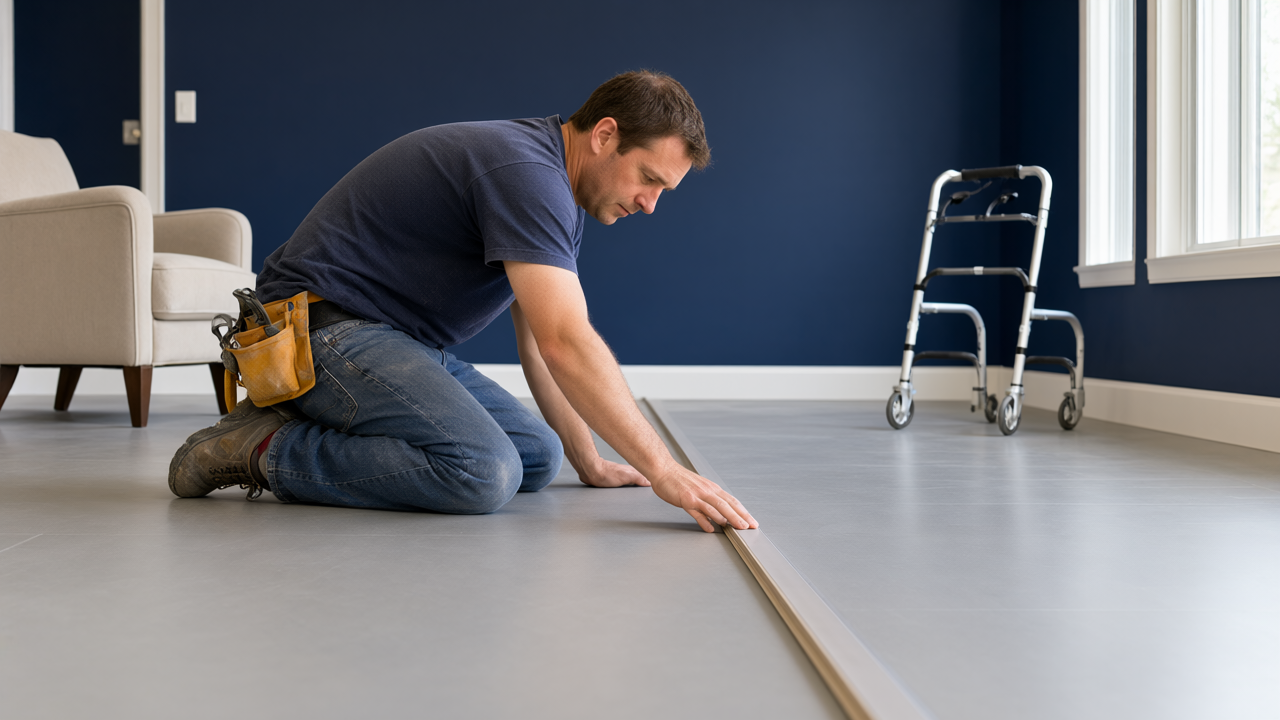
4. Height Transitions: Measure the height of your new flooring system from the concrete up. This includes underlayment, the floor itself, and any transition moldings. A common mistake is installing a thick floor that creates a tripping hazard at the bottom of the stairs or requires cutting down doors. Most basement doors can only accommodate a 3/4 inch rise max before they need to be trimmed.
5. Intended Use & Budget Realism: A home gym, a kids' playroom, and a home theater have different durability needs. Be honest about traffic, furniture drag, and spill potential. Then, budget for the entire system, not just the box of planks. For a professional installation in Cary in 2026, a complete basement floor project including moisture mitigation, subfloor prep, materials, installation, and trim typically runs between $7 and $15 per square foot. The box store material price is often less than half the final cost.
Laminate vs. Vinyl for Basements: 2026 Durability & Installation Comparison
The old advice was "never put laminate in a basement." That's outdated. The new advice is more nuanced, because both product categories have evolved dramatically.
Modern Laminate (Specifically Waterproof Laminate): Today's best laminate for basements has a waterproof core, usually made from stone plastic composite (SPC) or a high density fiberboard with a waterproof resin. The key is the entire plank is inert, not just the top layer. It can handle minor moisture from above and moderate vapor from below if installed with a proper underlayment. The advantages are a more realistic wood look and feel, and often a thicker, more substantial sound underfoot. The disadvantage is it's still more susceptible to permanent swelling at the seams if water sits on it for extended periods. For a basement that is dry and climate controlled, but where you want the warmth of wood, it's a viable 2026 option. Expect to pay $3.50 to $5.50 per square foot for quality waterproof laminate material.
Luxury Vinyl Plank (LVP & WPC/SPC Core): This is the reigning champion for basement applications, and for good reason. The best products are 100% waterproof, dimensionally stable with temperature changes, and have attached underlayment for comfort and vapor management. The wear layer technology in 2026 is exceptional, with residential grades offering 12 mil to 20 mil wear layers that resist scratches from furniture and daily life. The installation is also more forgiving over minor subfloor imperfections than rigid laminate. The feel is different, it's more of a click than a thud when you walk, and some purists still prefer the look of laminate. Material costs are comparable, ranging from $3.00 to $6.00 per square foot for good quality LVP.
The verdict? For 99% of Cary basements, a quality luxury vinyl plank is the safer, more durable bet. It's the choice we make for most of our Burns Carpentry Flooring Installation projects in the area because we see the long term results. Reserve waterproof laminate for exceptionally dry, conditioned basements where the aesthetic payoff is worth the extra vigilance against moisture.

Professional Installation vs. DIY: What Cary, IL Homeowners Should Know
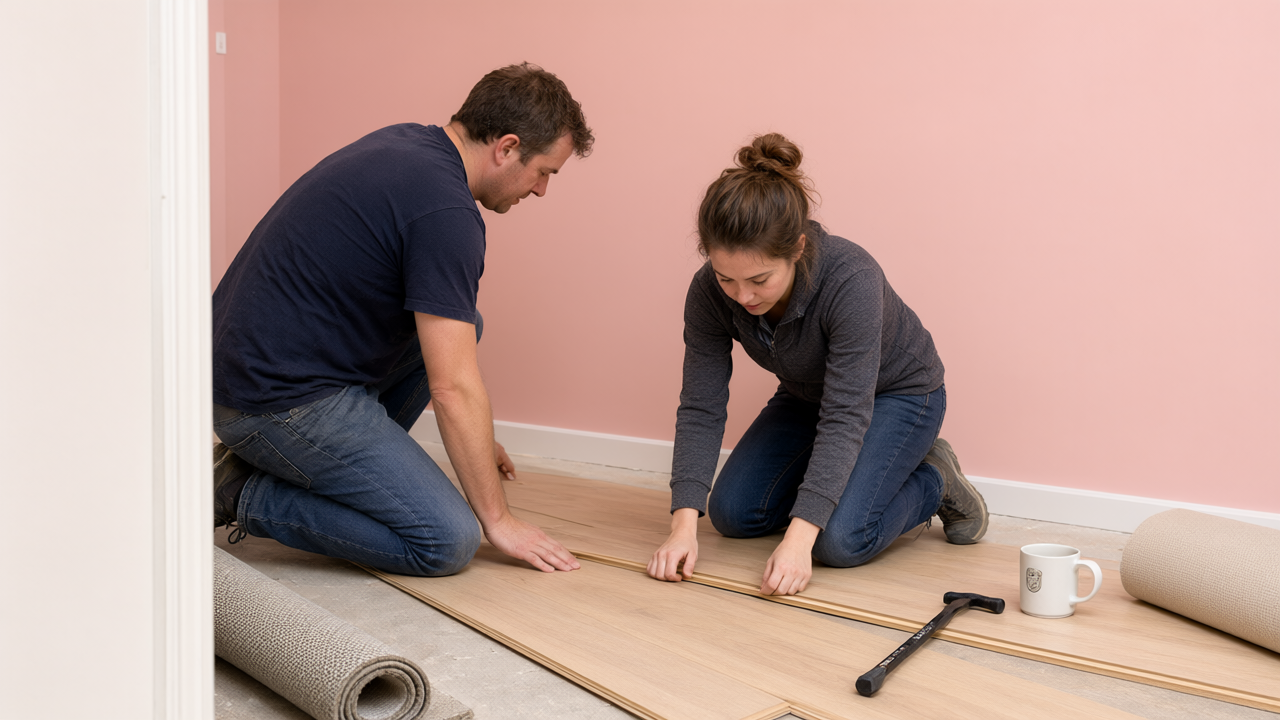
Installing a floating floor looks deceptively easy on a YouTube video filmed in a perfect, climate controlled studio. Your basement is not a studio. Here’s the honest breakdown of when to call a pro like Burns Carpentry and when you might tackle it yourself.
You CAN DIY if: Your basement passes the moisture tests with flying colors, the concrete slab is exceptionally flat (you’ve checked it with a 6 foot level), the space is a simple rectangle with no closets or obstacles, and you have the proper tools (a quality pull bar, tapping block, spacers, and a jigsaw or oscillating tool for cuts). You also need the patience for the meticulous first row, which dictates the entire room. The DIY savings on a 500 square foot area might be $1,500 to $2,500.
You SHOULD hire a professional for Burns Carpentry Flooring Installation if any of these are true:
1. Your moisture test shows any sign of dampness or your slab is cold to the touch.
2. The floor needs leveling compound or significant patching.
3. The room has multiple corners, pillars, doorways, or requires complex transitions to other flooring.
4. You’re installing in a large, open area where maintaining a perfectly straight line over 30+ feet is critical.
5. You value your time over a weekend (or two) and want a guaranteed result.
The hidden value of a pro isn't just the labor. It's the system knowledge. We know which underlayments work with which planks for vapor transmission in our climate. We know how to properly undercut door jambs so the flooring slides underneath cleanly. We know the Cary and McHenry County building codes for basement egress and required clearances. And most importantly, we assume liability for the installation. If a seam pops or a transition fails in a year, you call us, not the manufacturer who will blame your "improper subfloor."
Your 2026 Basement Flooring Decision Checklist
Use this step by step list before you buy a single sample. It will save you time, money, and regret.
- Conduct a Moisture Audit: Perform the plastic sheet test. For more certainty, rent a concrete moisture meter from a local tool library or hire a pro for an assessment. Document your findings.
- Check for Flatness: Use a long, straight level or a laser level. Mark high and low spots with chalk. Any deviation over 3/16" in 10 feet needs to be addressed.
- Define Your Zone: Is this a "dry storage" area, a living space, or a high traffic playroom? This dictates the required wear layer thickness and warranty.
- Get Real Samples: Don't judge by a 3" chip. Get full plank samples from a showroom. See them in your basement's light, wet them, drag a key across them.
- Calculate Total System Height: Add underlayment + plank thickness. Ensure it works with your stairs and doors.
- Review the Warranty Fine Print: Most basement specific warranties require professional installation and proof of a proper vapor barrier if the concrete moisture exceeds a certain level. Don't assume.
- Get a Detailed Quote: If going pro, your quote should clearly separate material, underlayment, subfloor prep, installation, trim, and removal/disposal. A quote from Burns Carpentry, for example, breaks all this down so you know exactly what you're paying for.
- Prepare the Space: Regardless of DIY or pro, you need to completely empty the room, remove old flooring, and clean the slab. Any good installer will require this.
Frequently Asked Questions
Can you put Laminate Flooring in a basement in Cary?
Yes, but only if you use a modern waterproof laminate core and only if your basement is exceptionally dry and climate controlled year round. You must conduct rigorous moisture testing first. For most Cary basements with our variable water table, a luxury vinyl plank is a more reliable and worry free choice.
What is the most waterproof flooring for a basement?
Sheet vinyl is technically the most waterproof as it has no seams, but it's less popular for residential aesthetics. For plank flooring, a luxury vinyl plank (LVP) with a stone plastic composite (SPC) core is 100% waterproof through and through. The key is ensuring the installation includes proper perimeter expansion gaps so the waterproof planks can handle thermal expansion without buckling.
How much does it cost to install basement flooring in Cary, IL?
For a professional installation including moisture mitigation, subfloor prep, quality materials, and labor, homeowners in Cary should budget between $7 and $15 per square foot in 2026. The wide range depends on the material chosen (vinyl vs. laminate, thickness, brand) and the amount of subfloor leveling required. A typical 800 square foot Basement Finishing project often sees a flooring cost of $6,000 to $12,000 as part of the larger remodel.
Do I need a vapor barrier under my basement floor?
In almost every Cary basement, yes. Concrete is a reservoir of moisture, not a barrier. A proper vapor barrier (like a 6 mil polyethylene sheet with sealed seams or a dimpled underlayment system) is essential to prevent moisture vapor from migrating up into your flooring and causing mold, mildew, or adhesive failure. This is a non negotiable step for a lasting installation.
If your basement flooring project involves moisture concerns, complex layouts, or you simply want the assurance of a system backed by a workmanship guarantee, this is exactly what Burns Carpentry specializes in. Our team handles the entire process from moisture testing and subfloor prep to the final trim, ensuring your new basement floor is built to handle Cary's climate for the long term. We offer free estimates in Cary to review your specific project and give you a straight answer on the best path forward.