Choosing the wrong flooring for your Cary home isn't just an aesthetic mistake. It's a financial one. The average homeowner in McHenry County spends between $2,800 and $4,500 to replace flooring that failed prematurely due to our local climate. The culprit? It's not just the cold. It's the dramatic, 70 degree temperature swings from summer to winter, combined with humidity that can spike from 30% in January to over 80% in July. This 2026 guide will show you how to choose flooring that withstands Cary, IL's climate, saving you from that costly replacement cycle by matching the right material to the right space in your home.
Why Cary's Climate is Tough on Flooring: Humidity & Temperature Swings
Most flooring advice you find online is generic. It doesn't account for the specific, punishing conditions of the upper Midwest. Cary sits in a zone where continental air masses collide, creating a climate that's a perfect stress test for building materials. From our work in hundreds of Cary basements and ground floor remodels, we see the same patterns year after year.
The primary enemy is dimensional instability. Materials expand when they absorb moisture and contract when they dry out or get cold. In a standard year, your flooring endures a slow, continuous expansion from May through September as humidity creeps in, followed by a rapid contraction when the furnace kicks on in October and the indoor air becomes desert dry. This cycle isn't gentle. It creates gaps at the seams of hardwood, causes laminate planks to buckle at the edges, and can make tile grout crack if the subfloor isn't perfectly prepared. The ground floor and basement are most vulnerable because they are closest to the soil, which acts as a massive humidity reservoir, especially after our spring thaws and summer rains.
Here's the insider detail most contractors won't tell you: the problem often isn't the flooring itself, but the installation environment. Installing any flooring on a day with 60% indoor humidity when your winter indoor humidity will drop to 25% is asking for trouble. A professional installer who understands Cary's climate will acclimate materials in your home for 48 to 72 hours and use a hygrometer to check moisture levels in both the subfloor and the air before a single plank is laid down. This step alone can prevent 80% of the callbacks we see from DIY or rushed professional jobs.

The Best Flooring Materials for Cary Basements & Ground Floors
For basements, the rule is absolute: assume moisture. Even if your basement has never had a puddle, concrete is porous and wicks moisture from the surrounding earth. This creates a constant, low level of vapor emission. For this environment, you need a flooring system that is either entirely impervious or can breathe and dry out.
The top performer for Cary basements in 2026 is luxury vinyl plank (LVP) with a waterproof core. Not all vinyl is created equal. You want a product with a rigid stone plastic composite (SPC) or wood plastic composite (WPC) core. These planks are 100% waterproof, dimensionally stable, and feel surprisingly solid underfoot. Expect to pay $4.50 to $7.50 per square foot for quality material, plus installation. The second option is porcelain tile. A properly installed tile floor with a waterproof membrane underneath is a permanent solution. The cost is higher ($8 to $15 per square foot installed), and the surface is hard and cold, but it's bulletproof. What should you avoid? Solid hardwood is a disaster waiting to happen. Engineered hardwood is risky unless a superior vapor barrier is installed first. Standard laminate is a poor choice due to its vulnerable fiberboard core.
For ground floors (living rooms, kitchens, dining rooms), you have more flexibility, but climate still dictates the rules. Engineered hardwood is a fantastic choice here because its plywood core is more stable than solid wood. Opt for a product with a thick wear layer (at least 4mm) so it can be refinished once or twice over its life. High quality laminate is also viable on ground floors, provided you choose a product with a water resistant core and ensure your subfloor is perfectly flat and dry. In kitchens and mudrooms, where spills are frequent, continuing with LVP is a smart, durable choice that creates a seamless look.
Vinyl vs. Laminate: Which Handles Moisture & Cold Better in 2026?
This is the most common question we get at Burns Carpentry, and the answer has evolved with new technology. As of 2026, for any area with moisture concern (basements, bathrooms, kitchens, mudrooms), vinyl is the clear winner.
Let's break down why. Laminate Flooring has a fiberboard core made of compressed wood dust. If water seeps into the seams, that core acts like a sponge, swelling and ruining the plank. Modern water resistant laminates have wax coatings on the cut edges, but this is a band aid, not a cure. Once the protective wear layer is compromised, damage is inevitable. Vinyl plank, specifically the SPC/WPC varieties, has a core made of plastics and limestone. It is completely inert to water. You could submerge it, and it would be fine. This makes it ideal for Cary's humid summers and for installations below grade.
Regarding cold, both materials will feel cool underfoot compared to carpet or wood. However, vinyl is a better conductor of temperature, so it will feel colder in a chilly basement in January. The solution isn't to choose a different floor, but to address the root cause: install a thermal underlayment designed for vinyl (check manufacturer approval first) or consider area rugs. For overall durability, scratch resistance, and realism in visuals, high end laminate still holds an edge in dry areas. But for the combination of water resistance, stability, and realistic wood/stone looks, vinyl plank technology has pulled decisively ahead for our local climate.

Professional Installation Tips for Long Term Durability in Cary
You can buy the best flooring material on the market, but a poor installation will guarantee failure. Here is the checklist we use at Burns Carpentry for every Flooring Installation project in Cary and the surrounding suburbs. Ask your installer to confirm these steps.
- Subfloor Inspection & Preparation: The subfloor must be clean, dry, and flat to within 3/16 of an inch over a 10 foot span. For concrete slabs, a moisture test is non negotiable. A plastic sheet taped to the concrete for 24 hours should show no condensation.
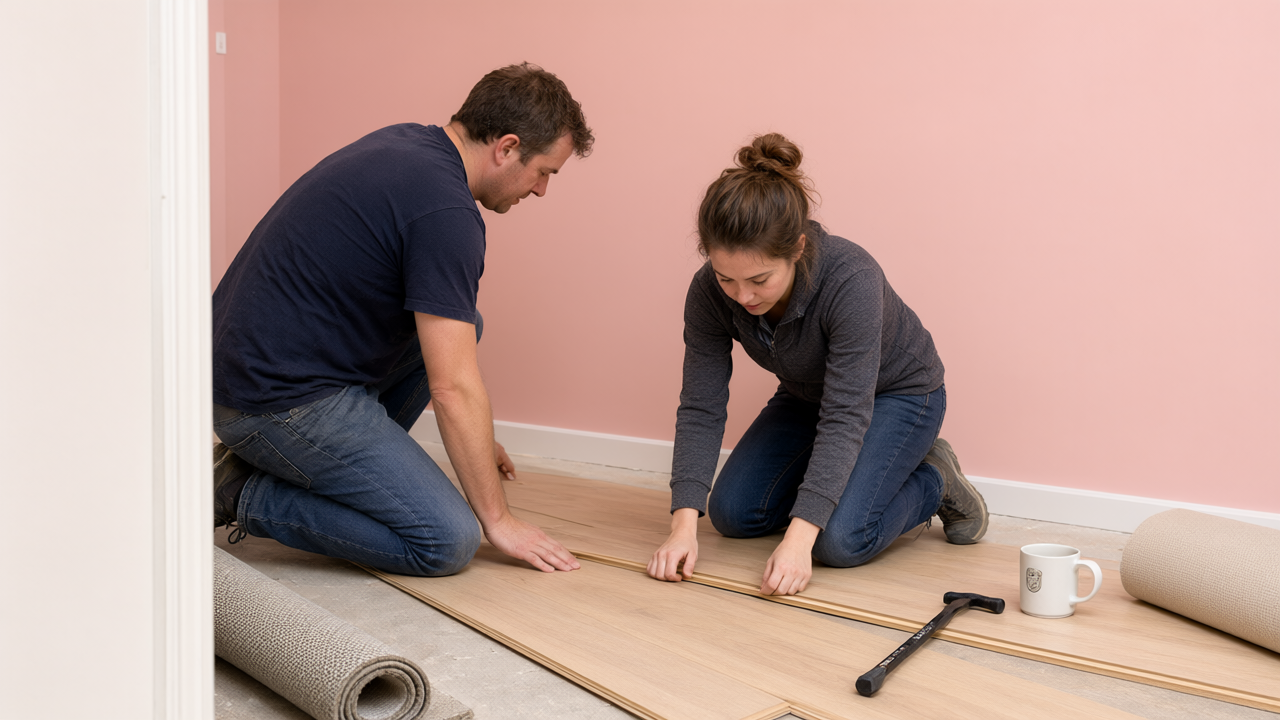
- Climate Acclimation: The flooring boxes must be brought into the center of the room where they will be installed and left for a minimum of 48 hours. This allows the material to adjust to the home's temperature and humidity.
- Expansion Gap: A consistent 1/4 inch to 1/2 inch gap must be left around the entire perimeter of the room, hidden by the baseboard or quarter round. This space allows the floor to expand and contract without buckling.
- Underlayment Selection: Never use the wrong underlayment. Some vinyl planks have attached pads, adding another can cause instability. For laminate, use a underlayment with a vapor barrier for ground floor installations over concrete.
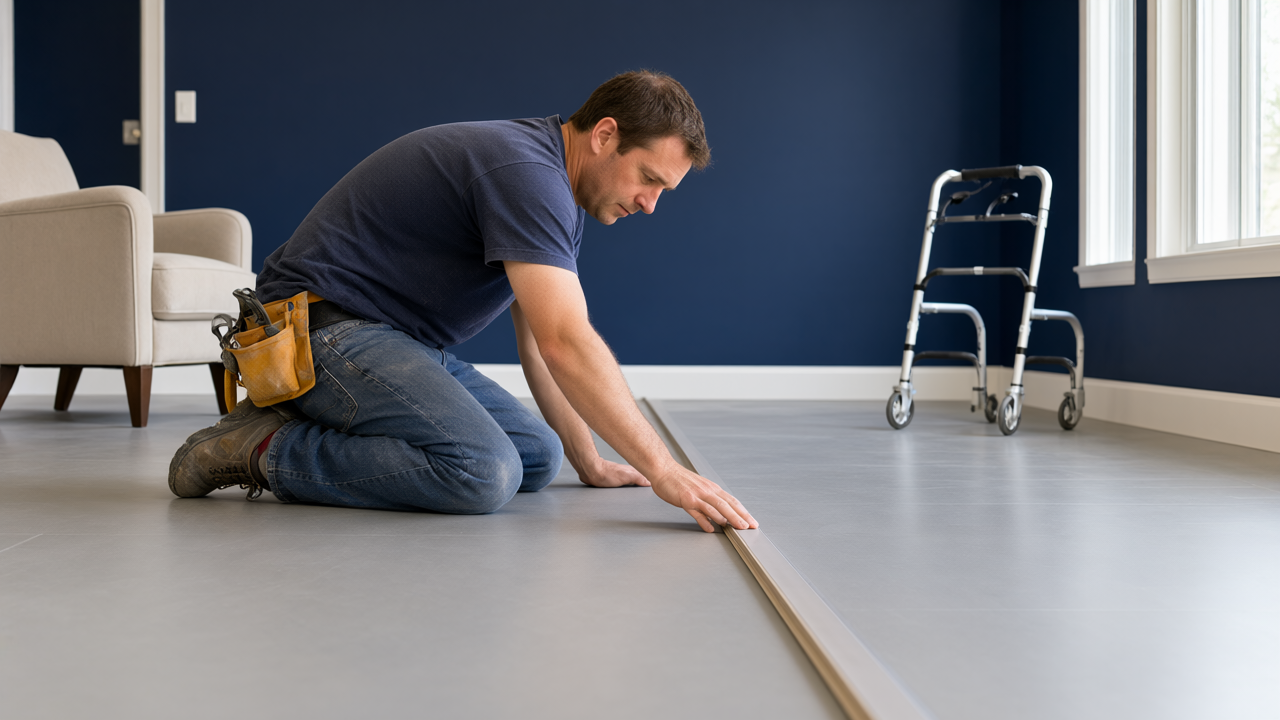
- Seam Sealing (for wet areas): In bathrooms, kitchens, or basements, using a 100% silicone sealant at the end joints of vinyl planks (per manufacturer instructions) creates an extra line of defense against moisture seepage.
A red flag is any installer who wants to skip acclimation, doesn't check subfloor moisture, or tells you expansion gaps aren't necessary. These are the shortcuts that lead to gaps, buckles, and squeaks within the first year.
Your 2026 Maintenance Plan for Cary-Specific Flooring Care
Your flooring's longevity depends as much on maintenance as on installation. The Cary climate demands a seasonal approach.
Spring/Summer (High Humidity): Run a dehumidifier in your basement consistently to keep relative humidity below 60%. This protects not just your floor, but also prevents mold and mildew. Use floor mats at all exterior doors to catch rain and mud. Clean floors with a damp mop (never soaking wet) and a cleaner specified for your floor type. Avoid steam mops on vinyl and laminate, as the heat and moisture can break down adhesives and seep into seams.
Fall/Winter (Dry Air): This is when gaps are most likely to appear in hardwood and laminate. Use a whole home humidifier or room humidifiers to maintain indoor humidity between 35% and 45%. This minimizes the contraction of wood fibers. Wipe up snow melt and salt tracked inside immediately, as salt is corrosive and can damage finish layers. Use furniture pads to prevent scratches when moving decorations or rearranging rooms for the holidays.
For all flooring, the golden rule is prompt cleanup. No standing water, ever. Even on waterproof vinyl, water left on top can seep into the subfloor through expansion gaps, causing damage underneath. A simple, disciplined cleaning routine will add years to the life of your investment.
Frequently Asked Questions
What is the most durable flooring for a basement in Cary, IL?
The most durable option is luxury vinyl plank (LVP) with a waterproof core. It is completely impervious to moisture, stable in temperature swings, and resistant to scratches and dents. Porcelain tile is a close second but is harder, colder, and more expensive to install properly.
Can I install hardwood flooring on my main floor in Cary?
Yes, but solid hardwood is riskier due to humidity swings. We strongly recommend engineered hardwood for main living areas. It has a stable plywood core that resists expansion and contraction far better than solid planks, making it a smarter long term choice for our climate.
How much does new flooring cost in the Cary area?
Costs vary widely by material. For a professional installation, expect to invest $4 to $8 per square foot for quality vinyl or laminate, $8 to $14 per square foot for engineered hardwood, and $8 to $15+ for tile. This includes material, labor, underlayment, and removal of old flooring.
Do I need a professional to install flooring, or can I DIY?
For simple, small rooms on a perfectly flat subfloor, a confident DIYer can install click lock vinyl or laminate. However, for entire floors, basements, kitchens, or any area with moisture concerns, professional installation is worth the cost. Pros ensure proper subfloor prep, moisture control, and expansion spacing that prevent costly failures down the road.
If you're in Cary, Arlington Heights, or the surrounding suburbs and your flooring project involves a basement, a large area, or you're just unsure about material choices, Burns Carpentry can help. Our flooring installation service starts with a free estimate where we'll assess your space, discuss the realities of our local climate, and give you a straight answer on the best path forward. We handle everything from subfloor prep to final cleanup, ensuring your new floor is built to last.