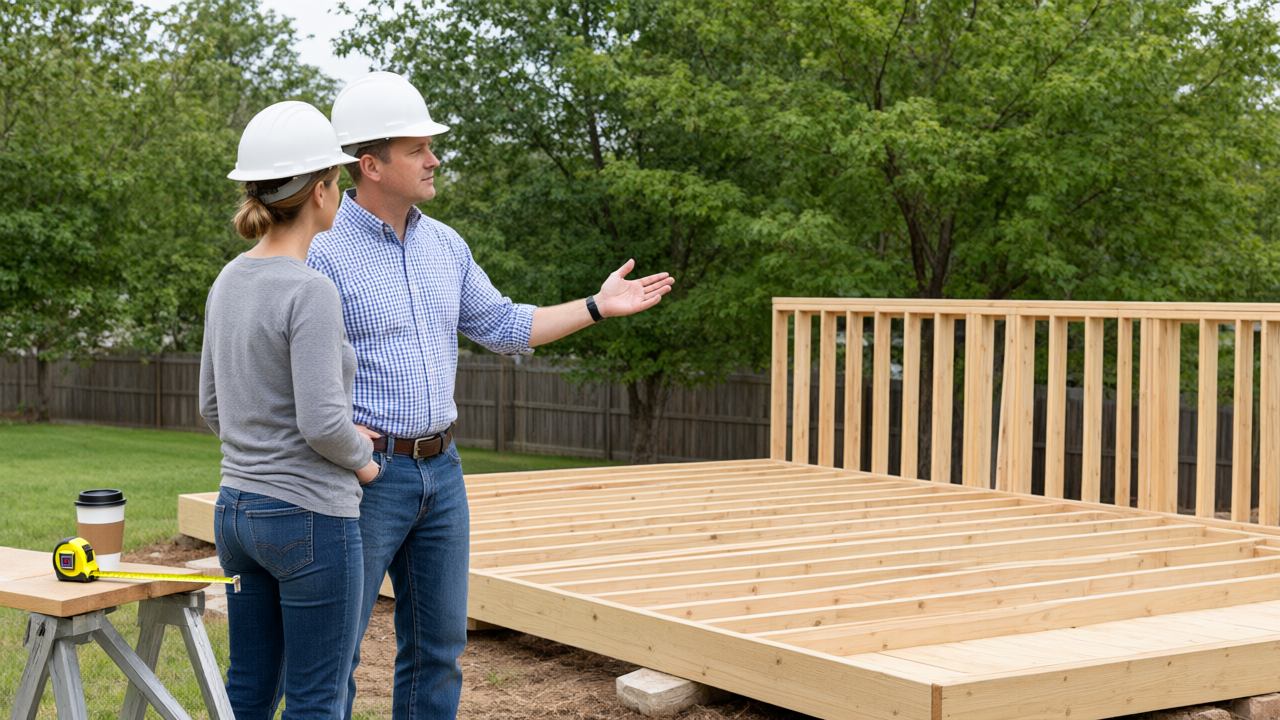
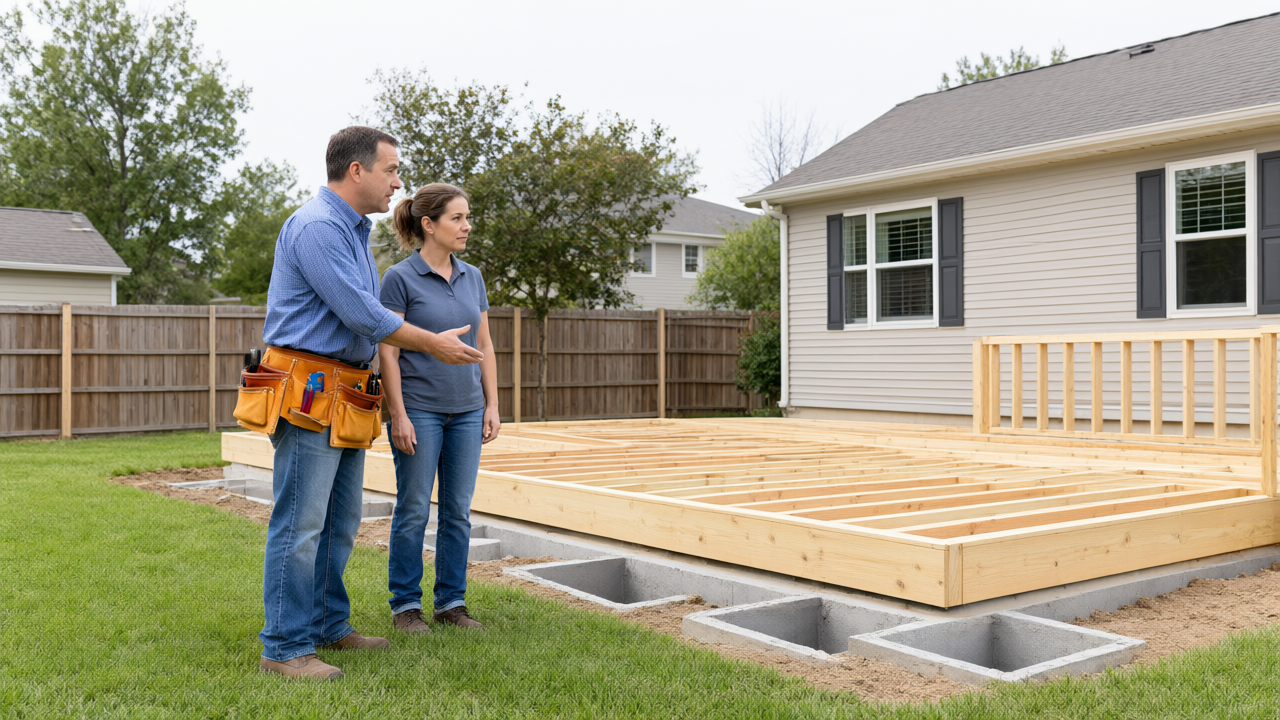
If you're planning a new deck in Arlington Heights this year, the most common cost estimate you'll hear is "$50 to $100 per square foot." That's true, but it's also about as useful as saying a car costs "$20,000 to $80,000." The real number for your home depends on three specific, local factors that most contractors gloss over. In 2026, the average deck build in our area ranges from $15,000 to $35,000, but we've seen projects from a simple $8,500 ground level platform to elaborate $60,000+ multi level outdoor rooms with built in kitchens. The difference isn't just size, it's about understanding how Arlington Heights' specific codes, our local material supply chain, and hidden structural requirements shape your final investment.
The 3 Main Factors That Determine Your Arlington Heights Deck Cost
Forget generic online calculators. In Arlington Heights, your deck's price is dictated by a local triad: site conditions, design complexity, and the quality of labor you hire. The first, and often most expensive surprise, is what's under your lawn. If your yard has a significant slope, you're not just building a deck, you're building a retaining wall system to support it. In neighborhoods like Dunton or Arlington Lakes, where lots can have subtle grading, this can add $3,000 to $8,000 in foundational work before the first post is set. We always recommend a detailed site survey, which costs about $400 to $600, to avoid a $5,000 change order two weeks into the project.
The second factor is design. A basic rectangle attached to your house is the most economical. The moment you add angles, multiple levels, wraparound sections, or integrated seating, you're increasing labor time and material waste by 25% to 40%. A popular 2026 feature is the "floating bench" or planter box, which looks beautiful but requires precise cantilevered framing. Each one adds roughly $500 to $800 in labor and materials. The biggest cost driver, however, is the roof. Adding a pergola or solid roof structure effectively doubles the project's scope, adding $7,000 to $15,000 as it requires engineered footings, heavier posts, and skilled overhead work.
Finally, labor quality is where quotes diverge wildly. A crew charging $45 per hour might get the job done, but their inexperience with Arlington Heights' frost line (42 inches deep) or local code requirements for lateral load connectors can lead to failed inspections and costly rework. A professional like Burns Carpentry, with deep local experience, typically charges between $65 and $85 per hour for carpentry labor. This premium ensures the job follows the 2026 International Residential Code amendments adopted by the Village, uses proper flashing details to prevent rot at the house ledger board (the #1 cause of deck failure), and includes a detailed, lien waivered contract that protects you.

2026 Material Cost Breakdown: Wood vs. Composite in Arlington Heights
Let's get specific on numbers. For a standard 16x20 foot deck (320 sq ft), material costs in early 2026 break down as follows. Pressure treated pine (PT) is the entry point. The framing (posts, beams, joists) will run about $2,500 to $3,200. The decking boards themselves add another $1,800 to $2,400. Total material cost for a basic PT deck: $4,300 to $5,600. This is a functional deck, but it will require annual cleaning and resealing every two to three years at a cost of $500 to $800 per service. Over a 10 year period, that maintenance adds $2,000 to $3,000 to the total cost of ownership.
Premium hardwood like Ipe or Tigerwood changes the equation. The same framing cost applies, but the decking soars to $8,000 to $11,000 for that 320 sq ft. Your total materials hit $10,500 to $14,200. The benefit is a deck that can last 25+ years with minimal care, though it still needs occasional oiling to maintain its rich color. The real 2026 conversation, however, revolves around composite. Brands like TimberTech, Trex, and Fiberon dominate the market here. Composite decking for our example size costs between $5,500 and $9,500. The total material package jumps to $8,000 to $12,700.
So why would anyone pay more for composite? The math works over time. There are zero costs for staining, sealing, or sanding. A yearly wash with a garden hose is it. For an Arlington Heights homeowner who values their weekends, that's a major savings. Furthermore, composite doesn't splinter, warp, or rot, which is a significant advantage given our freeze thaw cycles. The hidden cost? Composite gets hotter in direct sun than wood. If your backyard is a sun trap, plan for a light gray or tan color (which stay cooler) or budget for a shade structure. At Burns Carpentry, we often guide clients toward a hybrid approach: composite decking for the surface and low maintenance, with a beautifully stained wood railing and pergola for warmth and visual appeal.
How Arlington Heights Permits & Codes Impact Your Project Budget
This is the section that saves people thousands. The Village of Arlington Heights requires a permit for any deck that is more than 30 inches off the ground or attached to the house. The permit fee itself is relatively small, typically $150 to $300 based on project value. The real cost is in the engineering and plan requirements that the permit triggers. Your contractor must submit detailed plans showing footing depth and diameter, beam and joist sizing, connection details, and stair construction. If you're not working with a pro who has these standard plans ready, you'll pay an engineer $800 to $1,500 to draw them.
The code specifics directly increase material costs. Footings must extend 42 inches below grade to get below the frost line. That means more concrete and more excavation labor. Guardrails must be at least 36 inches high, with balusters spaced so a 4 inch sphere cannot pass through. Stair risers must be uniform, with a maximum height of 7.75 inches. The most critical, and often overlooked, code item is the lateral load connection. Since the 2015 code cycle, decks must be designed to resist lateral (side to side) movement, which usually requires special hardware like tension ties or diagonal bracing. Missing this will fail your inspection. A professional service like Burns Carpentry builds this into the initial plan and quote, while a cut rate builder might omit it, leading to a last minute scramble and added cost.
Also, remember your HOA. Many subdivisions in Arlington Heights, especially newer ones, have architectural review committees. You may need to submit your design for approval, which can add two to four weeks to your timeline. They often have rules on materials (e.g., "no pressure treated wood visible") or colors. Factor this in before you buy materials. Skipping the permit might seem like a way to save money, but it's a terrible risk. An unpermitted deck can halt a home sale, void your homeowner's insurance in case of an accident, and result in fines and a mandatory tear down. The permit is non negotiable.

Deck Building vs. Repair: When a New Build Makes Financial Sense
You might be looking at your old, wobbly deck and wondering if you can just fix it. Sometimes you can. If the decking boards are worn but the underlying structure (posts, beams, joists) is solid, dry, and securely attached to the house, a repair is smart. Replacing composite decking boards costs $12 to $20 per square foot for labor and material. Replacing wood decking is $8 to $15 per square foot. Adding a new railing system to an existing frame runs $50 to $100 per linear foot. These are great projects for extending the life of a sound structure.
However, there are clear signs that repair is throwing good money after bad. If you hear cracking when you walk on it, that's the structure failing. If you can easily push a screwdriver into the wood of the support posts or the ledger board (where it attaches to the house), it has rot. If the deck sways noticeably, the connections have failed. In these cases, a full rebuild is the only safe option. From a purely financial standpoint, if the repair quote exceeds 40% of the cost of a comparable new build, the new build is almost always the better investment. A new deck comes with a fresh warranty, modern materials, and decades of worry free use.
Consider this real scenario from a client in Palatine last fall. They received a quote for $11,000 to sister new joists to old ones, replace the decking, and rebuild the stairs on a 20 year old deck. We quoted $24,000 for a completely new, larger composite deck with a pergola. The repair would have given them 5, maybe 7 more years. The new build gives them 25+ years and significantly increased their home's value. They chose the new build. The key is to get a professional assessment. Burns Carpentry offers free estimates that include a thorough structural evaluation. We'll tell you honestly if a deck repair service is sufficient or if Deck Building is the smarter long term play.
Getting Accurate Quotes: What Arlington Heights Homeowners Should Ask
When you're ready to get quotes, your goal is to compare apples to apples. Three detailed quotes are ideal. To get them, you need to provide the same information to each contractor and ask the same specific questions. First, prepare for their visit. Have a rough sketch of what you want, including desired dimensions and features. Know your budget range. Clear access to the backyard. And have a copy of your property survey handy if you have one, as it shows property lines and easements.
When the contractor arrives, ask this specific checklist of questions. Their answers will separate the professionals from the hustlers.
- "Is your quote for a turnkey project?" It should include: demolition/removal of old deck (if applicable), all materials, labor, permits, plans, inspections, and a final cleanup. The price you see should be the price you pay, minus any change orders you initiate.
- "Can you provide a line item breakdown?" A professional quote will separate material costs from labor costs for framing, decking, railing, and stairs. This transparency lets you see where your money is going and make informed choices (e.g., upgrading railing but keeping standard decking).
- "Who pulls the permit, and is the fee included?" The answer must be "We do, and yes." If they suggest you pull the homeowner permit to save money, they may not be licensed or insured properly.
- "What is your schedule and payment terms?" Be wary of anyone who demands more than 33% down. A standard schedule is 33% to start, 33% at framing/rough inspection, and 34% upon completion/final inspection. Get the expected start date and duration in writing.
- "Can I see examples of your work and speak to past clients in Arlington Heights?" Any reputable contractor will have a portfolio and references. Drive by a past project if you can, and see how it has held up over a season or two.
Finally, trust your gut. Did the contractor show up on time? Did they listen, or just talk? Did they point out potential issues with your design (like drainage or access)? The lowest quote is often the most expensive in the long run. Choose the contractor who demonstrates knowledge, communicates clearly, and provides a detailed, professional proposal. That's the hallmark of a true professional service in Arlington Heights.
Frequently Asked Questions
How much does a 12x16 deck cost in Arlington Heights?
For a basic, ground level pressure treated wood deck of that size (192 sq ft), expect a total installed cost between $9,500 and $14,500 in 2026. If you want composite decking, add $2,500 to $4,000 to that range. This assumes a simple design with standard railings and stairs, and includes all materials, labor, permits, and cleanup.
Do I need a permit to rebuild my existing deck in Arlington Heights?
Yes. Any structural work, including replacing the deck frame (posts, beams, joists) or altering the footprint, requires a new permit from the Village. If you are only replacing the deck boards and railings on a sound existing frame, a permit may not be required, but you should always call the Building Department at (847) 368-5200 to confirm based on your specific project.
What's better for our Illinois weather, wood or composite?
Both work, but for different priorities. Premium hardwood (Ipe) handles freeze thaw cycles beautifully and lasts decades but requires maintenance. Pressure treated pine is affordable but requires the most upkeep. Composite is the clear winner for low maintenance, as it won't rot, splinter, or need sealing, but it can be hotter underfoot and has a higher upfront cost. For most Arlington Heights homeowners who want to maximize their summer enjoyment without weekend chores, composite is the leading choice.
How long does it take to build a deck from start to finish?
Once materials are on site and the permit is in hand, the physical construction for a typical deck takes 5 to 10 business days for a skilled crew. However, the total project timeline from signing a contract to final inspection is usually 4 to 6 weeks. This accounts for the design finalization, permit application (which can take 2 to 3 weeks for review), material ordering and delivery, and scheduling around weather.
If the numbers and details here align with your project vision, the next step is a precise, no obligation conversation. Burns Carpentry serves Arlington Heights and the surrounding suburbs, and we specialize in translating these cost factors into a clear, fixed price quote for your custom deck building project. We handle everything from the initial design and permits to the final inspection, so you know exactly what you're getting and when. Reach out for a free estimate, and let's build a deck that fits your budget and your backyard perfectly.