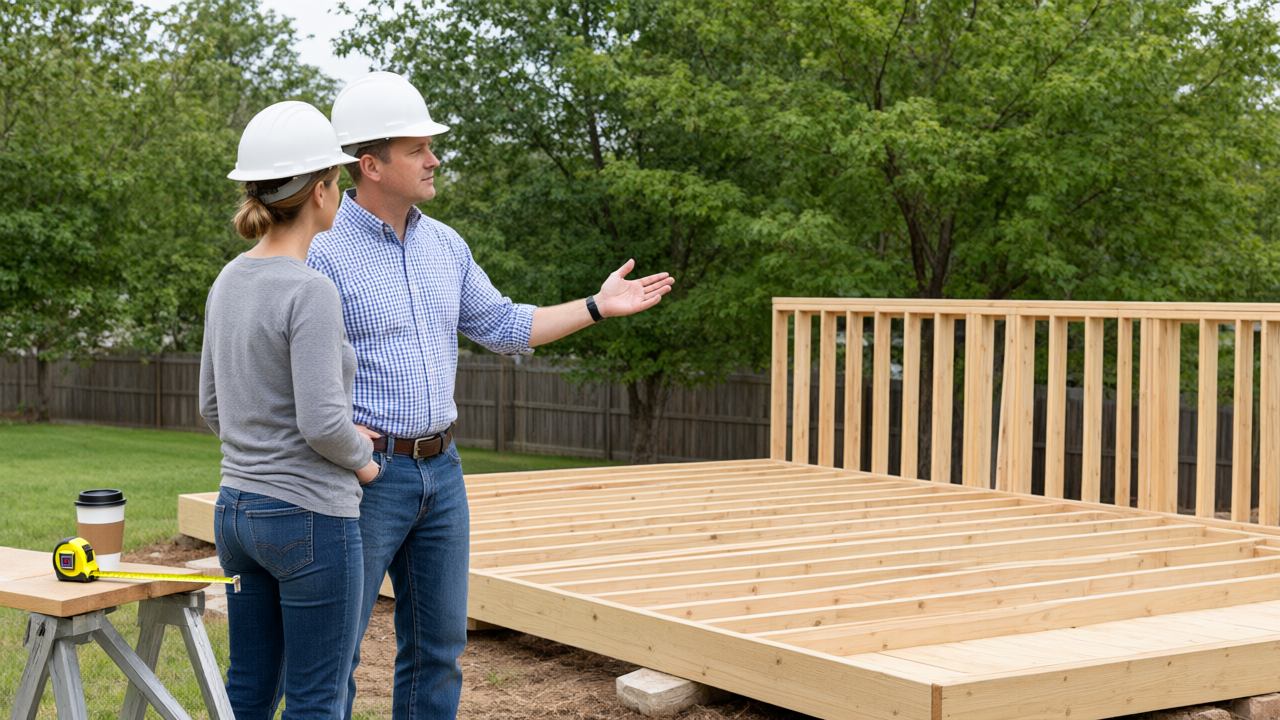
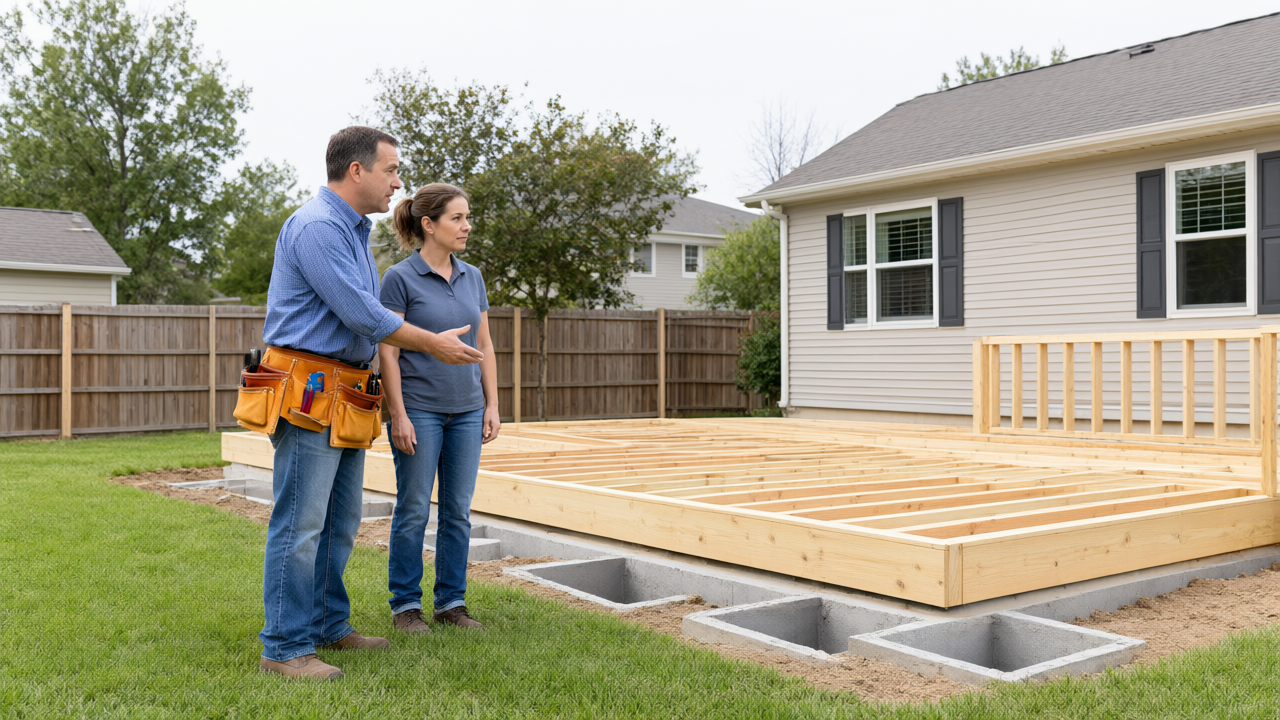
A new deck in Arlington Heights isn't just an addition. It's a $15,000 to $45,000 investment that should last 15 to 25 years. The difference between a contractor who builds it right and one who cuts corners isn't just a few thousand dollars. It's the difference between a space you use every summer weekend and a project that becomes a source of constant repair headaches, safety concerns, and lost property value. Asking the right questions before you sign a contract is the single most important step you can take.
Why the Right Contractor Matters for Your Arlington Heights Deck
Think of your deck as a permanent, load bearing structure attached to your most valuable asset. It's exposed to Illinois' full climate swing, from the deep freeze of January to the humid 90 degree days of July. A poorly built deck doesn't just look bad. The ledger board, the piece that attaches the deck to your house, can rot and pull away, creating a catastrophic collapse risk. The footings, if not dug below the frost line (42 inches deep in our area), will heave with the freeze thaw cycle, causing the entire structure to tilt and become unstable.
This isn't hypothetical. In 2025, the Village of Arlington Heights building department issued over 30 violation notices for decks built without proper permits or that failed inspection due to structural or safety issues. The cost to tear down and rebuild a non compliant deck can double your original investment. The right contractor, like the team at Burns Carpentry, views the permit and inspection process not as a hurdle, but as a free quality assurance check from the village. They build to code as a baseline, not a ceiling.
Your choice also dictates long term value. A custom deck built with proper drainage, high grade fasteners, and durable materials like capped composite or pressure treated lumber rated for ground contact adds tangible equity. A slapped together platform with undersized joists, cheap pine, and visible nail heads becomes a liability you'll have to disclose when you sell. The five questions that follow are designed to separate the true craftsmen from the weekend warriors with a truck.

Question 1: Are You Licensed, Insured, and Familiar with Arlington Heights Codes?
This is non negotiable, and you need proof, not promises. A valid Illinois roofing and exterior remodeling license is required for any deck project over $1,000. More critical is insurance: both general liability and workers' compensation. If a worker gets injured on your property and the contractor lacks comp insurance, you, the homeowner, could be held financially responsible for medical bills. Ask to see the certificates of insurance and call the provider to verify they're current. Burns Carpentry, for example, maintains full, up to date coverage for all projects in Arlington Heights and the surrounding suburbs.
Local code familiarity is the hidden part of this question. Arlington Heights, like many Chicago suburbs, has specific amendments to the International Residential Code. For instance, they may require particular fastener types for ledger board attachment or have rules about deck height relative to property lines. A contractor who primarily works in unincorporated McHenry County might not know these nuances, leading to failed inspections and costly rework. Ask directly: "Can you walk me through the specific Arlington Heights requirements for footings, railings, and stair construction for a deck of this size?" Their answer will tell you everything.
Red Flag Checklist: If a contractor says any of the following, thank them for their time and move on.
- "We don't need a permit for this." (Decks over 30 inches high or attached to the house always require one.)
- "My insurance is with the company, not the job." (Meaningless. You need job specific certificates.)
- "The codes are all the same around here." (They are not.)
- "You can pull the permit as the homeowner to save money." (This shifts all liability and inspection coordination onto you.)
Question 2: Can You Provide a Detailed, Line Item Quote and Timeline?
A professional quote should read like a recipe, not a mystery box. You should be able to see exactly what you're paying for. A vague quote that says "Build deck - $22,000" is a recipe for conflict. What you want is a breakdown that includes: demolition and disposal of old structure (if applicable), material costs for lumber/composite by type and linear foot, concrete for footings (by bag or yard), fasteners (specify hot dipped galvanized or stainless steel), railings and balusters by linear foot, stair construction, lighting, and of course, labor. This transparency allows you to make informed choices. Maybe you want to upgrade to hidden fastener systems for a cleaner look, or choose a higher end composite board. With a line item quote, you can see the exact cost of that upgrade.
The timeline should be equally specific. "Three to five weeks" is a start, but dig deeper. A proper schedule from a contractor like Burns Carpentry will outline key phases: 1) Design and permit approval (1 2 weeks), 2) Material delivery and site prep (1 week), 3) Footing excavation and pouring (2 3 days, weather dependent), 4) Framing and decking installation (1 2 weeks), 5) Railing and stairs (3 4 days), 6) Final cleanup and inspection. They should also tell you what they need from you and when, like clearing the backyard for equipment access or making a decision on stain color by a certain date.
Get this quote and timeline in writing, and make sure it includes a payment schedule. A reputable contractor will never ask for more than 10 15% as a deposit to secure materials. Major payments should be tied to completion of major phases (e.g., 30% after framing inspection). The final 10 15% should be due only after you have a passed final inspection from the village and have done a walk through.

Question 3: What's Your Process for Handling Permits and Inspections?
This question tests their professionalism and local experience. The answer should be a clear, confident process. A top tier contractor handles everything. They will prepare and submit the architectural drawings (often required for decks over a certain size or height), pay the permit fees (which they build into your quote), schedule all required inspections, and be present to meet the inspector. For an Arlington Heights deck, you typically need three inspections: one for the footings before concrete is poured, one for the framing before decking is installed, and a final inspection for the completed structure.
Why is this so important? Because the inspector is your ally. They're checking that the footings are deep enough, the ledger board is properly flashed and bolted to the house framing (not just the siding), the joist spacing is correct for the span, and the railings are the right height (36 inches minimum) with balusters spaced no more than 4 inches apart. If your contractor is resistant to permits, it's because they know their work won't pass muster. Burns Carpentry, for instance, builds the permit process into every project plan because they build to exceed code requirements.
Ask this follow up: "What's the most common reason a deck fails inspection in Arlington Heights, and how do you prevent that on my project?" A great answer might be: "Improper ledger board attachment is common. We use a specific flashing tape, 1/2 inch galvanized lag bolts every 16 inches into the house's rim joist, and we never rely on just nails or screws into siding." That specificity shows real expertise.
Question 4: How Do You Handle Material Selection and Weather Delays?
Material choice is where your deck's longevity, maintenance, and budget intersect. A good contractor won't just ask "wood or composite?" They'll guide you through the pros, cons, and true costs of each. For wood, pressure treated southern yellow pine is the economical choice but requires annual sealing. Tropical hardwoods like Ipe are stunning and durable but can cost 3x as much and are difficult to work with. For composites, the market has evolved dramatically. The best modern capped composite boards from brands like TimberTech or Trex come with 25 to 30 year fade and stain warranties, but you must understand the difference between hollow and solid boards, and the associated fastening systems.
Your contractor should provide physical samples, show you installed examples (photos or a visit to a past project), and be brutally honest about maintenance. "This beautiful cedar will turn silvery gray within a year if you don't stain it. This composite will never need staining, but you'll still need to sweep it and may get mildew in deeply shaded areas." They should also have trusted suppliers and explain how they protect delivered materials from rain and dirt before installation.
Weather is the great variable in Chicagoland. A professional has a plan. They know they can't pour concrete footings if the ground is frozen or if rain is imminent, as it will weaken the mix. They should build weather days into the timeline, especially for the early phases. Ask: "What's your protocol if we have a week of rain in the middle of the project?" The answer should involve protecting the worksite, resequencing tasks if possible (like pre cutting and treating lumber off site), and clear communication about the revised schedule. Avoid contractors who promise an unrealistic "two week build, no matter what." That pressure leads to shortcuts.
Question 5: What Does Your Warranty and Post-Installation Support Include?
The warranty separates a transaction from a relationship. You need two distinct warranties: one on the materials (provided by the manufacturer) and one on the workmanship (provided by the contractor). The material warranty for composites is often 25+ years, but it's only valid if installed exactly to the manufacturer's specifications. Your contractor must provide you with the warranty paperwork and confirm the installation met all requirements.
The workmanship warranty is the contractor's promise that their labor and construction will hold up. One year is standard, but two years, like the guarantee offered by Burns Carpentry, shows greater confidence. The warranty should be in writing and specify what's covered. For example: "Warranty covers defects in construction including but not limited to: loose railings, warping or buckling of deck boards due to improper installation, and structural issues with framing. Does not cover damage from acts of nature, improper homeowner maintenance, or normal wear and tear."
Finally, ask about post installation support. What happens if you notice a squeaky board six months later? Or a section of railing feels loose after the first winter? Do they have a simple process for a service call? A reputable contractor will want to know about and fix any minor issues promptly, as it protects their reputation and your satisfaction. The best answer is something like: "Call us directly. We'll schedule a time to come out, assess it, and if it's covered under our warranty, we'll fix it at no cost to you." This peace of mind is what you're really buying.
Frequently Asked Questions
How much does it cost to build a deck in Arlington Heights?
For a basic, pressure treated wood deck (16x20 feet) with simple railings, expect $15,000 to $25,000. A mid range composite deck of the same size typically runs $25,000 to $35,000. Larger decks, multiple levels, built in seating, lighting, and premium materials like hardwood or high end composites can push the cost to $45,000+. Always get 3 detailed, line item quotes for comparison.
Do I need a permit for a deck in Arlington Heights?
Yes, almost always. If your deck is more than 30 inches above grade at any point, or if it is attached to your house, you need a building permit from the Village of Arlington Heights. Your contractor should handle this process. Building without a permit can result in fines and forced removal.
What's better, wood or composite decking?
It depends on your budget and how much maintenance you want. Wood (like pressure treated pine) has a lower upfront cost but requires annual cleaning and sealing. Composite has a higher initial cost but needs only occasional cleaning with soap and water. For most Arlington Heights homeowners who want to maximize their time enjoying the deck rather than maintaining it, modern composite is the preferred choice in 2026.
How long does it take to build a deck from start to finish?
From the initial consultation to the final walkthrough, plan on 4 to 8 weeks for a typical deck. This includes 1 2 weeks for design and permitting, 1 week for material delivery, and 2 4 weeks for construction, which is subject to weather delays. A detailed timeline should be part of your contractor's proposal.
If you're in Arlington Heights or the surrounding suburbs and these questions resonate with you, the next step is a conversation with a contractor who welcomes them. Burns Carpentry offers free, detailed estimates that include answering all five of these questions upfront. They'll walk your property, discuss your vision, and provide the clear, line item quote and timeline that turns a major investment into a confident decision. Give them a call to schedule your consultation.