Most Cary homeowners who call about a deck addition already have a picture in their head: a few chairs, a grill, maybe a string of lights. Then they sit down with a real budget and discover the structure itself is only about 55 to 65 percent of the total project cost. The rest goes into the add-ons that decide whether the space actually gets used in April and October, or just sits there looking pretty from the kitchen window. Deck Building in Cary, IL comes with a specific set of climate demands that make those add-ons less about luxury and more about getting your money's worth out of a structure that has to survive everything McHenry County throws at it.
Here is what actually moves the needle on a backyard deck in 2026, what each upgrade costs in this market, and where you can skip the professional help entirely.
Built-In Seating and Storage: Maximize Your Cary Deck's Functionality
Floating benches and storage bump-outs are the highest return add-ons on a per-dollar basis, mostly because they use square footage you already paid for. A bench built into the perimeter railing runs roughly $450 to $900 per linear foot depending on whether it includes a backrest, and it eliminates the need to buy and store freestanding furniture that will blow around in a spring storm. More importantly, it clears the deck surface for actual traffic.
Storage is where homeowners get genuinely excited once they see it. A hinged bench lid over a weatherproof box gives you a place for cushions, grill tools, and the snow shovel that currently lives in your garage entryway. Under-deck storage, accessed through a door in the skirt, is a bigger lift, typically $1,800 to $4,500 depending on size and whether the space is finished, but it turns dead space into a shed you did not have to build.
A few things worth knowing before you commit:
- Ask about drainage. Any bench with a lid needs a sloped interior and a drain path, or you will be bailing water out after every rain.
- Confirm the framing supports it. A bench seat is a structural element. It needs blocking and proper attachment to the joists, not just decking screws into the surface board.
- Skip built-in storage if your deck sits under 18 inches off grade. There is not enough clearance to make it usable, and the cost outweighs the benefit.
If you are handy and your deck already has solid framing, a simple bench with a lift-off lid is a weekend project. Anything that ties into the railing or requires cutting into the deck surface is worth having a carpenter handle, because a failed attachment point means a failed railing, and that is a safety issue.

Pergola and Shade Structures: Extending Your Outdoor Season in Cary, IL
Here is the number that surprises people: a west-facing deck in Cary can hit 140 to 150 degrees Fahrenheit on the surface of composite decking during a July afternoon. Not air temperature, surface temperature. Bare feet and dog paws notice immediately. A pergola or shade structure is the difference between a deck that gets used from 4 p.m. onward and one that gets abandoned until sunset.
Burns Carpentry builds custom pergolas as a standalone service, and the pricing in this area typically lands between $4,500 and $9,000 for a 12x12 attached structure in cedar, with the range driven by post size, rafter spacing, and whether you add a slatted or solid roof. A solid roof with a slight pitch costs more but actually blocks rain, which stretches usable season into October and starts it in March. Slatted roofs look better and let more light through, but they only block about 60 percent of direct sun.
What most homeowners do not think about until it is too late is the wind load. McHenry County sees regular gusts over 40 mph, and an attached pergola that was not engineered for that will rack and pull away from the house within a few seasons. Ask specifically how the ledger is attached and whether the posts are set in concrete below the frost line. In this climate, that means 42 inches minimum for a footing. Anyone who tells you a surface-mounted post base is fine is not building for Illinois.
Where you do not need a pro: a freestanding shade sail or a cantilevered umbrella over a small deck. Both are inexpensive, both work, and neither requires a permit.
Lighting and Electrical Add-Ons: Safety and Ambiance for 2026
Deck lighting splits into two categories, and they are not interchangeable. Low voltage LED systems run on a transformer and can be installed by a competent DIYer or a carpenter, typically $600 to $1,800 for a full setup with post caps, stair lights, and a transformer. Line voltage work, meaning anything that ties into your home's electrical panel, requires a licensed electrician in Illinois. No exceptions. A carpenter who offers to run 120 volt wiring to your deck without an electrician is offering you a code violation and an insurance problem.
The safety case for lighting is stronger than most people realize. Illinois code requires illumination on stairways, and the majority of deck injuries happen on unlit steps during evening entertaining. A simple riser light on each step, roughly $40 to $70 per fixture installed, is cheap insurance. Post cap lights, which replace the flat cap on a 4x4 or 6x6 post, run $25 to $60 each and do more for the look of a deck than almost any other single upgrade.
A practical checklist for the electrical side:
- Decide your outlet locations before framing. Adding a weatherproof outlet during construction costs about $150. Retrofitting one through finished decking and siding costs three times that.
- Plan for a dedicated circuit if you are considering a hot tub or an outdoor kitchen appliance. Most decks have none, and a shared circuit will trip constantly.
- Ask whether the electrician pulls a separate permit. In Cary, electrical work is permitted separately from the deck permit, and a contractor who handles both is saving you a headache.
- Get the transformer sized correctly. Undersized transformers cause flickering and premature LED failure, and it is a $40 mistake that costs $400 to fix later.
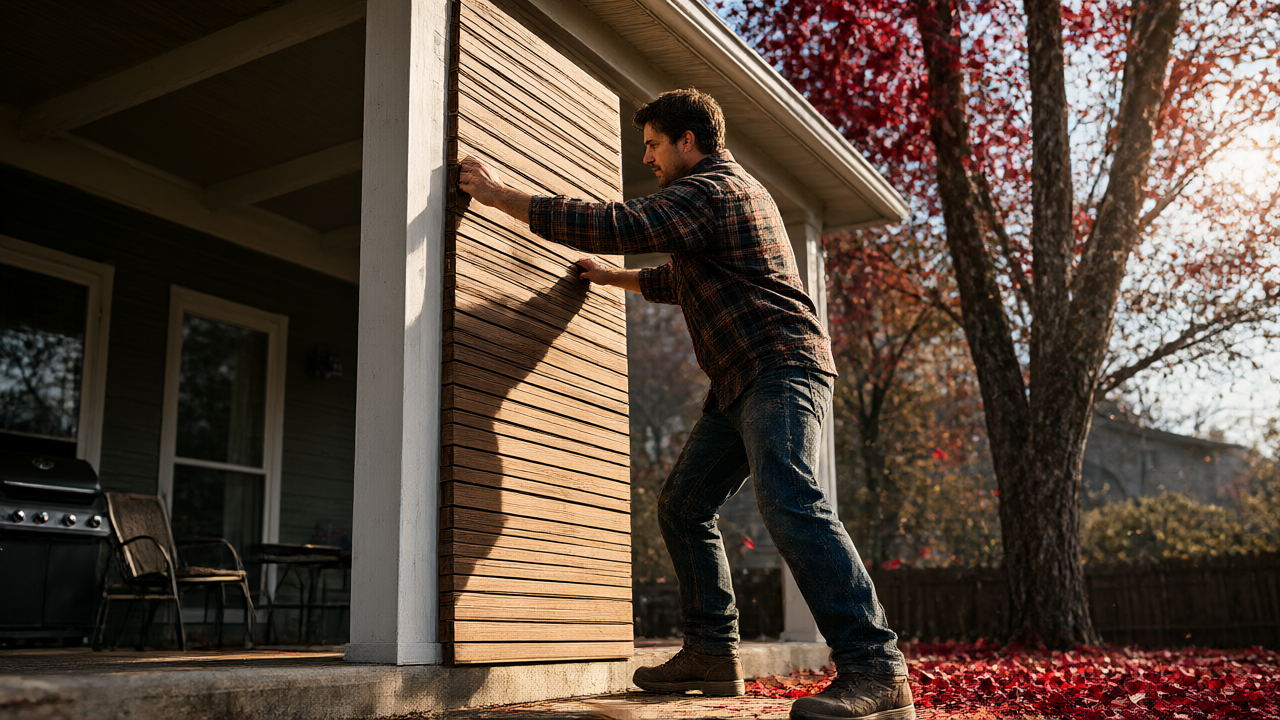
Outdoor Kitchen and Bar Features: What Cary Homeowners Should Consider
An outdoor kitchen is the add-on with the widest cost range and the most opportunity to overspend. A basic built-in grill island with a counter and storage runs $3,500 to $7,000. A full setup with a refrigerator, sink, and bar seating can hit $18,000 to $30,000, and at that point you are essentially building a second kitchen that sits empty from November through March.
The honest advice: build the infrastructure now and add appliances later. Running a gas line and a dedicated electrical circuit to a future kitchen location during deck construction costs a fraction of doing it afterward. A stub-out for gas and one 20 amp circuit might run $800 to $1,500 during the build. Retrofitting the same thing two years later involves tearing up decking and running lines through finished space.
Material choice matters more here than anywhere else on the deck. Composite decking holds up to grease and heat well, but the counter surface is what takes the abuse. Granite and quartz survive Illinois freeze-thaw cycles. Wood and tile counters generally do not, and tile grout lines will crack within two winters. If your budget is tight, a stainless steel counter is the most durable option per dollar and looks appropriate next to a grill.
One more thing worth saying plainly: if you grill four or five times a year, an outdoor kitchen is not a good use of money. A good freestanding grill on a deck with a solid surface and a nearby outlet will serve you better. Save the built-in for the homeowners who genuinely cook outside most of the year.
Budgeting for Add-Ons: Cost Expectations and ROI in Cary, IL
Deck add-ons do not return money the way a kitchen remodel does, and pretending otherwise is dishonest. What they do is increase the usable season, reduce maintenance, and make the space more attractive to buyers who are comparing two similar homes. In the Cary and greater Arlington Heights area, real estate agents consistently report that a well-built deck with lighting and a pergola helps a home sell faster in the spring market, though the premium is difficult to quantify.
The realistic math for a 2026 project: a 16x20 composite deck with railing typically runs $18,000 to $28,000 in this market. Add-ons stack on top of that:
- Built-in bench seating: $1,500 to $3,500
- Under-deck storage: $1,800 to $4,500
- Attached pergola: $4,500 to $9,000
- Low voltage lighting package: $600 to $1,800
- Gas and electrical stub-outs for future kitchen: $800 to $1,500
That puts a fully loaded deck in the $28,000 to $45,000 range. The way to keep this sane is to prioritize by how much you will actually use each feature. Lighting and seating get used every single time you are on the deck. A pergola gets used all summer. An outdoor kitchen gets used if you are a certain kind of cook. Build in that order.
Two final pieces of insider advice. First, get your permits sorted early. Burns Carpentry handles the permit process with Cary municipal offices as part of the job, and that is worth asking about with any contractor, because a deck built without a permit becomes a problem at resale. Second, ask about the workmanship warranty in writing. Burns Carpentry guarantees workmanship for two full years, and any contractor who will not put that in writing is telling you something.
Frequently Asked Questions
How much does it cost to add a pergola to an existing deck in Cary, IL?
Most attached pergolas in this area run between $4,500 and $9,000 for a 12x12 cedar structure. The price depends on post size, roof style, and whether the footings need to be dug and poured. Adding a pergola to an existing deck costs more than building it during new construction because the attachment points and footings have to be worked around finished decking.
Do I need a permit for deck lighting or an outdoor kitchen in Cary?
Low voltage lighting generally does not require a permit, but any line voltage electrical work does, and it must be done by a licensed electrician. Outdoor kitchens with gas lines also require permits. The Town of Cary handles deck and electrical permits separately, so confirm with your contractor that both boxes get checked.
Is built-in seating worth it on a small deck?
Yes, often more than on a large one. Built-in benches along the railing free up floor space for a table or traffic flow in a way freestanding chairs cannot. On a 12x14 deck, perimeter seating can effectively double your usable square footage.
What is the best time of year to add these features to a deck in Illinois?
Late April through early June is ideal, and September through October is the second-best window. Summer heat and humidity slow curing for concrete footings, and winter makes staining and sealing difficult. If you are planning a 2027 project, get on a contractor's schedule by February, because spring books fill fast in McHenry County.
If you are in Cary or anywhere across the northwest suburbs and your deck project is heading past the DIY stage, Burns Carpentry handles the whole scope, from framing and pergolas to lighting coordination and permit paperwork. Call them for a free estimate and they will tell you straight whether the add-on you have in mind is worth the money or whether you are better off putting it toward something else.