A deck contract in Cary, IL is not paperwork. It is the single document that decides whether your $18,000 to $45,000 outdoor project ends with a handshake and a finished deck or a six month argument about who pays for the footings that failed inspection. Most homeowners spend three weekends comparing bids and about eleven minutes reading the contract. That ratio is backwards. Here are the five clauses that separate a professional Deck Building agreement from a liability trap, plus the exact language you should be looking for before you sign anything in 2026.
Why Your Deck Building Contract Matters More Than the Bid Price in Cary, IL
The cheapest bid is almost never the cheapest project. In the Cary and McHenry County market, a pressure treated deck runs roughly $18,000 to $28,000 for a standard 16x20 footprint, while a composite build with upgraded railing lands closer to $32,000 to $45,000. When one contractor quotes $14,000 on the same scope, the difference is hiding somewhere: thinner joists, missing flashing, no permit pull, or a crew that disappears in August.
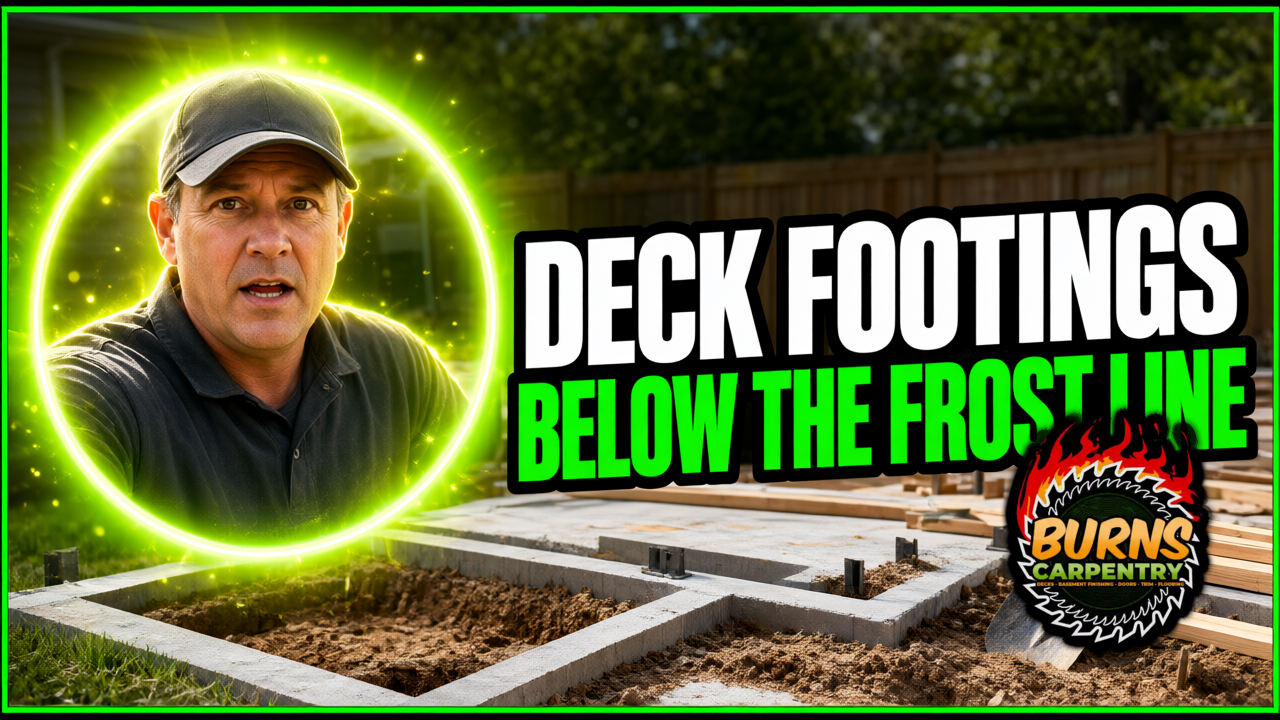
Here is what makes Cary specific. The village sits in a climate that swings from single digit January lows to 95 degree July afternoons, with frost depths that push footings down to 42 inches in this part of Illinois. A deck built on 12 inch piers will heave and rack within two winters. Your contract needs to spell out footing depth, not just deck dimensions. It also needs to name who pulls the permit. Burns Carpentry handles the entire application process with Cary municipal offices on deck and basement projects, but plenty of contractors will quietly ask you to pull an owner permit so the inspection record lands on your name instead of theirs.
The contract is where you find out which kind of builder you hired. A good one will hand you a document that reads like a plan. A bad one hands you a single page with a total and a signature line.

5 Contract Clauses Cary Homeowners Should Never Sign Without in 2026
Read every contract with these five items highlighted in your head. If any of them is missing or vague, ask for a revised draft in writing. A builder who resists reasonable contract language is telling you something about how they handle change orders and warranty calls.
- A written scope with material specifications. "Composite decking" is not a specification. It should read something like "Trex Transcend, 1 inch profile, hidden fastener system, color specified in attachment A." Decking brand, joist size (2x10 minimum for a 16 foot span), hanger hardware, and railing system all need to be named. Vague scopes are where upcharges come from.
- Footing depth and structural details. Ask for the footing depth in writing. In this region that means below the frost line, typically 42 inches. The contract should also specify ledger board attachment method and flashing detail, because a failed ledger is the number one cause of deck collapse in the U.S.
- A named permit responsibility. One line should state clearly who obtains the permit and who pays the fee. Cary permit fees for a residential deck generally run a few hundred dollars, but the liability of an unpermitted deck is far bigger and can surface years later at resale.
- A completion date with a defined weather clause. "Approximately three to five weeks" is fine for a verbal estimate, but the contract needs a start date and a substantial completion date. Burns Carpentry quotes three to five weeks from consultation to finished deck on typical Cary projects, and that range should appear in the agreement.
- An explicit warranty in writing. The workmanship warranty should be stated as a number of years, not a promise. Burns Carpentry guarantees workmanship for two full years from completion, and manufacturer warranties on the decking and hardware should be listed separately with the length of coverage.
Payment Schedules and Lien Waivers: Protecting Your Money During Deck Construction
The single most common way homeowners lose money on a deck is front loaded payment. If a contractor asks for 50 percent down before a shovel hits the dirt, that is your cue to slow down. A fair schedule looks like this: 10 to 20 percent at signing to lock in materials and scheduling, another payment when framing is complete and inspected, a third at decking installation, and the balance at final walkthrough. Never pay the final invoice before you have walked the deck, tested every railing post for wobble, and confirmed the final inspection passed.
Lien waivers are the clause most homeowners have never heard of and wish they had. In Illinois, subcontractors and material suppliers can file a mechanic's lien against your property if they are not paid by the general contractor, even if you already paid the general contractor in full. The fix is simple. Require a conditional lien waiver with each progress payment and a final unconditional lien waiver from every sub and supplier at closing. Ask for it in the contract. A reputable builder will already have this language in place.
Pay for progress, not promises. The money should follow the work, never lead it.
One more thing on payment: never pay cash without a receipt that names the project address and the amount applied to which milestone. If a dispute ever lands in small claims court, that paper trail is your evidence.

Change Orders and Weather Delays: What Cary, IL Contracts Should Say
Every deck project changes. You see the framing go up and decide you want a bench seat along one rail. You upgrade the railing because the neighbor's composite looks better than you expected. Mid project changes are normal and fine, as long as the contract tells you how they are priced.
Look for a change order clause that requires written approval before any additional work begins, with the cost and schedule impact spelled out. Verbal change orders are the source of most billing disputes in the trades. If your builder says "we'll figure it out at the end," that is not a change order process, that is a blank check. A clean clause reads something like: "Any modification to the scope of work requires a signed change order stating the added cost and adjusted completion date. No additional charges will be billed without prior written approval."
Weather deserves its own paragraph. Cary sits in a region that gets roughly 36 inches of precipitation a year, including lake effect snow events that can shut down outdoor work for days at a time. A reasonable contract should define weather delays as excusable and specify how they are communicated. What it should not do is let the builder claim weather delay indefinitely. Ask for a clause that requires notification within 24 hours of a weather stoppage and a revised completion date within three business days. If the contract says nothing about weather, ask why not. Illinois contractors deal with it constantly, so a contract that ignores it was probably copied from a template.
How to Verify Your Deck Builder's Insurance and Warranty Terms Before Signing
Any contractor can say they are insured. Verification takes about ten minutes and it is the difference between a covered accident and a lawsuit naming you as the property owner. Ask for three documents and actually look at them.
- Certificate of general liability insurance with at least $1 million per occurrence. Call the insurance agent listed on the certificate to confirm the policy is active. Certificates can be forged or expired.
- Workers compensation certificate covering every person who will set foot on your property. If the builder says their crew is "all subcontractors," ask for each sub's certificate separately. An uninsured worker injured on your deck is a claim against your homeowner policy.
- Illinois state registration and local licensing documentation. Burns Carpentry is fully licensed and insured to work in Cary, with credentials current and verified for McHenry County and the surrounding Illinois areas.
On warranty, ask two questions. First, what does the workmanship warranty cover and for how long? Two years is a solid baseline for carpentry work in this climate. Second, does the warranty transfer if you sell the home? Manufacturer warranties on composite decking often run 25 years and are transferable, but only if the deck was installed to spec and the paperwork exists. Keep every document in a folder with your home records.
One honest note: if you are replacing a few boards on a 12 year old deck and the joists are sound, you probably do not need a full contract or a full rebuild. Burns Carpentry handles Deck Repairs for exactly that scenario. The five clauses above matter when you are spending real money on new construction, not when you are swapping out three cracked boards on a Saturday.
If you are planning a deck build in Cary or anywhere across the northwest suburbs, from Arlington Heights to Elgin or Schaumburg, Burns Carpentry will walk you through the contract line by line before you sign. That is the standard. Any builder who will not do that is telling you everything you need to know.
Frequently Asked Questions
How much does deck building cost in Cary, IL in 2026?
A standard pressure treated deck typically runs $18,000 to $28,000 for a 16x20 footprint, while Composite Decks with upgraded railing land between $32,000 and $45,000. Final pricing depends on height off grade, footing requirements, railing type, and whether the site needs grading work.
Do I need a permit to build a deck in Cary, IL?
Yes, residential decks in Cary require a permit through the village. The permit covers footing inspections, framing, and final inspection. Burns Carpentry manages the entire permit application process with Cary municipal offices so the inspection record is properly documented.
What should I look for in a deck building contract?
Look for a written scope with named materials, footing depth specifications, permit responsibility, a payment schedule tied to progress, a change order clause requiring written approval, a workmanship warranty stated in years, and lien waiver language. Missing any of those is a red flag worth asking about before you sign.
How long does a deck build take in Cary?
Most projects take three to five weeks from initial consultation to completed deck, weather permitting. The timeline includes design discussion, permitting, site prep, framing, decking installation, and final inspection, so plan for a late fall or early winter finish if you start in October.
If you are in Cary and ready to talk through a deck project, Burns Carpentry will walk you through the scope, the payment schedule, and the warranty before you sign anything. Call them and ask the hard questions. A good builder will be glad you did.