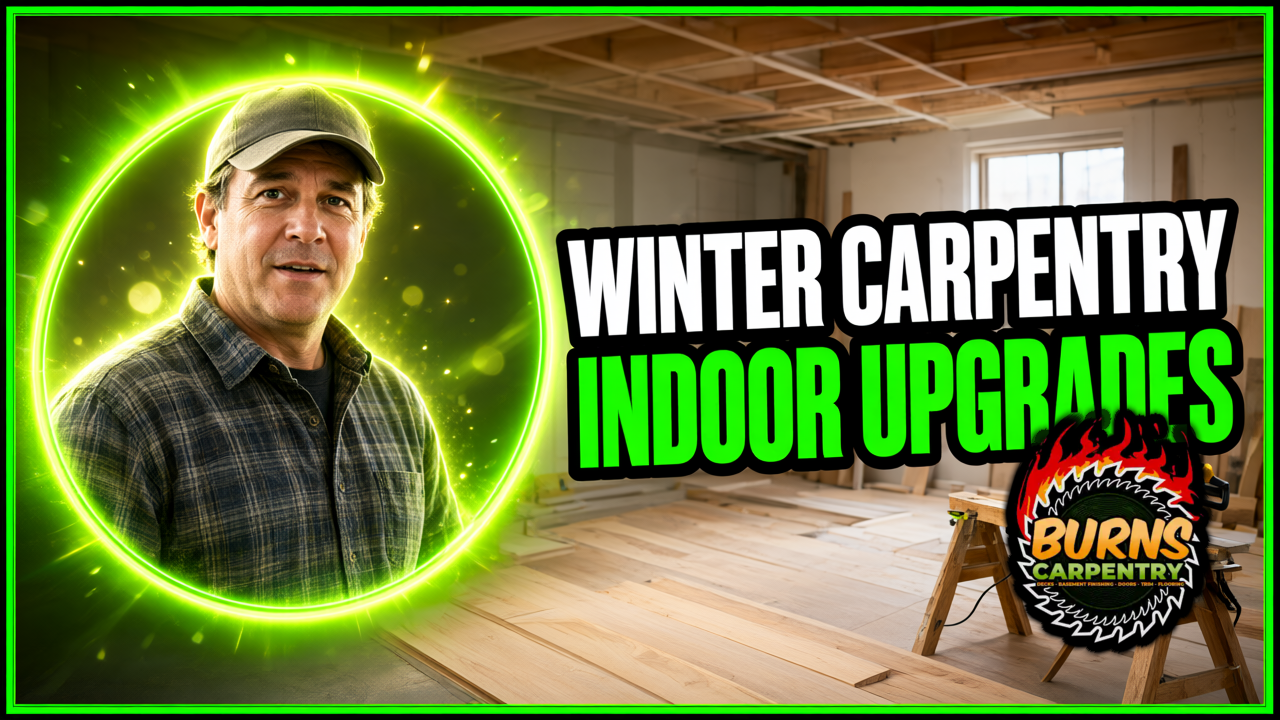
Chicago winters don't shut down good carpentry work. They just move it inside. While most homeowners are putting their outdoor projects on hold from November through March, the smart ones are booking Basement Finishing, Flooring Installation, and custom built-ins for the cold months, when contractors have more availability and your house is already buttoned up against the cold. If you've been putting off indoor carpentry in Chicago because you assumed winter was the off-season, here's the reality: December through February is when the best crews actually have room in their schedule. And with the right planning, your project wraps up right as the thaw hits.
Why Chicago Homeowners Should Plan Indoor Carpentry Projects for Winter 2026
There's a practical reason winter works so well for interior carpentry: your house is already sealed. Windows are shut, the furnace is running, and humidity levels are stable, which matters more than most people realize. Wood flooring and trim acclimate best in a climate-controlled environment, and a Chicago January gives you exactly that. Compare that to a humid July install where planks can swell before they're even nailed down, and the winter window starts looking less like a compromise and more like an advantage.
The scheduling math is even more compelling. Spring and summer are peak season for Deck Building and exterior work across the Chicago suburbs, which means contractors are booked solid from April through September. If you call a carpenter in May about a basement finishing project, you might wait six to eight weeks just for a site visit. Call in November or December, and you're often looking at a consultation within a week and a start date within two to three weeks. For homeowners in Cary, Arlington Heights, or Naperville planning to use a finished basement or new floors by spring, starting the conversation in late 2026 is the difference between enjoying the space in March and waiting until June.
One word of caution: not every indoor project is a great winter fit. Anything that requires cutting a hole in the building envelope, like a new exterior door or major window work, is better saved for milder weather. But basement finishing, flooring installation, and custom built-ins? Those are ideal cold-weather projects. Here's a quick checklist of what to confirm before booking:
- Material acclimation time: Ask how long your flooring or wood products need to sit in the house before installation. Most hardwoods want 72 hours minimum at indoor temperature.
- Moisture readings: Basement projects should start with a moisture test on the concrete. A good carpenter will do this before quoting anything.
- Permit lead time: Chicago-area municipalities vary widely. Some suburbs process basement permits in two weeks; others take six. Ask your carpenter who handles the paperwork, and get it in writing.
- Dust and ventilation plan: Winter means closed windows. Confirm how the crew will manage dust, whether that's plastic barriers, negative air machines, or a shop vac with a HEPA filter.
Basement Finishing: Turn Unused Space into a Winter Retreat
A finished basement is the single highest-return indoor project for Chicago-area homeowners who want more usable square footage without adding on. In most of the suburbs Burns Carpentry serves, including Cary, Schaumburg, and Palatine, finishing a 600 to 1,000 square foot basement typically runs $35,000 to $75,000 depending on whether you're adding a bathroom, bedroom, or wet bar. That's a fraction of what a comparable above-ground addition would cost, and you get to use the space all winter instead of watching it collect boxes.
The moisture question is the one that separates a basement that lasts from one that grows mold by March. Burns Carpentry starts every basement finishing project with a full moisture assessment, checking for existing seepage, testing the slab, and identifying where water would go if it ever got in. If there's a problem, it gets addressed before framing goes up. That's not upselling; that's the difference between a finished basement and an expensive mistake. If your basement has visible water stains, efflorescence (that white chalky powder on the concrete), or a musty smell, get a waterproofing assessment before you call a carpenter. You don't need a finished basement yet. You need to solve the water problem first, and no honest carpenter will tell you otherwise.
For homeowners with a dry, sound basement, winter is the best time to build. Framing, insulation, drywall, and trim all go faster when the crew isn't fighting summer humidity. And there's a real psychological payoff: by the time the holidays roll around in 2026, you're not staring at a cold concrete room. You're using it. A finished basement with a family room, a guest suite, or a home office is the kind of upgrade that pays you back every single day of the Chicago winter.
Flooring Installation: Best Options for Cold-Weather Months
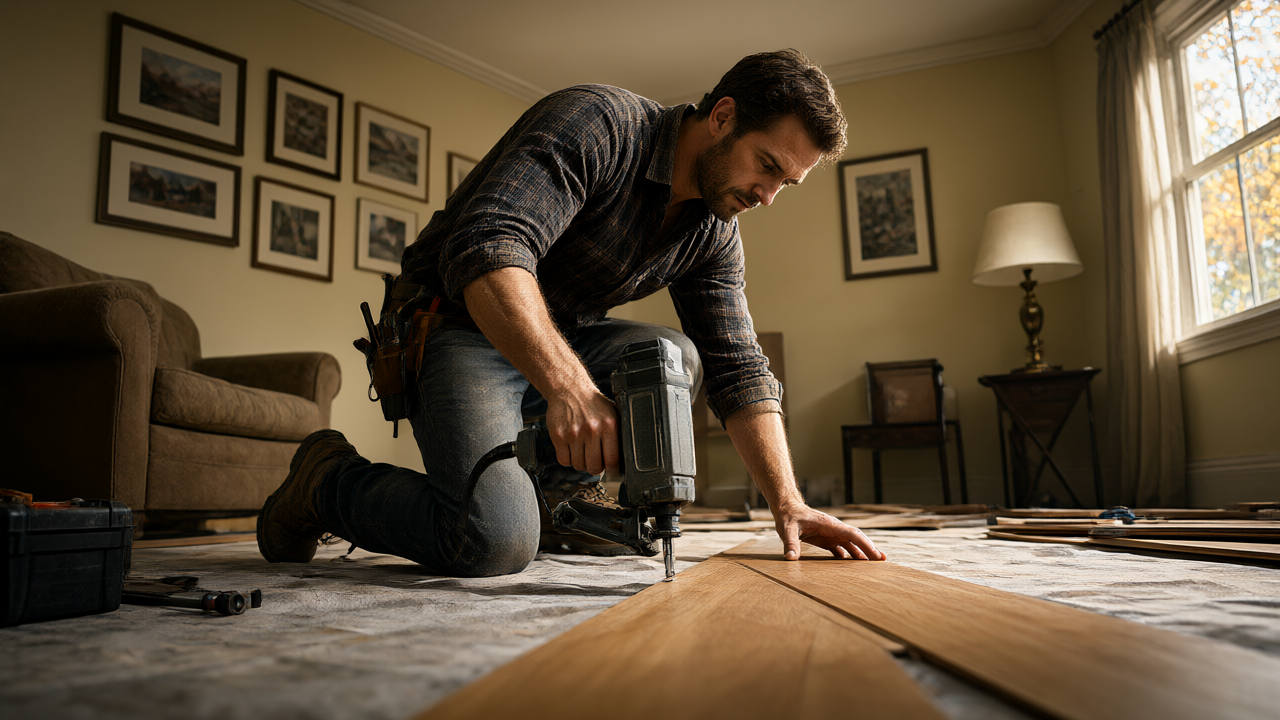
Flooring is the other indoor project that works beautifully in winter, but the material choice matters more than people think. Laminate Flooring and Vinyl Flooring are both excellent cold-weather options because they're dimensionally stable and don't care much about humidity swings. Burns Carpentry installs both across the Chicago suburbs, and for basements specifically, luxury vinyl plank is often the smartest choice: it's waterproof, it handles temperature fluctuations, and it installs over most concrete slabs with a proper underlayment.
Hardwood is trickier in winter, but not impossible. The key is acclimation. Wood needs to sit in the room where it will be installed for at least 72 hours, ideally longer, so it can adjust to your home's indoor humidity. In a Chicago January, indoor humidity can drop below 30%, which causes wood to shrink. A good installer will bring a moisture meter, check the subfloor, and recommend a humidifier if needed. If a contractor shows up in December with boxes of hardwood and starts nailing the same day, that's a red flag. Ask them directly: "How long will the flooring acclimate before installation?" If the answer is anything less than 48 hours, find someone else.
A typical flooring installation takes two to five days depending on square footage and material. Your home stays usable throughout; the crew works room by room so you're never without a kitchen or a bathroom. And here's an insider tip: winter is when you can often negotiate better pricing on installation labor, because crews are less booked. That doesn't mean haggling to the point of disrespect, but it does mean you have more leverage than you would in June. For homeowners in Aurora or Elgin thinking about new floors, the November through February window is the one to target.
Custom Built-Ins and Storage: Maximizing Space Without a Deck
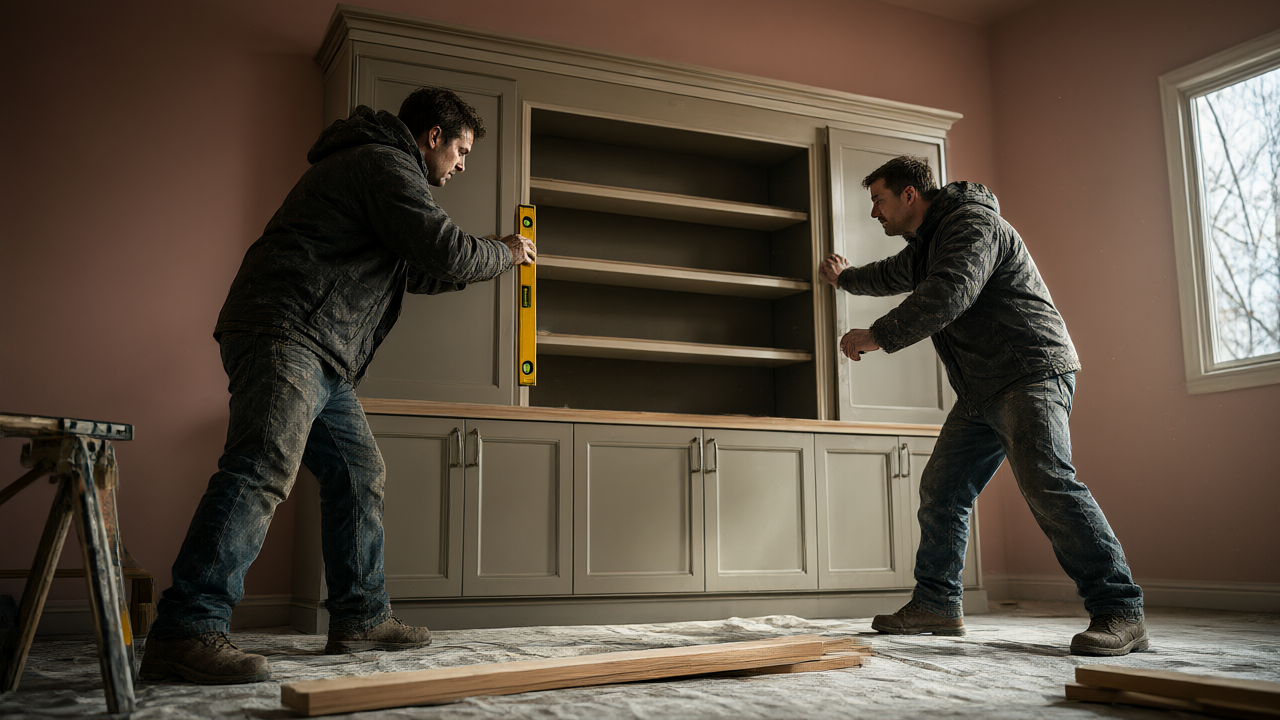
Not every winter project needs to be a full basement or a whole-house flooring job. Custom built-ins are the sleeper upgrade: bookshelves, mudroom storage, window seats, home office cabinetry, and pantry systems that turn dead space into functional square footage. In a Chicago winter, when everyone is spending more time indoors, built-ins make the house feel bigger without adding a single square foot.
The cost range is wide because built-ins are custom by definition. A simple set of built-in bookshelves in a living room might run $3,000 to $6,000, while a full mudroom system with bench seating, cubbies, and closed storage can run $8,000 to $15,000. The payoff isn't just aesthetic. In the Chicago market, well-executed built-ins read as high quality craftsmanship to buyers, and they solve real problems: where do the boots go, where does the laptop live, where do the board games actually belong. For families in Arlington Heights or Naperville with a growing pile of winter gear by the back door, a mudroom built-in is the kind of project you'll wonder how you lived without.
The winter advantage here is precision. Custom carpentry requires shop time, and shop time is easier to schedule when the outdoor crews aren't competing for it. Burns Carpentry handles design, fabrication, and installation, and can work with your own design or materials if you've already got a vision. The one thing to plan for is lead time on specialty materials. If you want a specific wood species or a particular finish, order it in November so it's ready for a January install. Walking into a lumber yard in December and hoping for the best is how projects slip into spring.
How Burns Carpentry Handles Indoor Projects Across Chicago Suburbs
Burns Carpentry is licensed and insured across McHenry County and the surrounding Illinois areas, and the company handles the permit process for basement remodels and other permitted work, which removes one of the biggest headaches for homeowners. Workmanship is guaranteed for two full years from project completion, and materials carry their own manufacturer warranties. For a winter project, that matters: if something settles or shifts as the seasons change, you've got coverage.
The process is straightforward. You call, describe what you're thinking about, and schedule a free estimate. A carpenter visits the property, measures, discusses materials, and gives you a written quote. From there, you get a start date, a schedule, and a clear sense of what happens when. For homeowners in Cary, Arlington Heights, Aurora, Chicago, Elgin, Joliet, Naperville, Palatine, Schaumburg, or Waukegan, that first conversation is the only commitment. If your project turns out to be something you can handle yourself, a good carpenter will tell you. If it's beyond DIY territory, you'll know what it costs before anyone picks up a hammer.
Frequently Asked Questions
How much does basement finishing cost in Chicago?
Most basement finishing projects in the Chicago area run between $35,000 and $75,000, depending on square footage and whether you're adding a bathroom, bedroom, or wet bar. A basic open family room costs less; a full suite with plumbing and electrical costs more. Get a written estimate before committing.
Is it worth it to install hardwood floors in winter?
Yes, with the right precautions. Wood needs at least 72 hours to acclimate to your home's indoor humidity before installation. If your installer checks moisture levels and gives the material time to adjust, winter is actually a great time for hardwood because your home's climate is stable.
Do I need a permit to finish my basement in Illinois?
In most Chicago-area municipalities, yes. Basement finishing typically requires a building permit, and electrical and plumbing work usually require separate inspections. A reputable carpenter will handle the permit process for you, so ask upfront who is pulling the permit.
What should I look for when hiring a carpenter for indoor winter work?
Look for proof of licensing and insurance, a written estimate with a clear scope, and a crew that talks about dust control and material acclimation before you ask. Ask how they handle moisture in basements, and confirm the workmanship warranty in writing. If a quote is dramatically lower than the others, ask why.
If you're in the Chicago suburbs and you've got a basement, a floor, or a wall of built-ins that's been waiting for the "right time," winter 2026 is that time. Burns Carpentry handles basement finishing, flooring installation, custom built-ins, and more across Cary, Arlington Heights, Naperville, and the surrounding areas. Call for a free estimate and they'll tell you straight up whether your project is a good winter fit.