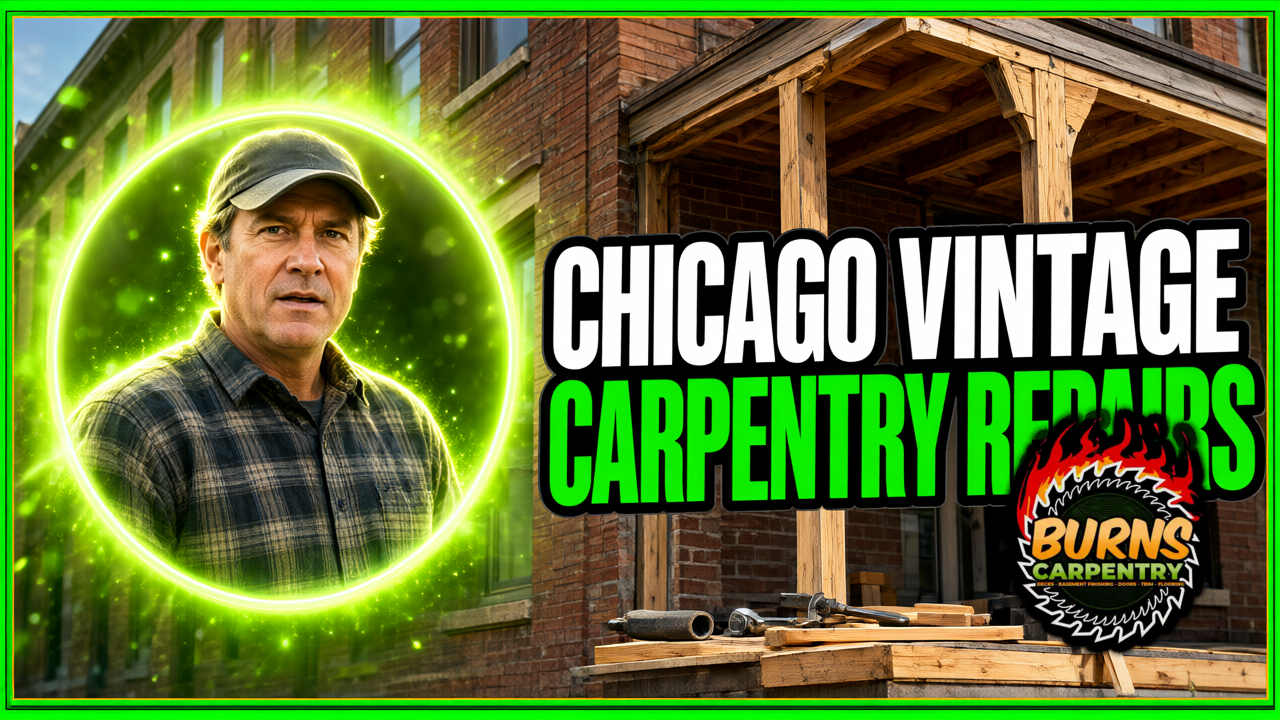
Chicago's pre-1940 housing stock, roughly 400,000 two-flats, greystones, and worker's cottages, was built with old growth lumber that is denser, harder, and more rot resistant than anything you can buy at a big box store today. That is the good news. The bad news is that the same houses have spent 80 to 100 years absorbing freeze-thaw cycles, lake-effect moisture, and the occasional roof leak, and the carpentry repairs that protect their value are not the ones most contractors pitch. If you own a vintage home in Chicago or the surrounding suburbs, five specific repairs deliver the highest return on investment in 2026, and knowing which ones to prioritize can mean the difference between a $4,000 fix and a $40,000 rebuild.
Why Chicago's Pre-1940 Homes Need Specialized Carpentry Repairs
Walk through any block in Logan Square, Lincoln Park, or Oak Park and you are looking at framing cut from old growth Douglas fir and southern yellow pine. That lumber came from forests that no longer exist. It holds a nail, resists rot, and carries loads that modern fast growth lumber cannot match. The problem is not the wood itself. It is what has happened to it over eight decades of Chicago weather.
The Chicago region swings from single digit wind chills in January to 95 degree humidity in July, and that cycle repeats 80 to 100 times over a home's life. Wood expands and contracts with every swing. Paint cracks, water gets in, and the rot starts in places you cannot see from the sidewalk. The other factor is that pre-1940 homes were built with details that modern builders stopped using: deep porch overhangs, decorative corbels, true divided light windows, and solid wood trim profiles that are now custom order items. Repairing them takes a carpenter who understands how those assemblies were built, not just someone who can run a nail gun.
That is the gap Burns Carpentry fills across Chicago and the surrounding suburbs. Andy Burns and his crew work on vintage homes regularly, and the approach is always the same: match the original construction method, use materials that age the same way, and fix the underlying cause instead of covering it up. That philosophy matters most on the five repairs below.
5 High ROI Repairs That Protect Vintage Home Value in 2026
These are the repairs that appraisers, home inspectors, and experienced carpenters flag first, and they are the ones that protect both structural integrity and resale value.
1. Porch Column and Beam Repair
Chicago's front porches are architectural signature pieces, and they are also the most exposed wood on the house. Column bases sit in splash zones where rain and snowmelt collect, and the beam behind the column is often hollowed out by rot before the paint shows a single blister. A porch that feels bouncy underfoot or shows a gap where the column meets the base needs a carpenter, not a painter. Repairs typically run $1,200 to $3,500 per column when the damage is caught early, versus $8,000 to $20,000 for a full porch rebuild once the beam and deck framing are compromised.
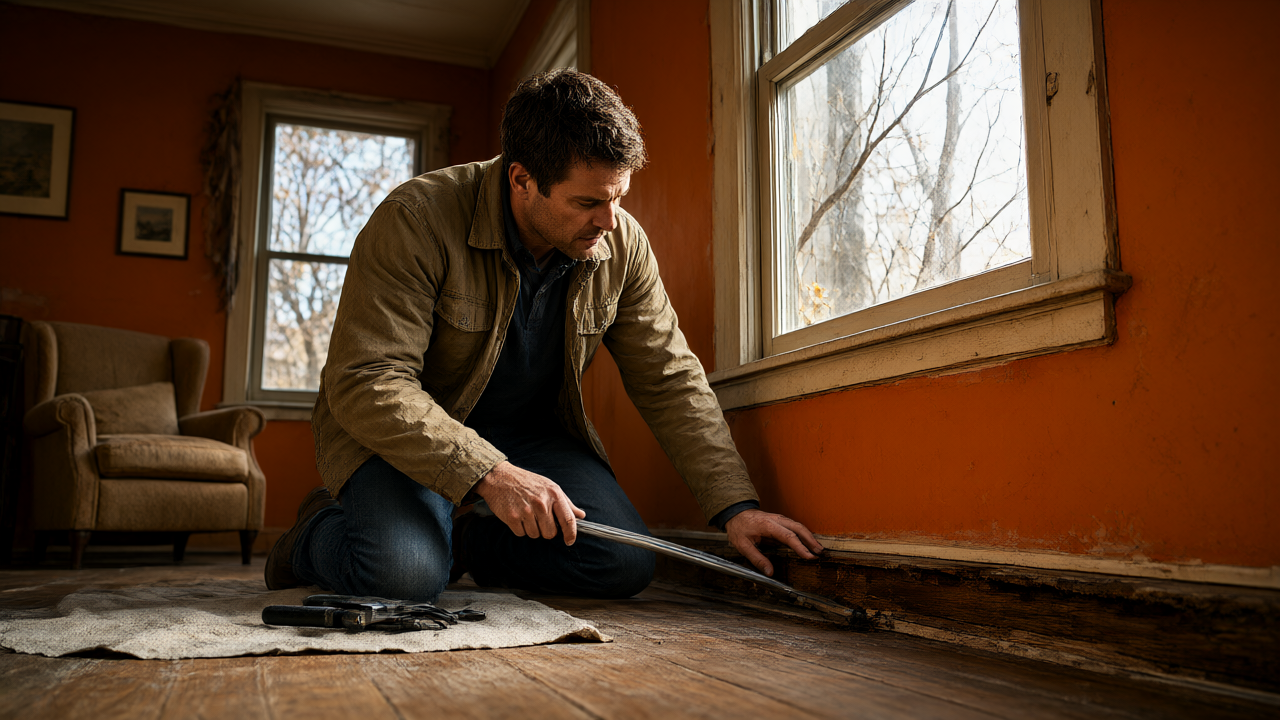
2. Floor Leveling and Joist Sistering
Old houses settle, but not all settling is equal. A floor that slopes toward the center of the house is often just age. A floor that slopes toward an exterior wall or shows a dip in one room usually means a joist has cracked, rotted at its bearing point, or pulled loose from the beam. Sistering a new joist alongside the old one and re anchoring the bearing point is a targeted repair that costs $400 to $900 per joist and stops the movement before it cracks plaster and binds doors.
3. Trim and Millwork Restoration
Original trim is one of the few things in a vintage home that cannot be replaced with an off the shelf product. Losing it to rot or a careless remodel knocks real dollars off resale value. Restoration means scarfing in matching wood, matching the profile, and blending the finish so the repair disappears. Expect $60 to $150 per linear foot for detailed restoration work, and get a carpenter who will match the species, not just the profile.
4. Stair Tread and Riser Replacement
Creaky, worn, or cracked stair treads are a safety issue and a value issue. In a vintage home, the treads are usually thick solid wood that can be repaired rather than replaced. A carpenter who understands the construction can tighten the assembly, replace cracked treads, and rebuild the stringer connection for $150 to $400 per tread, versus $6,000 to $12,000 for a full staircase rebuild.
5. Deck Joist Reinforcements
If you have a deck that was built before modern code, the joist hangers and ledger connections are the weak point. Reinforcing the ledger to the house, adding hangers, and sistering any soft joists is a focused repair that runs $1,500 to $4,500 and buys years of safe use. It is also the difference between passing a pre sale inspection and losing a buyer.
How to Spot Hidden Wood Rot Behind Vintage Siding and Trim
Rot hides. It starts at the end grain, at the back of the trim, and at the bottom of the siding where water sits. By the time you see bubbling paint or a soft spot, the damage has usually been spreading for two or three seasons. Here is a checklist you can run yourself before you call anyone.
- Probe the end grain. Use a screwdriver or an awl on the bottom edge of trim, the base of porch columns, and the ends of siding boards. Soft resistance means rot.
- Look for paint that will not stick. Repeated peeling in one spot is almost always moisture behind the wood, not bad paint.
- Check for staining and rust streaks. Water tracks leave brown stains on siding and rust on nails. Follow the streak back to its source.
- Test the bounce. Walk the porch and deck slowly. Any soft or springy spot is a red flag.
- Look at the caulk lines. Cracked or missing caulk at trim joints lets water in behind the wood, where it cannot dry.
- Check the basement and crawlspace. Staining on the sill plate or joist ends above grade tells you water is getting in from outside.
If you find one soft spot, you probably have three. Rot spreads along the grain and into adjacent framing, and a screwdriver probe costs nothing. That is the one inspection every vintage home owner should do in November before the first hard freeze.
"The repairs that cost the least are the ones done before the first winter. A $400 joist sister in November is a $4,000 floor repair in April."
What These Repairs Cost in Chicago vs. the Suburbs in 2026
Pricing in 2026 reflects both labor rates and material costs. Inside Chicago, expect to pay a premium for access, parking, permits, and the simple fact that city carpenters deal with more complexity per job. In the suburbs, labor rates are lower but travel and material delivery can offset some of the savings. Here is a realistic breakdown for the five repairs above.
- Porch column repair: $1,200 to $3,500 per column in Chicago; $1,000 to $2,800 in the suburbs.
- Floor joist sistering: $400 to $900 per joist in both markets, with city jobs at the higher end.
- Trim restoration: $60 to $150 per linear foot in Chicago; $50 to $120 in the suburbs.
- Stair tread replacement: $150 to $400 per tread city and suburbs, depending on profile matching.
- Deck joist reinforcement: $1,500 to $4,500 in Chicago; $1,200 to $3,800 in the suburbs.
One thing that does not change by geography: material choice. Matching old growth fir or pine with modern lumber is a mistake, and a carpenter who suggests it is telling you something about their experience level. The right approach is to source reclaimed or specialty milled stock that will move and age the same way as the original.
How to Vet a Carpenter Who Actually Understands Vintage Chicago Construction
Plenty of carpenters can build a new deck. Far fewer can look at a 1920s porch and tell you how it was framed, why it failed, and what the correct repair looks like. Here is what to ask before you hire anyone for a vintage home repair.
- Ask what they would do if the rot goes deeper than expected. A good carpenter has a plan for the surprise, not just the visible work.
- Ask how they will match the existing wood. The answer should involve species, grain, and profile, not just dimensions.
- Ask for references on homes built before 1940. New construction experience does not transfer.
- Ask whether they pull permits. In Chicago, porch and structural repairs require permits, and a carpenter who avoids them is passing the risk to you.
- Ask what happens if they find rot behind the siding. The answer should include a written change order process, not a verbal estimate.
Red flags are just as useful. A carpenter who quotes a porch repair without probing the wood is guessing. One who suggests covering rot with new trim is hiding a problem. And one who cannot tell you the difference between old growth fir and modern pine has not worked on enough vintage homes to be trusted with yours.
Frequently Asked Questions
How much does porch column repair cost in Chicago in 2026?
Most porch column repairs in Chicago run between $1,200 and $3,500 per column, depending on whether the beam behind the column is also damaged. If the beam and deck framing are compromised, the repair can climb into the $8,000 to $20,000 range, which is why early inspection matters.
Is it worth repairing original wood trim or replacing it?
Repairing original trim is almost always the better financial move. Matching profiles and species costs $60 to $150 per linear foot, while replacing original trim with modern stock can reduce resale value and rarely matches the original look. Restore when the wood is sound enough to hold a repair.
How do I know if my old Chicago home needs floor leveling?
A floor that slopes toward an exterior wall, dips in one room, or feels bouncy underfoot is signaling a framing problem, not just age. Sistering a joist typically costs $400 to $900 and stops the movement before it cracks plaster and binds doors.
Do I need a permit for carpentry repairs on a vintage home in Chicago?
Structural repairs, porch work, and deck reinforcement generally require permits in Chicago and most surrounding suburbs. A reputable carpenter will pull the permit and schedule the inspection. If a contractor suggests skipping it, walk away.
If you own a vintage home in Chicago or the surrounding suburbs and you are not sure whether a soft spot, a sloping floor, or a peeling trim board is serious, Burns Carpentry handles exactly this kind of work. Andy Burns and his crew work on pre-1940 homes regularly, and they will tell you straight up whether a repair can wait until spring or needs to happen before the first freeze. Call for a free estimate and get a real answer, not a sales pitch.