A Waukegan deck can look perfectly fine from the sliding glass door and still be one hard rain away from a $9,000 repair bill. The lakefront climate here is brutal on wood, and the damage that matters most rarely announces itself. It hides underneath, behind the fascia board, or in the six inches of framing you never see. Knowing what to look for, and when to call a carpenter instead of a handyman, is the difference between a $400 fix in October and a full deck rebuild by spring.
Why Waukegan's Lakefront Climate Accelerates Deck Damage
Waukegan sits right on Lake Michigan, which means the decks here live in a different environment than a deck in Cary or Arlington Heights. The lake moderates temperature, but it also delivers humidity, wind driven rain, and freeze thaw cycles that hit wood framing harder than most homeowners realize. A deck in Waukegan can go through 40 to 50 freeze thaw cycles in a typical winter, and each one works moisture deeper into end grain and fastener holes.
The bigger issue is what the humidity does between storms. Lake County averages roughly 36 inches of precipitation a year, and a good chunk of that arrives as blowing rain that pushes sideways into places a roof overhang never protects. Wood that stays above 20 percent moisture content becomes a food source for decay fungi. Pressure treated lumber resists that for a while, but the treatment only penetrates so deep. Every cut end, every drilled hole, and every lag screw is a weak point where untreated wood is exposed.
Then there is the sun. South and west facing decks in Waukegan take the kind of UV load that turns a fresh stain job gray in 18 months and dries out board surfaces until they check and split. Combine that with the lake wind that pulls fasteners loose over time, and you have a structure that ages about twice as fast as the same deck built inland. That is not a sales pitch. It is the reason a 12 year old Waukegan deck often needs the same attention as an 18 year old deck in Schaumburg.

5 Warning Signs Your Waukegan Deck Needs Immediate Repair
Most deck failures do not start with a collapse. They start with a small problem that gets ignored for two or three seasons. Here are the five signs that should get you off the deck and on the phone.
1. Soft spots or spongy boards underfoot
Walk the deck in soft soled shoes, not boots. A board that gives slightly under your weight is already compromised. Probe it with a screwdriver. If the tip sinks in more than a quarter inch, that board is done. Soft spots usually mean moisture has been trapped against the joist below, and the rot has moved past the surface.
2. Loose or popping fasteners
Nails that back out a quarter inch or more are a structural warning, not a cosmetic one. On older decks with smooth shank nails, this happens because the wood expands and contracts with the seasons and the nail loses grip. A deck with 15 or 20 popped nails across a 12 by 16 foot surface is telling you the connection between boards and framing is failing. Modern structural screws with a threaded shank hold far better, but retrofitting them is a job, not a Saturday afternoon project.
3. Wobbly railings and loose posts
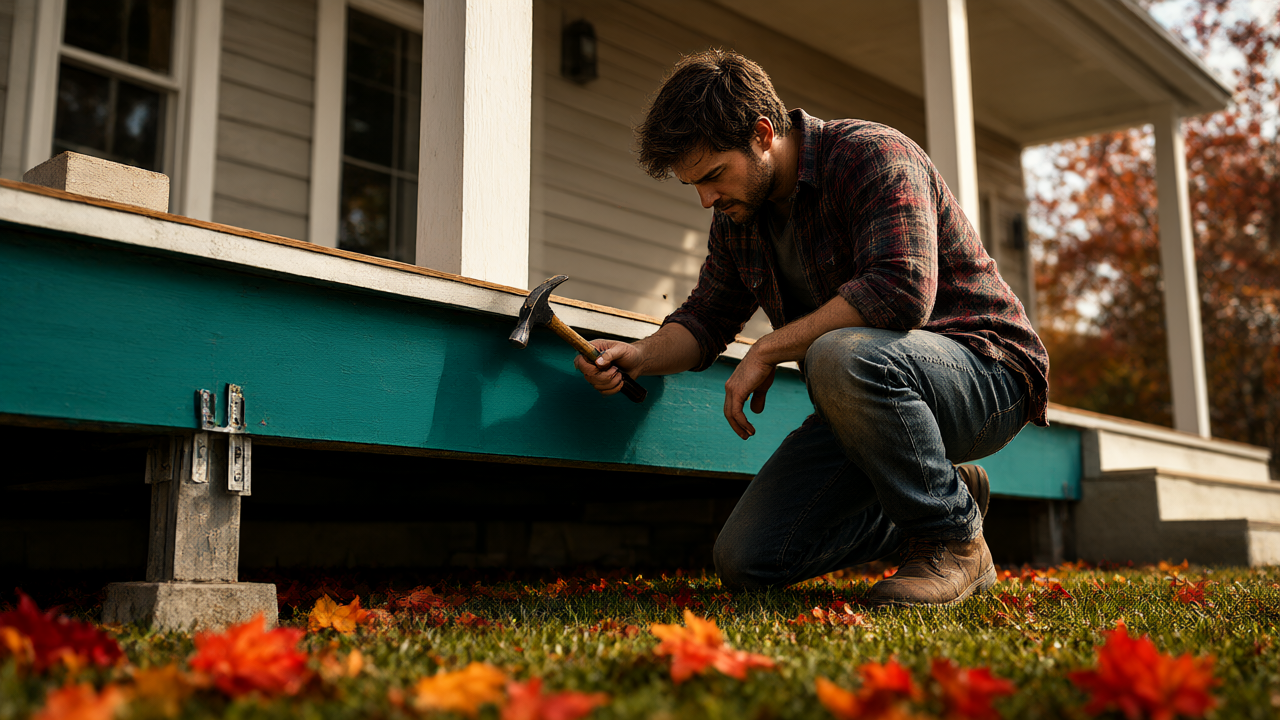
Grab the railing at the top and push it hard in both directions. It should feel solid, like pushing against a wall. Any movement at the post base means the connection to the framing or the footing has loosened or rotted. This is the most dangerous failure on the list. A railing that gives way under a leaning adult can send someone off a 10 foot deck.
4. Rust streaks, green fuzz, or white chalky residue
Rust stains around nails and joist hangers mean water is getting in and staying in. Green algae or moss on the north side of the deck is a sign of constant damp, which is exactly the condition decay fungi need. White chalky residue on the wood surface is often efflorescence, salts pushed out of the wood as it dries, and it usually points to prolonged moisture exposure.
5. Stairs that move independently from the deck
Stand at the bottom of the stairs and shake the stringer. If the stairs shift separately from the deck frame, the connection has failed. Stair stringers on Waukegan decks take the worst of the weather because they sit low, collect snow, and hold moisture against the ground. A failed stringer connection can drop a full flight without warning.
Here is the honest part. If you find one soft board and everything else is solid, you probably do not need a full deck repair. Replacing two or three boards and re driving the fasteners is a reasonable DIY job. If you find two or more of these signs together, especially a wobbly railing plus a soft spot, call a carpenter. Structural repairs on a raised deck are not the place to learn.
How to Document Deck Damage for Insurance Claims in Waukegan
Most homeowners insurance policies cover sudden damage, like a fallen limb or storm driven impact, but not gradual decay. That distinction matters in Waukegan because so much of what goes wrong here is slow. If a nor'easter blows through and tears off a section of railing, that is a claim. If the railing rotted because the post base sat in water for six years, that is maintenance.
Document everything before anyone touches the deck. Take wide photos of the whole structure from all four sides, then close ups of each damaged area with something for scale, like a tape measure or a coin. Photograph the underside of the deck if you can safely get there, especially the ledger board where the deck attaches to the house. Note the date and the weather event if there was one. Keep your receipts for any emergency repairs, like boarding over a hole or bracing a railing.
When you call for an estimate, ask the contractor to note in writing whether the damage looks sudden or progressive. Insurance adjusters respond to that language. A written scope from a licensed carpenter carries more weight than a homeowner's description, and in Illinois, a contractor who is licensed and insured can provide the documentation an adjuster needs to process a claim without three follow up visits.
DIY vs. Professional Deck Repair: What Waukegan Homeowners Should Know
Some Deck Repairs are genuinely DIY friendly. Replacing a handful of deck boards, power washing and re staining, tightening loose railing balusters, and clearing debris from between joists are all reasonable projects for a homeowner with basic tools and a free weekend. A board replacement typically runs $15 to $40 per board in materials depending on whether you use pressure treated pine or composite, and the labor is a few hours.
The line gets crossed fast when structure is involved. Ledger board repairs, joist replacement, post and footing work, and stair stringer replacement all require an understanding of load paths and the current Illinois deck code requirements. Waukegan follows the Illinois adoption of the International Residential Code, which has specific rules about ledger attachment, flashing, and joist hangers that changed in recent code cycles. A repair that looks fine but skips the flashing detail will fail again in two winters.
Professional deck repair in the Waukegan area typically runs $400 to $1,200 for minor board and fastener work, $1,500 to $4,000 for railing and stair repairs, and $5,000 to $12,000 for structural framing and ledger work depending on the size of the deck and how much material has to be replaced. Burns Carpentry handles deck repairs across Waukegan and the surrounding suburbs, and the crew will tell you straight up if the repair is small enough to handle yourself. That honesty is worth more than a sales pitch.
One more insider note. Ask any contractor you call whether they pull permits for structural deck repairs. In Waukegan, structural work generally requires a permit, and a contractor who suggests skipping it is telling you something about how they operate. A permitted repair protects you at resale and if you ever file a claim.
Preventing Future Deck Damage: 2026 Maintenance Checklist for Waukegan Homes
The best deck repair is the one you never need. A 30 minute inspection twice a year, once in spring after the freeze thaw season and once in late fall before the snow, catches most of the problems while they are still cheap. Here is the checklist to run through each time.
- Walk the full surface in soft shoes. Mark any soft spots with chalk and probe them with a screwdriver.
- Check every railing post. Push hard in both directions. Any movement gets flagged.
- Look at the ledger board where the deck meets the house. Check for rust, staining, or separation from the siding.
- Clear debris from between joists. Leaves and twigs hold moisture against the framing all winter.
- Inspect the stairs. Shake the stringers and check the tread connections.
- Re seal or re stain every 2 to 3 years. In Waukegan's climate, a clear water repellent lasts about 18 months on a south facing deck.
- Check the footings. Look for soil erosion or standing water around the post bases.
Write the date of each inspection on the inside of a joist with a paint marker. It sounds old school, but it gives you and any future contractor a maintenance history, and it makes it obvious when a deck has been neglected. Burns Carpentry builds and repairs decks across Waukegan, Cary, Arlington Heights, and the rest of the Chicago suburbs, and the team can walk your deck with you and give you a straight answer on what needs attention now versus what can wait. If you are seeing soft spots, a wobbly railing, or rust streaks that were not there last year, call Burns Carpentry. They will tell you whether it is a $300 fix or a bigger project, and they will not sell you a rebuild you do not need.
Frequently Asked Questions
How much does deck repair cost in Waukegan?
Minor board and fastener repairs typically run $400 to $1,200. Railing and stair repairs usually land between $1,500 and $4,000, and structural framing or ledger work runs $5,000 to $12,000 depending on deck size and how much material needs replacing. Get a written estimate before any work starts.
How do I know if my deck needs repair or replacement?
If the framing and ledger board are solid and only surface boards or railings are failing, repair is usually the right call. If more than 30 percent of the framing shows rot, or the ledger board has separated from the house, replacement is often more economical than piecemeal repairs.
Can I repair my own deck in Waukegan, or do I need a permit?
Cosmetic work like board replacement, staining, and tightening railings generally does not require a permit. Structural repairs, including ledger work, joist replacement, and footing repairs, typically do require a permit in Waukegan. Ask before you start.
How often should a Waukegan deck be inspected?
Twice a year, in spring after the last freeze and in late fall before the snow. Waukegan's lakefront humidity and freeze thaw cycles age decks faster than inland climates, so a mid summer check after any major storm is also worth the 10 minutes.
If your Waukegan deck is showing any of these warning signs, do not wait for spring. Burns Carpentry handles deck repairs and full Deck Building across Waukegan and the surrounding suburbs, and they will give you an honest assessment of what needs fixing now and what can wait. Call them for a free estimate and get ahead of the damage before the next freeze.