Cary, Illinois sits right on the edge of the Fox River valley, and the frost line here runs about 42 inches deep. That number matters more than most homeowners realize. When a deck footing isn't poured below that line, the freeze and thaw cycles that hit McHenry County every winter will push it up, twist it sideways, or crack it outright. A deck footing inspection in Cary, IL is the single most important structural check you can do before winter sets in, and five specific red flags tell you almost everything you need to know.
Why Cary's Frost Line Makes Deck Footings the First Thing to Inspect
Illinois code typically calls for deck footings to sit below the local frost line, and in this part of McHenry County that means a minimum depth of roughly 42 inches. A footing poured at 24 or 30 inches might hold fine for two or three mild winters and then fail all at once during a hard freeze. The soil beneath the deck expands when water in it turns to ice, and that expansion lifts anything sitting above it. Contractors call it frost heave, and it is the root cause behind most of the footing problems Burns Carpentry sees on repair calls around Cary.
Here is the part most homeowners miss. Frost heave rarely lifts a deck evenly. One corner rises a half inch, another stays put, and the whole frame starts racking. Ledger boards pull away from the house. Stair stringers separate from the rim joist. You might notice a sticking door on the patio or a wobble at the top of the steps long before you ever look underneath. By the time the movement is visible from the kitchen window, the footing has usually been moving for at least a couple of seasons.
Cary's soil adds another wrinkle. Much of the area sits on clay heavy glacial soils that hold water rather than draining it. That means the ground around your footings stays saturated longer after rain, and saturated soil expands more when it freezes. The combination of a deep frost line and slow draining clay is why footing depth and drainage matter more here than in sandier suburbs further south. If your deck was built before the current code requirements were enforced, there is a real chance the footings were never deep enough.

5 Footing Red Flags: Heaving, Tilting, Exposed Piers, Soil Erosion, and Rusted Hardware
You do not need a contractor's license to spot most footing problems. You need a flashlight, a few minutes on your hands and knees, and a rough idea of what normal looks like. Here are the five warning signs worth checking every fall before the ground freezes.
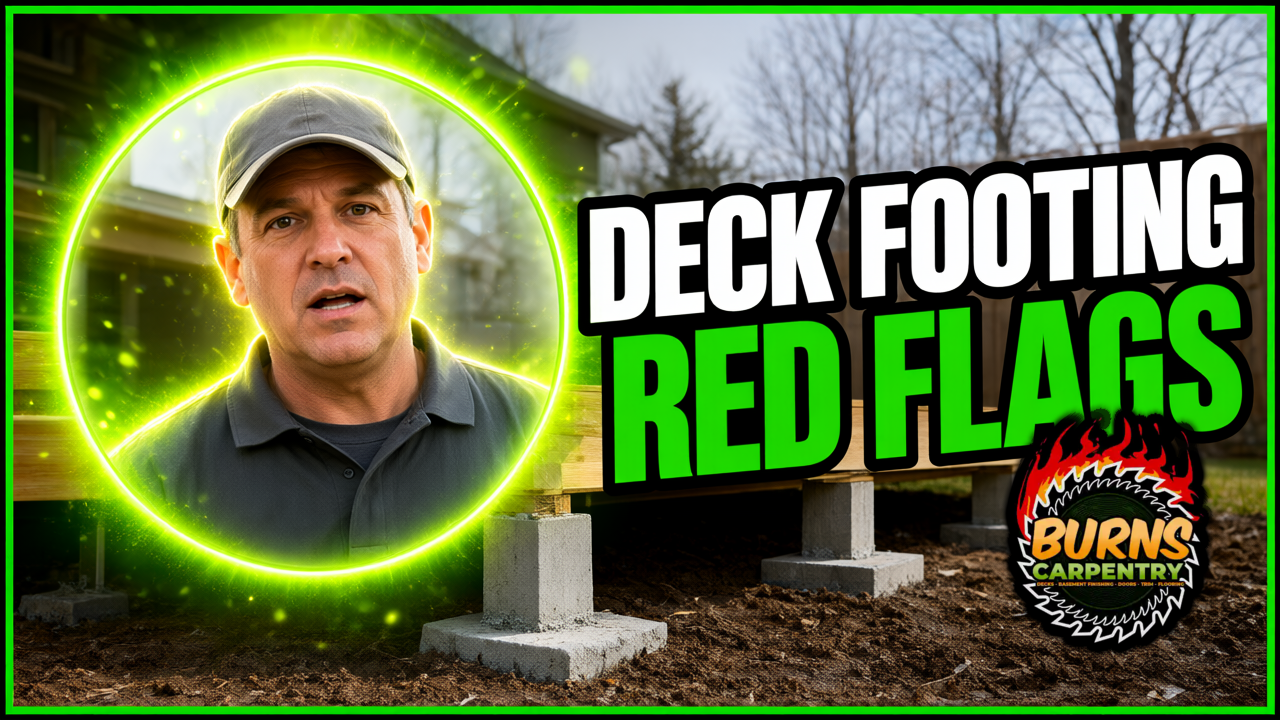
1. Heaving. Look at the connection point where each post meets its footing. If the post has lifted off the concrete, or if you can slide a putty knife into a gap that should not exist, the footing has moved. A post that was set correctly sits flush on its base or in a properly sized bracket. Any daylight between post and footing is a red flag.
2. Tilting. Stand back and sight down the line of posts along one side of the deck. They should all be plumb, meaning straight up and down. A post leaning even two or three degrees out of plumb usually means the footing beneath it has rotated. Hold a 4 foot level against a post to confirm. If the bubble is off by more than a quarter bubble, get it looked at.
3. Exposed piers. A properly built footing is buried. If you can see six or more inches of bare concrete pier above grade, either the soil around it has washed away or the pier was poured too shallow to begin with. In Cary, an exposed pier means less of the footing is doing its job below the frost line, and that is exactly the setup for heaving next winter.
4. Soil erosion. Walk the perimeter and look for dished out areas, channels, or low spots where water pools against the footings. Downspouts that dump right at the deck edge are a common culprit. So is a grade that slopes toward the deck instead of away. Any footing sitting in a puddle after a hard rain is a footing that will move.
5. Rusted hardware. Check the post bases, anchor bolts, and joist hangers. Surface rust on galvanized hardware is normal after a decade. Flaking, structural rust that has eaten into the metal is not. A rusted through post base no longer holds the post down, and an uplifted post is a deck waiting to fail. Replacing hardware is cheap. Replacing a failed deck is not.
How to Check Your Deck's Footings Without Digging Up the Yard
You can do a solid visual inspection in about 20 minutes with no digging and no special tools. Here is the sequence Burns Carpentry recommends to homeowners who want to check things themselves before calling anyone.
- Clear the area. Move anything stored under the deck and rake back mulch or landscaping fabric so you can see the actual soil line at each footing.
- Map your footings. Count them. A typical 12 by 16 foot deck has six to eight footings. If you find fewer than the span tables call for, that is a framing problem, not just a footing problem.
- Check each post base with a flashlight. Look for gaps, rust, rot at the bottom six inches of the post, and any sign the post has shifted off its base.
- Sight down the post line. Crouch at one corner and look along the row. Any post that breaks the line is suspect.
- Pour a glass of water at each footing. If it sits there for more than a few minutes without soaking in, drainage is poor and the footing is at risk.
- Test the deck surface. Walk the perimeter and bounce gently. A springy feel near a corner often traces back to a footing issue, not a board issue.
If everything checks out, you are done. If two or more items raise a flag, that is your signal to bring in someone who can measure footing depth and check the framing. You do not need a professional inspection if the deck is under 10 years old, the posts are plumb, and the hardware is clean. Save the call for when something actually looks wrong.

When a Footing Problem Means Deck Repair vs. Full Rebuild
The honest answer is that most footing issues fall into the repair column, not the rebuild column. A single heaving footing under an otherwise sound deck can often be addressed by excavating around it, re-pouring or extending the pier to the proper depth, and reconnecting the post. That kind of targeted deck repair typically runs $800 to $2,500 per footing in the Cary area, depending on access and how much framing has to be temporarily supported. A full deck rebuild on a 300 square foot deck, by comparison, runs $15,000 to $30,000 or more depending on materials.
The math changes when the problem is systemic. If three or more footings have moved, or if the deck was built with shallow footings across the board, patching one at a time is throwing money at a losing battle. That is when a rebuild makes sense, and it is also when upgrading to a properly engineered footing system pays for itself. Burns Carpentry builds new decks with footings designed for the Illinois climate from day one, which is a big part of why a new build holds up where an older one failed.
One more honest note. If your deck is 20 years old, the footings are shallow, the ledger flashing is failing, and the joists are showing rot, a rebuild is usually the better investment. If the deck is 12 years old, the framing is solid, and one corner has heaved, repair it and move on. A good contractor will tell you which situation you are in rather than defaulting to the bigger job.
What a Professional Footing Inspection Includes for Cary, IL Homeowners
A proper footing inspection goes beyond what you can see from a flashlight. When Burns Carpentry inspects a deck in Cary, the process starts with a full walk of the structure and a check of every post to footing connection. From there, the inspector probes the soil around suspect footings to estimate depth, checks the ledger attachment and flashing at the house, reviews the joist and beam connections, and looks at how water is draining around the entire footprint. You get a written summary of what is sound, what needs attention now, and what to watch over the next year.
Ask any contractor you hire three questions before they start: Do you check footing depth or just what is visible? Do you inspect the ledger and flashing, or only the footings? And do you put your findings in writing? A contractor who answers all three clearly is doing a real inspection. One who says "looks fine to me" and hands you a business card is not.
Burns Carpentry handles Deck Building, Deck Repairs, and full outdoor living projects across Cary and the surrounding suburbs, including Arlington Heights, Elgin, and Schaumburg. The team manages permits through the Cary municipal offices and backs workmanship for two years. If your fall inspection turned up a red flag, or if you just want a second set of eyes before winter, give Burns Carpentry a call. They will tell you straight whether it is a repair, a rebuild, or nothing to worry about yet.
Frequently Asked Questions
How deep should deck footings be in Cary, IL?
Footings in Cary should sit below the local frost line, which is roughly 42 inches deep in this part of McHenry County. A footing poured shallower than that is at risk of frost heave during Illinois winters. If you are not sure how deep yours go, a contractor can probe the soil around a footing to estimate.
How much does a deck footing repair cost in Cary?
Most single footing repairs in the Cary area run between $800 and $2,500, depending on access and how much framing has to be temporarily supported. A full deck rebuild is a much larger investment, typically $15,000 to $30,000 or more. Get a written estimate before any work begins.
Can I inspect my own deck footings?
Yes. A visual check of post bases, plumb, soil drainage, and hardware takes about 20 minutes and catches most problems. You do not need a professional if the deck is relatively new, the posts are straight, and the hardware is clean. Call a pro when two or more red flags show up.
When should I schedule a deck footing inspection?
Fall is the best time in Cary, before the ground freezes and while any movement from the previous winter is still visible. Spring is the second best window. If you notice a wobble, a sticking door, or a gap at a post base at any point, do not wait for the season to change.
If your deck is in the Cary area and something under it looks off, Burns Carpentry handles exactly this kind of work. They build and repair decks built for the Illinois climate, and they will tell you honestly whether you are looking at a repair, a rebuild, or nothing to worry about. Call them before the first hard freeze and get a straight answer.