
Wood deck cleaning and sealing in Cary, IL comes down to a narrow window: the stretch between the last humid weekend of September and the first hard freeze, which in McHenry County usually lands somewhere around October 20 to November 5. Miss it and you're sealing over moisture that will push the finish off by spring. Hit it and you buy your deck three to five extra years before the boards start cupping, splintering, and pulling away from the fasteners.
Here's the part most homeowners get wrong: fall is not just a convenient time to knock out a weekend project. It's the season when wood is at its driest and most receptive to a penetrating finish. Summer humidity keeps board moisture content above 15%, and most sealers want wood down around 12% to 14% before they'll bond properly. Fall gets you there naturally. This checklist walks through the whole job, from the wash to the final coat, plus the mistakes that cost Cary homeowners real money every year.
Why Fall Is the Best Time to Clean and Seal Your Wood Deck in Cary, IL
Cary sits in a pocket of northern Illinois where the freeze-thaw cycle is brutal on exterior wood. You'll get 40 plus swings below 32 degrees between November and March, and each one pulls moisture into the grain and pushes it back out. A properly sealed deck sheds that water. An unsealed one absorbs it, and every freeze expands the water inside the wood fibers until the surface checks, splinters, and eventually rots at the ledger board and post bases where water sits longest.
Fall sealing works because of the moisture math. Wood needs to be dry enough to accept a finish, and by late September through October, average relative humidity in Cary drops into the 60s and daytime temps hold in the 55 to 70 degree range. That's the sweet spot for oil based and water based penetrating sealers alike. Most products want application temps between 50 and 80 degrees with no rain for 24 to 48 hours. You get a lot more of those days in October than in June.
There's also a practical reason: the deck has taken a full summer of UV, foot traffic, grill grease, and pollen. Cleaning now removes the grime before it gets locked in under a winter of snow and ice. Seal it before the first hard freeze and you're protecting the wood through the worst four months of the year, not chasing damage in April.
One local wrinkle: Cary and the surrounding McHenry County townships don't require a permit for deck cleaning or sealing, so this is a project you can schedule on your own timeline. Deck building and structural repairs are a different story, and Burns Carpentry handles permitting for those through the Cary municipal offices.

Step-by-Step: How to Clean Your Wood Deck Before Winter (Tools & Solutions)
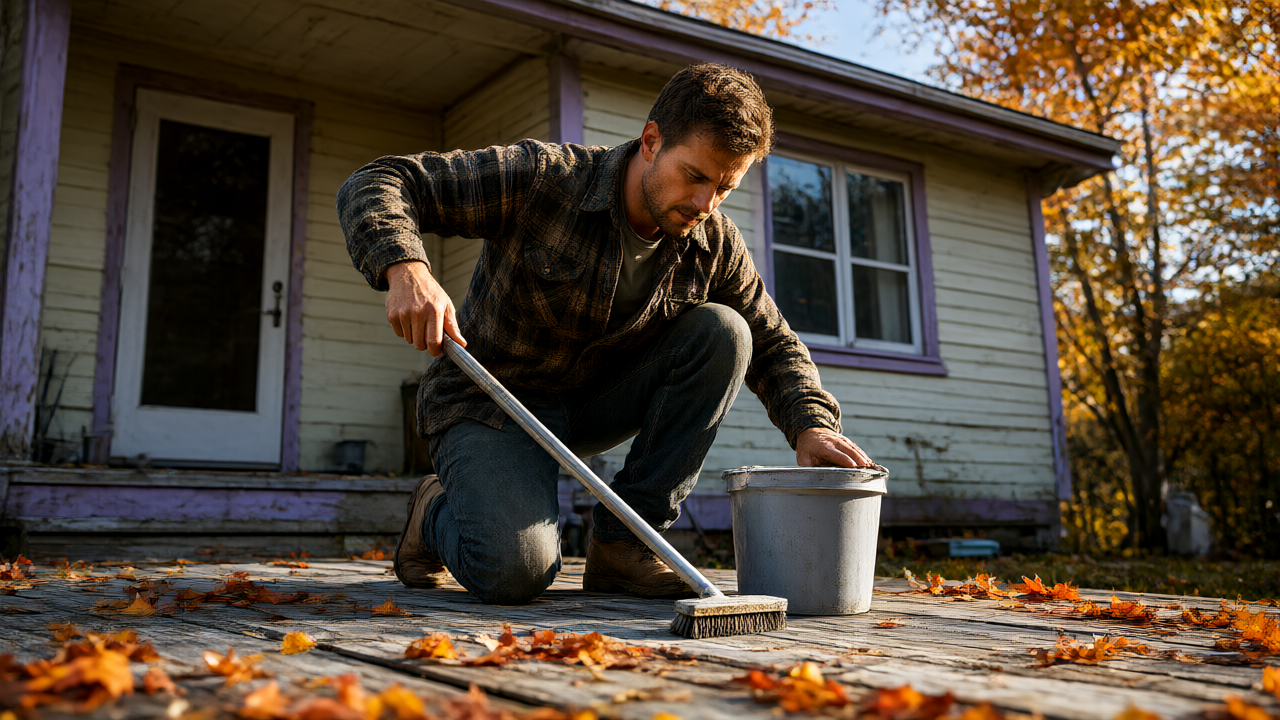
Skipping the cleaning step is the single biggest reason sealers fail early. A finish applied over dirt, mildew, and old flaking product will peel within a season. Set aside a full weekend: one day to clean and let the wood dry, one day to seal. Here's the sequence that works.
- Clear everything off the deck. Furniture, planters, the grill. Sweep the surface and dig debris out of the gaps between boards with a putty knife. Check the ledger board and post bases for soft spots while you're down there.
- Pre-treat mildew and tannin stains. Mix one cup of oxygen bleach (sodium percarbonate, not chlorine) per gallon of warm water. Chlorine bleach can raise the grain and leave a gray cast on cedar and pressure treated pine. Scrub stained areas with a stiff nylon brush and let it sit 15 minutes.
- Apply a wood cleaner or brightener. Oxalic acid brighteners run about $15 to $25 at any hardware store in the area and restore the natural color on graying boards. Apply with a pump sprayer, keep it wet for 10 to 15 minutes, then scrub with the grain.
- Power wash at low pressure. Keep the nozzle under 1,200 PSI and at least 8 to 12 inches off the surface. Higher pressure furs up the grain and drives water into the seams, which defeats the whole purpose. Work with the grain, not across it.
- Rinse thoroughly and let it dry. Two full days of dry weather is the minimum. Test before sealing by taping a 12 inch square of plastic sheeting to the deck for 24 hours. If condensation forms underneath, the wood isn't ready.
- Seal. Apply two thin coats rather than one heavy one. Most penetrating sealers cover 150 to 250 square feet per gallon, so a 300 square foot deck uses roughly two gallons per coat.
Budget $80 to $150 in materials for a typical Cary deck, plus a Saturday of your time. That's the honest number. If a contractor quotes you $1,800 for a 300 square foot clean and seal, ask what's included, because the labor on this job is real but not that heavy.
Sealing vs. Staining: Which Does Your Cary Deck Need in 2026?
These are not the same product, and using the wrong one is a common and expensive mistake. Sealer is a clear or lightly tinted finish that soaks into the wood and protects against moisture and UV without changing the color much. Stain adds pigment, which blocks UV damage far better and gives you a color result. Most modern products are actually a hybrid, a tinted penetrating sealer that does both jobs.
Match the product to the wood and the condition. New pressure treated pine needs to cure for 30 to 60 days before any finish goes on, and it will still look greenish for a while. Cedar takes a clear or light tint beautifully and doesn't need heavy pigment. If your deck has already gone gray and weathered, a semi transparent stain will hide more of that than a clear sealer will.
For Cary's climate, a penetrating oil based or water based sealer with UV inhibitors is the standard recommendation, reapplied every 12 to 24 months. Film forming surface sealers look great for one season and then peel in sheets, which is a nightmare to strip. Avoid them on horizontal deck surfaces. Vertical railings and pergola beams are more forgiving.
If the boards are composite rather than wood, none of this applies. Composite Decks don't need sealing or staining, just an annual wash with mild soap and water. That's one of the tradeoffs homeowners weigh when comparing Wood Decks to composite decks, and Burns Carpentry walks through that decision with clients regularly. If you're still deciding, ask about the maintenance difference before you commit to a material.
5 Common Cleaning & Sealing Mistakes Cary Homeowners Make (And How to Avoid Them)
These come up over and over in this region, and each one shortens the life of a finish by a season or more.
- Sealing too soon after rain or washing. Wood needs to be down to 12% to 14% moisture content. Two dry days minimum, three is safer. The plastic sheeting test above is your friend.
- Power washing too hard. Anything over 1,200 PSI strips the soft grain between the harder growth rings and leaves a fuzzy surface that a sealer can't bond to. If the boards feel rough after washing, you went too far.
- Using chlorine bleach. It's cheap and it kills mildew, but it also degrades wood fibers and can leave a permanent gray tone. Oxygen bleach or a dedicated deck cleaner costs a few dollars more and does the job without the damage.
- Applying sealer in direct sun or wind. The finish flashes off before it soaks in, leaving lap marks and a blotchy coat. Work in the morning or on an overcast day, and do one section at a time so you can keep a wet edge.
- Skipping the railing and stairs. Horizontal surfaces get the attention, but rail caps, stair treads, and post tops take the most water. Seal them first while you have full energy and a fresh brush.
One more: don't seal a deck that has active rot or loose fasteners. A finish won't fix structural problems, and sealing over them just hides the damage until it's more expensive to repair.
When to Call a Cary Carpentry Pro for Deck Cleaning & Sealing
Here's the honest truth: if your deck is in decent shape, single level, and under about 400 square feet, you can absolutely handle the clean and seal yourself. The materials are cheap, the process is straightforward, and there's no permit involved. Save the money.
Call a professional when the job involves any of the following:
- Soft or spongy boards anywhere on the surface or at the ledger. That's rot, and it needs repair before sealing. Burns Carpentry handles Deck Repairs and can tell you whether the damage is cosmetic or structural.
- Multiple levels, built in benches, or complex railings where the square footage and access make the job a two or three day project. Labor cost climbs fast and mistakes get more likely.
- Existing finish that's peeling or flaking. Stripping old product is a different job from cleaning, and it's easy to damage the wood if you're not careful with the stripper and pressure.
- A deck over 10 years old that's never been sealed. The wood may need restoration before it will accept a finish, and a professional eye catches problems a homeowner might miss.
- You want it done before the freeze window closes and your schedule doesn't allow a full weekend. Scheduling pressure is a real reason to hire out.
If you're in Cary or anywhere across the northwest suburbs, Burns Carpentry is the local call worth making. The company builds wood decks, composite decks, and pergolas in Cary and the surrounding towns, so the crew knows exactly how northern Illinois weather treats exterior wood. Andy Burns and the team can walk your deck, tell you straight whether it needs a clean and seal or something more, and give you a free estimate either way. That's a phone call worth making before the first hard freeze rolls through McHenry County.
Frequently Asked Questions
How much does deck cleaning and sealing cost in Cary, IL?
Most Cary homeowners pay $1.50 to $3.50 per square foot for a professional clean and seal, so a 300 square foot deck typically runs $450 to $1,050. DIY materials for the same deck cost $80 to $150. The price gap is mostly labor and the stripping work if there's old finish to remove.
Can I seal my deck in November in Illinois?
Only if daytime temps stay above 50 degrees and you have 24 to 48 hours of dry weather ahead. Most years the window in McHenry County closes around the first week of November. If you're past that, wait for a dry stretch in April or May rather than sealing in marginal conditions.
How often should I reseal a wood deck in northern Illinois?
Every 12 to 24 months for a penetrating sealer, depending on sun exposure and foot traffic. Decks in full sun with heavy use need it closer to every year. Test by sprinkling water on the surface: if it beads, the finish is still working. If it soaks in, it's time.
Is it worth hiring a carpenter near me in Cary for deck sealing?
It's worth it when the deck has rot, multiple levels, or old peeling finish that needs stripping. For a simple single level deck in good shape, doing it yourself is a reasonable weekend project. Get a free estimate from a local carpenter either way so you know what you're comparing against.
If your deck is showing soft boards, peeling finish, or you just want it sealed before the freeze hits, Burns Carpentry handles deck cleaning, sealing, and repairs across Cary and the northwest suburbs. Call for a free estimate and they'll tell you honestly whether it's a DIY job or one worth handing off.