
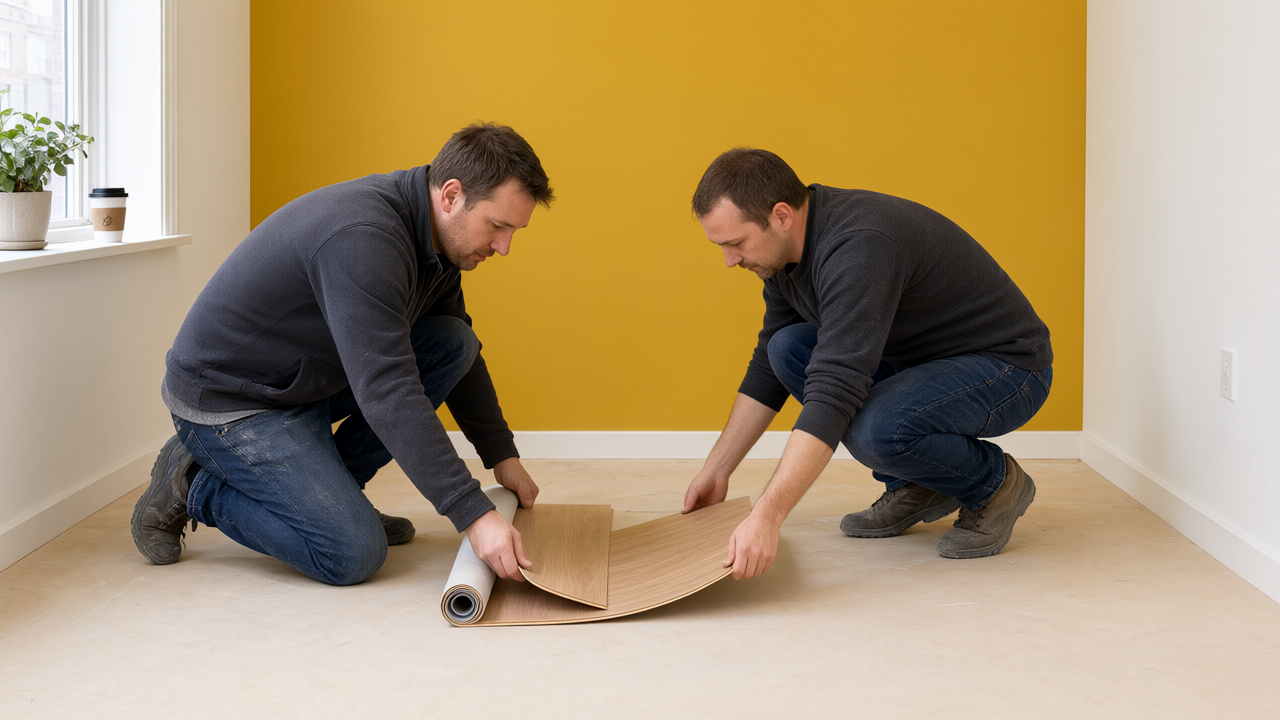
A tenant turnover in Cary costs you more than the cleaning bill. Every week a unit sits empty in McHenry County runs you roughly $1,450 in lost rent on a typical $1,800-per-month two-bedroom, and that's before you factor in the re-listing fees and the two weekends you burn showing the place. Vinyl Flooring for Cary, IL rental properties has quietly become the single highest-return upgrade a landlord can make, because it attacks the two expenses that actually hurt: downtime and replacement cost. Here's what the numbers look like in 2026, and where vinyl makes sense versus where it doesn't.
Why Vinyl Flooring Is the Top Choice for Cary, IL Rental Units in 2026
Carpet in a rental is a countdown clock. Figure you get seven to ten years out of mid-grade carpet in a single-family rental, and that assumes no pets, no kids, and no tenant who leaves a sliding door open during a July thunderstorm. In practice, Cary landlords replacing carpet are usually doing it at the five-year mark, and the last two years of that carpet's life look terrible, which means it's costing you applications from good tenants long before it costs you a replacement.
Luxury vinyl plank, usually shortened to LVP, flips that math. A quality 20-mil wear layer plank in a rental runs $4.50 to $7.50 per square foot installed in the Cary and greater Chicago area, and it carries a manufacturer warranty of 15 to 25 years in residential applications. In rentals, most flooring manufacturers void or shorten that warranty, so treat the warranty as a signal of quality rather than a promise. What you're really buying is a floor that survives 10 to 15 years of normal tenant abuse and looks presentable the entire time.
The reason vinyl beats laminate and hardwood in rentals comes down to water. Vinyl plank is waterproof through the core. Laminate swells when water sits on it, and a tenant who leaves a leaking dishwasher for 48 hours turns a $2,000 laminate job into a $6,000 tear-out. Hardwood in a rental is a tax write-off waiting to happen. Burns Carpentry provides expert vinyl flooring solutions for homes across Cary and the surrounding Illinois areas, and the reasoning behind that service line is simple: it's the floor that requires the least babysitting from the person who owns the building but doesn't live in it.
One more Cary-specific factor. The housing stock here skews toward 1970s and 1980s ranches and two-stories with concrete slab or older plywood subfloors. Slab moisture is common, especially in walk-out basements and lower levels near the Fox River corridor. Vinyl plank handles minor slab moisture vapor far better than laminate or engineered hardwood. If your subfloor reads above 5 pounds per 1,000 square feet on a calcium chloride test, you need a moisture barrier regardless, but vinyl gives you a much wider margin for error.
Turnover Speed: How Vinyl Flooring Cuts Vacancy Time Between Tenants
Here's the number that surprises most landlords: flooring condition is the number two reason prospective tenants walk away from a rental after location and price. Stained carpet in a hallway or a bathroom floor with peeling vinyl sheet reads as "this owner doesn't maintain the property," and tenants extrapolate that to the furnace, the roof, and the water heater.
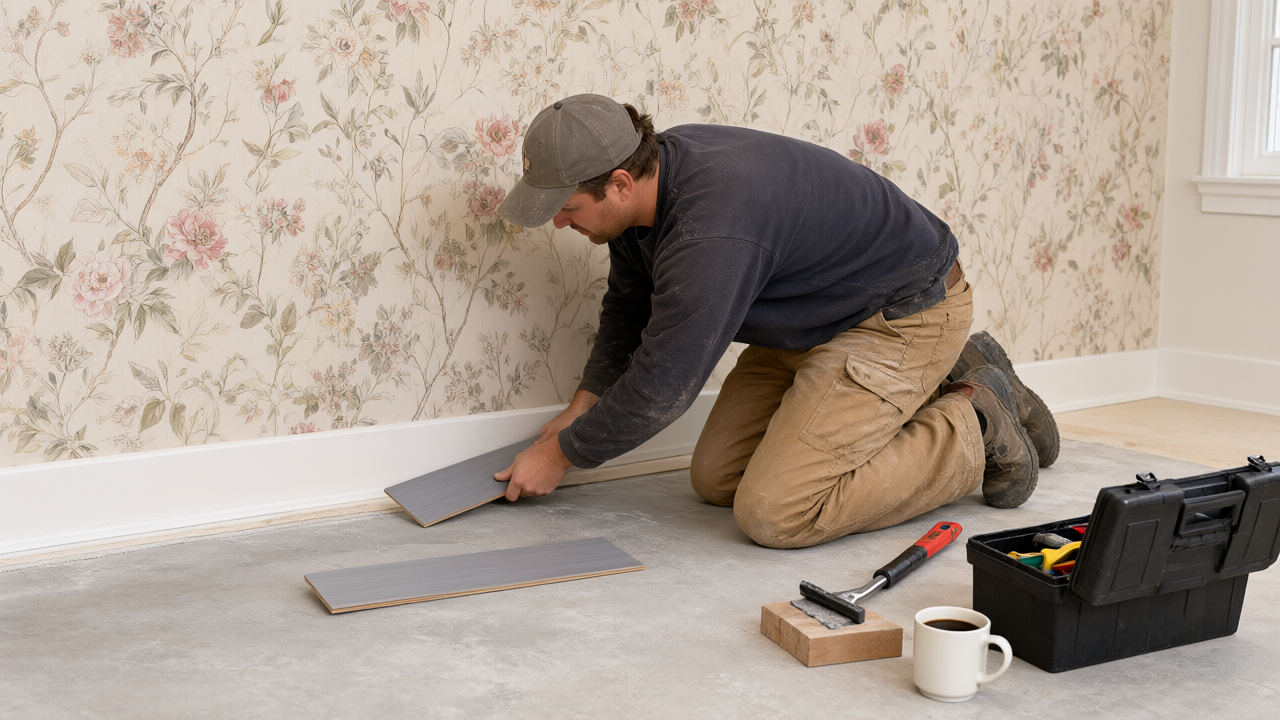
The turnover math works out like this. Between tenants, you need to clean, patch, paint, and re-key. Carpet adds a wildcard. If the carpet is shot, you're looking at three to five days for a flooring crew plus dry time plus at least one lost showing weekend. With vinyl plank, a damaged board can be pulled and replaced in under an hour if you kept spares from the original install. That's the whole advantage in one sentence: vinyl converts a five-day problem into a one-hour problem.
Keep the spares. This is the single most important piece of advice in this article. Buy one extra case (typically 10 to 15 percent overage) and store it in the mechanical room or garage. Plank patterns and dye lots change every 18 to 24 months, and a 2026 plank will not match a 2029 plank from the same manufacturer. Having three or four spare boards on hand means a pet-clawed or water-damaged section gets fixed between tenants instead of triggering a full-floor replacement.
For landlords managing multiple units, standardizing on one or two plank SKUs across the portfolio is worth real money. You buy in bulk, you keep one spare-stock pile, and your maintenance person learns one installation system. Burns Carpentry handles Flooring Installation projects across the area and can advise on which plank lines hold up best under repeated install-and-repair cycles, which is a different question than "which floor looks nicest."
Durability & Repair: Handling Pet Damage, Scuffs, and Water Spills in Rentals
Pets are the number one cause of flooring damage in rentals, and the damage is rarely dramatic. It's the slow accumulation of claw marks near doorways, a scratch pattern where the dog runs to the back door, and the occasional accident that sits long enough to reach the seams.
Wear layer thickness determines how well vinyl resists all of this. The wear layer is the clear protective topcoat measured in mils, and it's the number printed on the box that actually matters. For rentals:
- 12 mil: Adequate for low-traffic rentals with no pets. Expect issues within five to seven years.
- 20 mil: The sweet spot for Cary rentals. Handles dogs, kids, and heavy foot traffic. This is where most landlords should land.
- 28 mil and up: Commercial-grade. Worth it for rental common areas or if you're buying for a 20-year hold.
Scuffs come off vinyl with a damp microfiber cloth and a mild cleaner. Do not let a tenant use abrasive pads, steam mops, or anything with a wax or polish in it, because those dull the wear layer and trap dirt. A one-page care sheet handed over at lease signing prevents most of this. If you don't have one, write one. It takes 20 minutes and saves hundreds.
Water is where vinyl shines, but only if the installation was correct. Water gets under a floating floor through the perimeter gaps and through unsealed seams, and once it's under there, it sits. Two things to insist on: a 6-mil or heavier polyethylene vapor barrier under any slab installation, and 100 percent silicone sealant at all wet-area perimeters (kitchens, bathrooms, laundry rooms). This is a detail many budget installers skip because it adds two to three hours of labor. It's the difference between a floor that survives a water heater failure and a floor that gets torn out.
One honest caveat: vinyl plank is not indestructible. A dropped cast iron pan will dent it. A tenant who drags a refrigerator across the floor without a furniture slider will gouge it. The point isn't that vinyl never fails, it's that failures are localized and cheap to fix, which is exactly what you want in an asset you don't live in.
Cost Per Square Foot vs. Long Term ROI for Cary Landlords
Let's run the actual numbers on a 1,000-square-foot rental in Cary, which covers most of a two-bedroom unit's flooring footprint after subtracting bathrooms and closets.
- Carpet, mid-grade: $3.00 to $4.50 per square foot installed. Life span: five to seven years in a rental. Replacement cost every cycle: $3,000 to $4,500.
- Laminate: $3.50 to $5.50 per square foot installed. Life span: five to eight years, less if there's any water event. Not recommended for kitchens, baths, or basements.
- Vinyl plank, 20 mil: $4.50 to $7.50 per square foot installed. Life span: 10 to 15 years with localized repairs. Replacement cost amortized over 12 years: roughly $375 to $625 per year.
- Engineered hardwood: $8 to $12 per square foot installed. Life span: 15 to 25 years if you refinish, but refinishing a rental between tenants is a scheduling nightmare.
Run the 20-year projection. Carpet gets replaced three times: $9,000 to $13,500. Vinyl plank gets installed once and repaired a handful of times: $4,500 to $7,500 plus maybe $600 in board replacements. That's a $4,000 to $6,000 swing per unit, and it doesn't count the vacancy days you saved by never having a carpet-replacement delay during a turnover.
There's a tax angle worth mentioning to your accountant. Flooring in a rental property is generally depreciated over 27.5 years as part of the building, or you may be able to expense it under a safe harbor election in the year it's placed in service if it qualifies as a repair or small taxpayer improvement. Rules changed under the 2025 tax provisions, so confirm the current treatment with a CPA before you assume. The point is that the after-tax cost of a $6,000 vinyl install is meaningfully lower than the sticker price.
Where vinyl does not make sense: if you own a high-end rental in a market where tenants expect hardwood, vinyl will cost you applications. That's rare in Cary, but it happens in pockets of Arlington Heights and certain Chicago neighborhoods. Match the floor to the tenant you're actually trying to attract, not to the floor you'd want in your own house.
Installation Tips for Rental Properties: Minimizing Disruption and Maximizing Lifespan
A rental flooring install is a logistics problem before it's a construction problem. Empty units are easy. Occupied units require sequencing, and getting the sequence wrong means a tenant living in a construction zone for a week instead of two days.
Here's the process that keeps disruption to a minimum:
- Schedule the install between tenants whenever possible. A vacant unit lets the crew work wall to wall in one pass. Occupied installs take 30 to 50 percent longer because of furniture moving and room-by-room staging.
- Confirm the subfloor before ordering material. Pull a floor vent and check what's underneath. Uneven plywood needs patching or a self-leveling compound. Slab needs a moisture test. Skipping this step is the number one cause of callbacks.
- Acclimate the planks for 48 hours in the unit at normal living temperature. Vinyl is more forgiving than hardwood here, but it still moves, and cold planks installed in an unheated unit in February will gap at the seams.
- Remove and dispose of old flooring in the same visit. Two trips means two days of a torn-up unit.
- Install new baseboards or reuse existing ones carefully. Most vinyl plank needs a 1/4-inch expansion gap at the perimeter, hidden by baseboard. If you're reusing baseboard, it has to come off and go back on, which adds labor.
- Seal wet-area perimeters with silicone. Non-negotiable in kitchens, bathrooms, and laundry rooms.
- Leave a care sheet and a spare case with the tenant. Tell them what not to use on it.
On timing, a typical flooring installation at a Cary rental usually takes two to five days depending on square footage and how much prep the subfloor needs. A 1,000-square-foot unit with a clean subfloor is a two-day job. Add subfloor leveling, baseboard replacement, or a toilet pull and you're at four or five.
One insider tip: if you're replacing flooring, that's the moment to handle anything else that requires pulling baseboards or moving appliances. Running new outlet wiring, replacing a dishwasher, painting the walls, or addressing a slow drain under the kitchen sink. Doing those things later means pulling the floor up again or paying a second mobilization fee. Bundle the work.
Frequently Asked Questions
How much does vinyl plank flooring cost in Cary, IL?
Expect $4.50 to $7.50 per square foot installed for a 20-mil rental-grade plank, including removal and disposal of the old floor. Subfloor leveling, baseboard replacement, and moisture barriers are typically extra. A 1,000-square-foot unit usually lands between $5,000 and $8,000 all in.
Is vinyl flooring better than carpet for a rental property?
For almost every rental, yes. Vinyl lasts two to three times longer, handles water and pet accidents, and lets you repair a single damaged section instead of replacing the whole floor. The exception is a high-end rental where tenants specifically expect carpet in bedrooms. Even there, most landlords use vinyl in living areas and carpet only in bedrooms.
Can I install vinyl plank flooring over existing tile or concrete in a Cary rental?
Often yes, provided the existing surface is flat within 3/16 inch over 10 feet and there's no loose tile or crumbling concrete. You'll still need a moisture barrier over concrete. The bigger risk is height, because adding a new floor over tile can create a lip at doorways and make appliances not fit. Have someone look at it before you commit.
How do I handle pet damage on vinyl flooring between tenants?
If the damage is surface scuffs, clean with a mild cleaner and a microfiber cloth. If a plank is gouged or water-damaged, it gets pulled and replaced using your spare stock, which takes under an hour. If you didn't keep spares, you're either living with the damage or replacing the room, so buy the extra case at install time.
If you own a rental in Cary or anywhere in the surrounding McHenry County area and you're tired of replacing carpet every five years, Burns Carpentry installs vinyl flooring built for rental abuse. Andy Burns and his crew handle subfloor prep, moisture barriers, and wet-area sealing as part of the job, not as an upsell, and they'll tell you straight if your subfloor has a problem that needs solving first. Call for a free estimate and ask them to bring the moisture meter. The workmanship carries a two-year guarantee, which is longer than most tenants stay.


