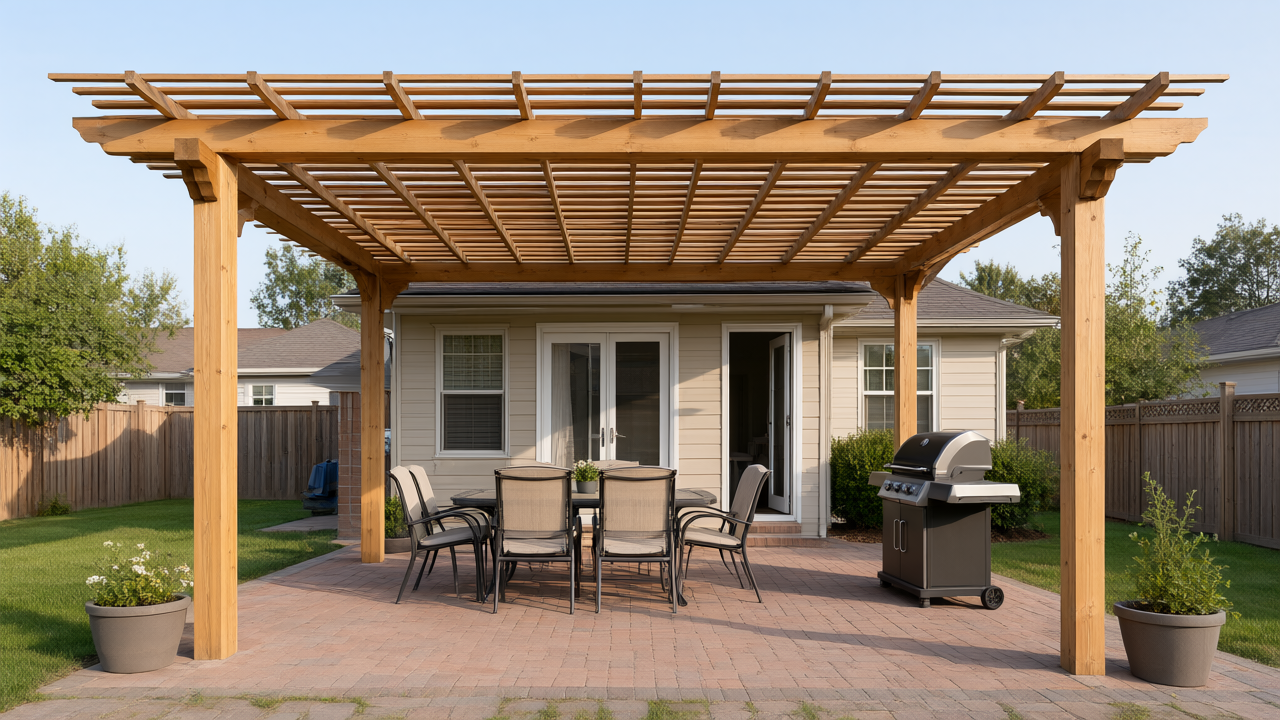
Here's the number that surprises most Cary homeowners: a custom pergola typically runs $4,500 to $12,000 installed, while a fully covered patio often lands between $18,000 and $45,000 depending on roof structure, electrical, and materials. That's not a small gap. But the real question isn't which one costs less. It's which one you'll actually use from April through October in McHenry County, and which one still makes sense when the January wind comes screaming across the Fox River valley. If you're weighing a pergola vs. covered patio for your Cary, IL home in 2026, this breakdown covers the costs, the weather reality, the permit headaches, and a simple framework for deciding.
Pergola or Covered Patio? The Core Differences Cary Homeowners Should Understand
A pergola is an open structure. Think vertical posts supporting a slatted or louvered roof. Sun filters through. Air moves freely. Rain falls through unless you add a solid roof panel or fabric canopy. A covered patio is exactly what it sounds like: a solid roof over an existing or new patio slab, usually tied into your home's roofline or built as a freestanding structure with shingles or metal roofing.
The functional difference matters more than the aesthetic one. A pergola gives you partial shade, not shelter. On a 90 degree July afternoon in Cary, a well-oriented pergola with 2x2 slats spaced six inches apart will cut direct sun by roughly 60 to 70 percent. That's comfortable. But when a summer storm rolls through, everyone's inside. A covered patio gives you true outdoor living space: grilling in the rain, watching storms from a dry seat, keeping furniture out year round.
Burns Carpentry builds both, and the honest answer we give clients is this: if you want a shade feature that looks incredible and costs less, go pergola. If you want an extension of your indoor square footage, go covered patio. The mistake is buying a pergola expecting it to behave like a roof, or buying a covered patio when what you really wanted was a garden focal point.

Cost Comparison: What Each Option Actually Costs in Cary, IL in 2026
Let's talk real numbers, because this is where most online comparisons get vague. In the Cary and greater McHenry County area, here's what homeowners are paying right now for installed structures. These figures assume you're hiring a licensed carpenter, not a handyman with a truck.
- Basic wood pergola (12x12, pressure treated pine): $4,500 to $7,500 installed
- Premium cedar or louvered pergola (12x16): $8,000 to $15,000, with motorized louvers pushing toward the top of that range
- Attached covered patio (16x20, shingled roof tied to house): $18,000 to $32,000
- Freestanding covered structure with metal roof: $22,000 to $45,000
- Electrical add-ons (ceiling fans, recessed lights, outlets): $1,200 to $4,500
- Concrete or paver patio slab underneath (if not already poured): $6 to $14 per square foot
Two things drive that covered patio price up fast. First, tying a roof into your existing home structure means flashing, framing, and matching shingles, which is real carpentry work, not a kit. Second, most Cary homeowners want at least a couple of outlets or a fan, and running electrical through an exterior wall adds cost and requires a licensed electrician.
Here's where you save money: if you already have a concrete patio slab in good condition, a covered patio becomes significantly cheaper because you're not paying for the foundation. And if your existing deck or patio is solid, a pergola can often be built over it without any demo work at all. Burns Carpentry handles Deck Building and pergola construction as separate scopes, so you're never paying twice for the same footprint.
Weather & Sun Reality Check: How Each Structure Performs Through Cary's Four Seasons
Cary sits in USDA hardiness zone 5b, which means winter lows that regularly hit -10 to -15 degrees Fahrenheit, roughly 36 inches of snow annually, and a freeze-thaw cycle that punishes anything built without frost-depth footings. Both structures need footings poured below the 42 inch frost line. Skip that, and you'll be resetting posts in three years.
Summer tells a different story. Cary gets about 190 sunny days a year and July humidity that makes an uncovered patio miserable by 2 p.m. A pergola oriented with slats running east to west blocks the high midday sun while letting lower morning and evening light through. That orientation detail alone changes how usable the space feels, and it's the kind of thing that gets ignored when someone buys a big box kit and installs it facing the wrong way.
Wind is the underrated factor. Open pergolas handle gusts well because air passes through. Covered patios need proper bracing and, in some cases, engineered connections to the house to handle the 70 to 80 mph gusts that show up during summer thunderstorms. Snow load is the other one. A flat or low pitch roof that doesn't shed snow can accumulate 30 to 50 pounds per square foot, which is why roof pitch and rafter sizing on a covered patio aren't places to cut corners.
Maintenance reality check: a wood pergola needs re-staining every two to three years in this climate. Cedar lasts longer between coats. A covered patio's roof needs the same care as your house roof, plus gutter cleaning twice a year. Neither is maintenance free.

Permits, HOA Rules & Resale Value in Cary, IL
This section saves people real money and real headaches. In Cary, most structures over a certain height or square footage require a building permit through the Village. A pergola attached to your home, or one exceeding typical height thresholds, generally needs a permit. A covered patio almost always does, because it's a roofed structure with structural connections. Burns Carpentry manages the permit application process with the Cary municipal offices on deck, basement, and covered structure projects, which means you're not the one standing in line at Village Hall trying to explain your rafter spacing.
Before you sign anything, do these three things:
- Call the Village of Cary building department and ask specifically about your address. Setback rules vary by lot, and a structure that's fine on one street may violate setback on yours.
- Read your HOA covenants. Some Cary subdivisions restrict structure height, roof color, or require architectural review board approval before a single post goes in the ground. Getting retroactive approval after the fact is expensive.
- Check your plat of survey for easements. Building over a utility easement means you may have to tear it down later.
On resale: a well built covered patio tends to appraise as added living area and often recoups 50 to 70 percent of its cost at sale. A pergola is typically treated as a landscape feature and recoups less, maybe 30 to 50 percent. But here's the honest part: if you're planning to sell within two years, neither project is a great financial move. Build it because you'll use it, not because you're chasing ROI.
How to Decide: A Simple Framework for Your Backyard
Run through these questions honestly. Most people land on an answer by question three.
- Do you want to use the space in the rain? Yes means covered patio. No means pergola is on the table.
- Is your budget under $12,000? A pergola fits. A covered patio usually doesn't, unless you're doing a partial cover.
- Do you already have a solid patio slab or deck? If yes, both options get cheaper and faster.
- How much direct afternoon sun does the space get? Six or more hours means shade is non negotiable, and a pergola may not cut it alone.
- Are you willing to re-stain wood every few years? If not, look at cedar, composite, or a covered structure with low maintenance finishes.
And here's when you don't need a professional: if you're putting up a small freestanding pergola kit on an existing level patio with no electrical, no permit requirement, and no attachment to the house, a competent DIYer can handle it in a weekend. That's a legitimate DIY project. What you shouldn't DIY is anything attached to your home's structure, anything requiring frost depth footings, or anything needing a permit. Those are the jobs where a bad build shows up as a sagging roof or a post lifting out of the ground two winters later.
If you're in Cary or anywhere across McHenry County and you want a straight answer on which structure fits your yard, Burns Carpentry builds custom pergolas and outdoor living structures for homeowners throughout the area. Andy Burns and the crew will walk your property, tell you what's realistic for your budget, and let you know if what you're picturing is actually a good fit. No pressure, no upsell. Just a carpenter telling you the truth about your backyard.
Frequently Asked Questions
How much does a pergola cost in Cary, IL?
Most Cary homeowners pay between $4,500 and $12,000 for an installed pergola, depending on size, wood species, and whether you add louvers or electrical. Cedar and louvered systems run higher. Pressure treated pine kits built over an existing patio sit at the low end.
Is a covered patio worth it in Illinois winters?
Yes, if it's built correctly with frost depth footings and proper roof pitch for snow shedding. A covered patio extends your usable outdoor season by several weeks on each end and protects furniture and grills from snow and ice. Poorly built ones crack and shift within a few seasons.
Do I need a permit for a pergola or covered patio in Cary?
In most cases, yes, especially for anything attached to your home or above a certain height. Requirements vary by lot and structure type. Call the Village of Cary building department before you buy materials, and ask your contractor whether they handle the permit application for you.
Which adds more resale value, a pergola or covered patio?
A covered patio generally recoups more at resale, often 50 to 70 percent of project cost, because it reads as added living space. A pergola is usually treated as a landscape feature and recoups less. If resale is your main goal, wait until you're not selling soon.
If you're weighing a pergola against a covered patio and you want a real answer for your specific yard, call Burns Carpentry. They'll look at your space, tell you what makes sense for your budget, and give you an honest read on whether you need a pro or can handle it yourself.