
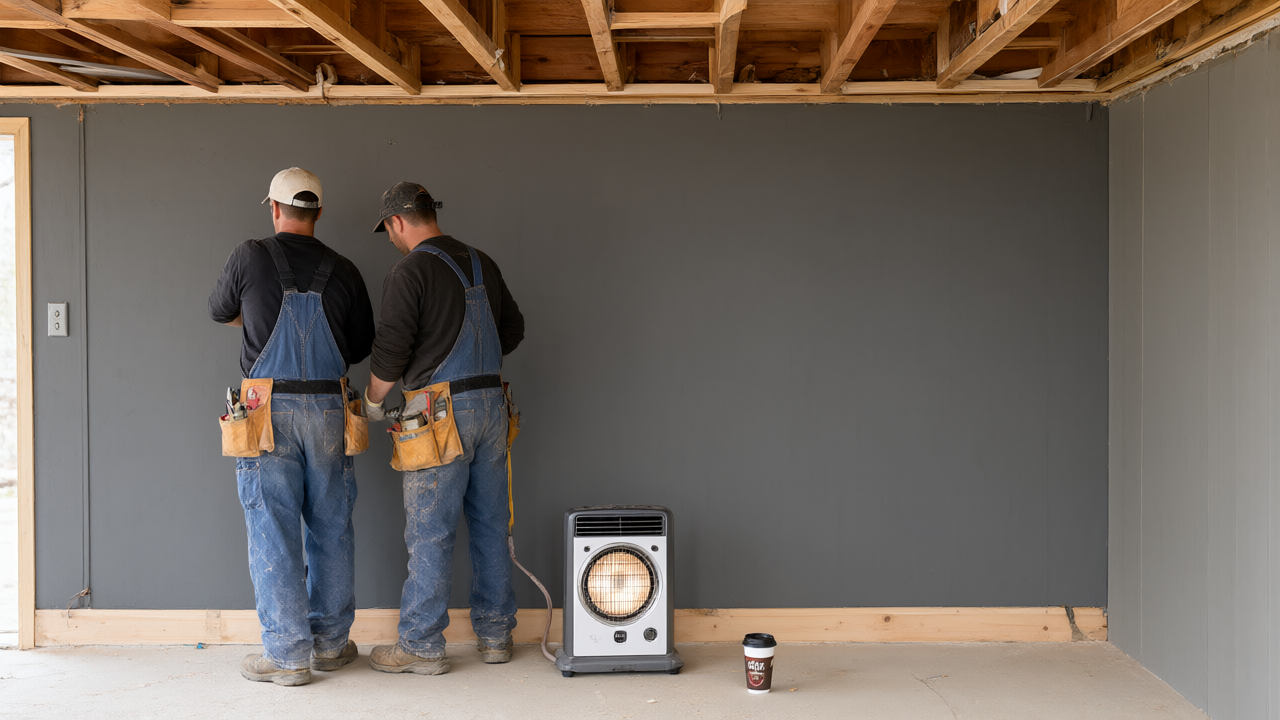
Most Palatine homeowners call about Basement Finishing in April. By then, every reputable carpenter in the northwest suburbs is booked six to ten weeks out, lumber yards are running seasonal price increases, and your finished basement gets done just in time for everyone to spend the summer upstairs. The homeowners who call in November and December? They're the ones who get the best crews, the most attention, and often the better price. Winter construction in Palatine isn't a compromise. It's a strategy.
Why Palatine Homeowners Choose Winter for Basement Finishing Projects
There's a real rhythm to construction in the Chicago suburbs, and it has almost nothing to do with the weather. It has to do with demand. From May through September, carpenters in Palatine, Arlington Heights, and Schaumburg are slammed with Deck Building, pergola construction, and exterior repairs. Basements sit on the back burner because homeowners are thinking about patios and backyard living, not a downstairs family room they won't use until January anyway.
That seasonal shift creates a window. When you schedule basement finishing in November, December, or January, you're competing with far fewer homeowners for the same crew. And basement work, unlike deck building, happens entirely indoors. The ground freezes, the snow falls, and your project keeps moving because nobody's framing a floor plan in a blizzard. The temperature inside your Palatine home stays between 65 and 72 degrees all winter, which is exactly the environment where framing, drywall, and Flooring Installation actually perform best.
There's a moisture angle too, and it's the one most homeowners miss. Basements in this region deal with two water threats: groundwater from spring thaw and summer humidity. Scheduling a finish during the dry winter months means your framing lumber has time to acclimate and your moisture barriers get installed and tested before the first big thaw hits in March. Ask any experienced carpenter in Cary or Elgin and they'll tell you the same thing: a basement finished in February handles April a lot better than one finished in June.
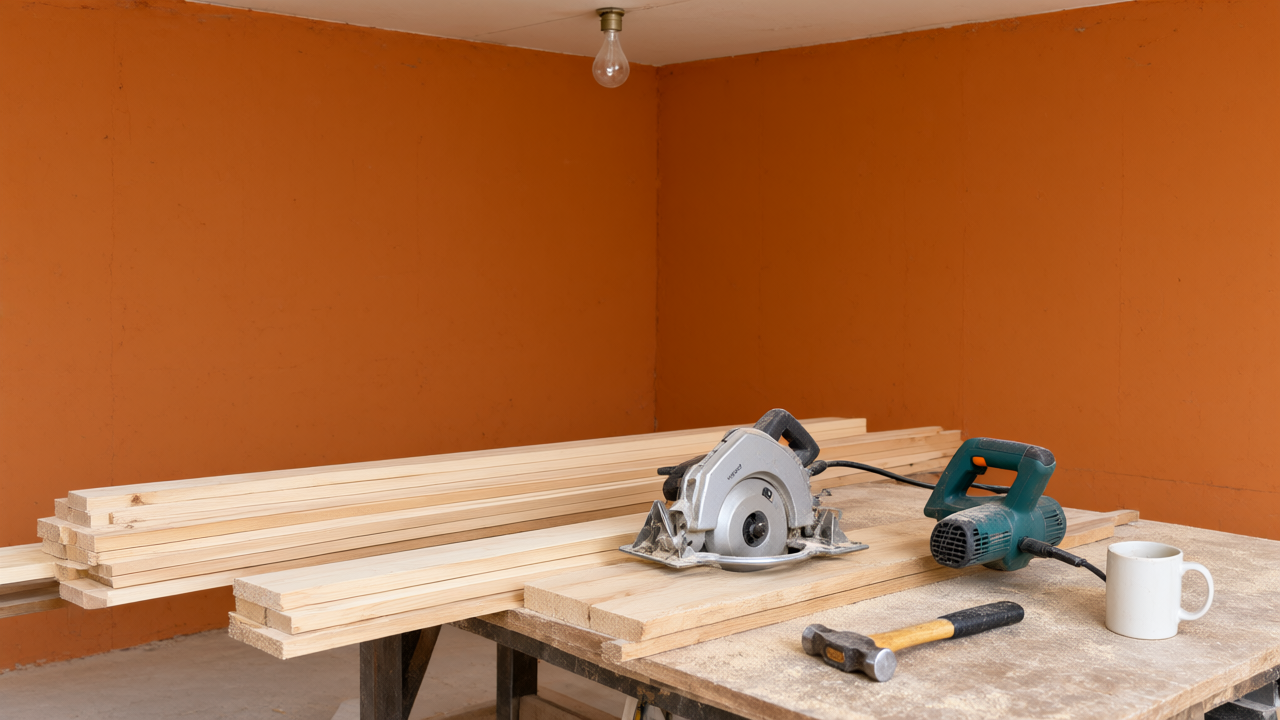
5 Cold-Weather Advantages: Contractor Availability, Material Pricing, and Faster Timelines
The advantages stack up fast once you're inside the season. Here's what actually changes between a summer start and a winter start on a Palatine basement project.
- Contractor availability opens up. During peak season, a good crew might be juggling four or five jobs at once. In winter, you're often one of two. That means faster responses, more consistent daily progress, and a project manager who isn't splitting attention between your basement and three decks across town.
- Material pricing stabilizes. Lumber and composite suppliers often run off-season promotions and hold pricing steadier from December through February. On a typical 800 to 1,200 square foot basement, homeowners frequently report saving $800 to $2,500 on framing lumber, insulation, and flooring materials compared to peak season quotes.
- Timelines compress. A basement finishing project that takes eight to ten weeks in summer can often be completed in six to eight weeks in winter simply because crews aren't stretched thin and material deliveries aren't competing with every deck builder in the county.
- Permit offices move faster. Municipal building departments in Palatine and surrounding Cook County towns see far fewer applications in winter. That means quicker review cycles and inspection appointments scheduled within days instead of weeks.
- You're ready for spring. Finish in February, and by the time the first warm weekend hits, your basement is done and your upstairs project (deck, pergola, flooring) can start immediately. You've effectively queued up two projects back to back without overlap.
How Burns Carpentry Manages Dust, Moisture, and Temperature Control in Palatine Homes
Winter basement work sounds great until you think about the practical mess: dust floating through a closed house, cold air seeping in through open doors, moisture trapped behind new walls. These are real problems, and how a contractor handles them is the difference between a smooth project and a nightmare.
Burns Carpentry approaches every basement finishing project with a moisture assessment first. That means checking for existing water intrusion, testing the foundation walls, and identifying any spots where a French drain or sump upgrade might be needed before framing goes up. Skipping this step is the single most common mistake homeowners make when hiring a carpenter near me in Palatine. If a contractor starts framing without addressing moisture, you're building a future mold problem into the walls.
Dust control in an occupied home is equally important. The standard approach is zippered plastic barriers at stairwells, negative air machines running continuously, and floor protection throughout the path from the basement to the nearest exterior door. Burns Carpentry also schedules high-dust work (cutting, sanding, drywall) in concentrated blocks so the air scrubbers can run overnight and the house stays livable during the day. Homeowners typically keep full use of their upstairs during the entire project.
Temperature and ventilation matter in winter specifically. Framing lumber needs to acclimate to indoor conditions before it's installed, or you get shrinkage and drywall cracks three months later. Insulation has to be applied in the correct temperature range. And HVAC ductwork for the new basement space should be tied into the existing system before drywall goes up, not after. Here's a quick checklist to run through with any contractor you're considering:
- Moisture assessment before framing: Foundation walls tested, drainage plan documented.
- Dust barriers and air scrubbers: Zippered plastic at stairwells, negative air running daily.
- Lumber acclimation: Materials delivered and stored indoors at least 48 to 72 hours before installation.
- HVAC plan: Ductwork tied in, returns sized correctly, permits pulled for mechanical work.
- Insulation specification: Rigid foam or spray foam on exterior walls, proper R value for Illinois code.
- Egress plan: If you're adding a bedroom, a code compliant egress window is required. This is non negotiable.
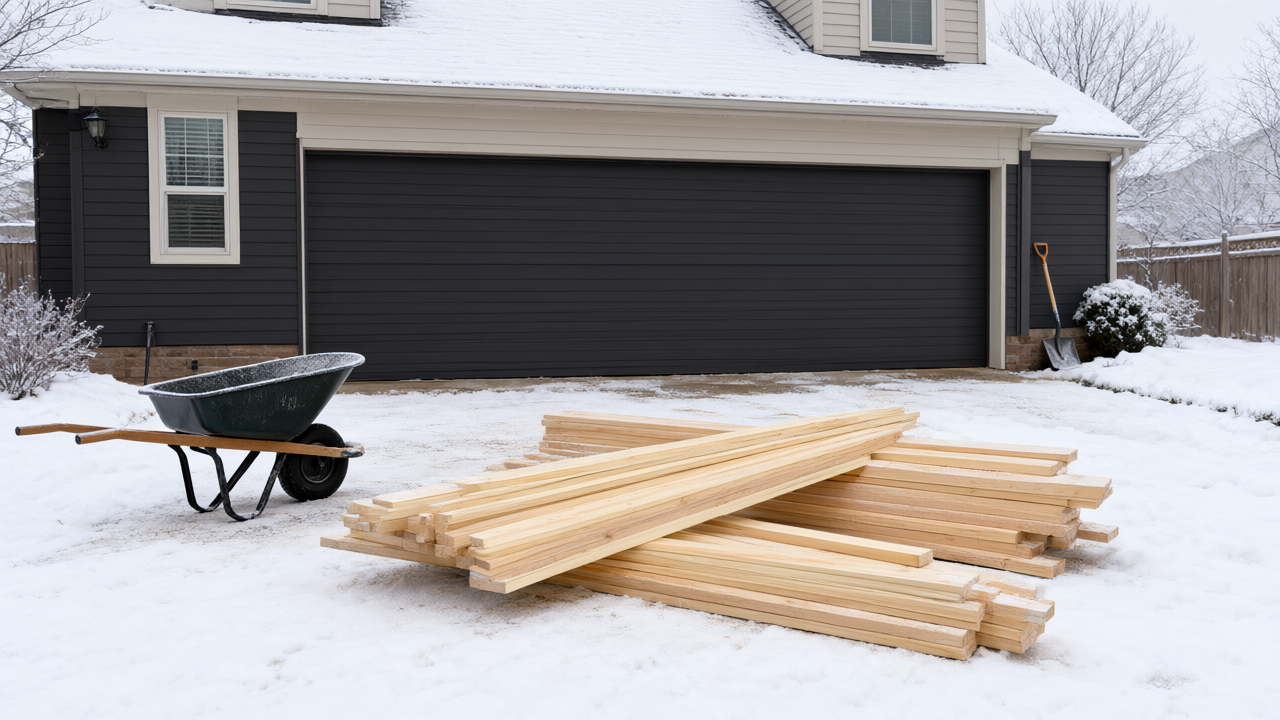
Permits, Inspections, and Scheduling: A Winter 2026 Timeline for Palatine
Permits are where DIY basement finishing projects quietly fall apart. Most homeowners don't realize that finishing a basement in Palatine requires a building permit, and that the inspections along the way (framing, electrical, insulation, final) are what protect you when you sell the house. Unpermitted basement work is a disclosure nightmare and can complicate financing.
Burns Carpentry handles the entire permit application process with municipal offices, including the Village of Palatine and surrounding Cook County jurisdictions. That means submitting plans, coordinating inspections, and making sure every stage passes before the next one starts. If you're working with a contractor who suggests skipping permits to save time, walk away. That's the biggest red flag in this industry.
Here's what a realistic winter 2026 timeline looks like for a Palatine basement finishing project starting in November:
- Week 1: Free estimate, site visit, moisture assessment, design discussion.
- Week 2: Plan finalization, material selections, permit application submitted.
- Weeks 3 to 4: Permit approval (faster in winter), material ordering, project scheduling.
- Weeks 5 to 6: Framing, rough electrical, rough plumbing, framing inspection.
- Weeks 7 to 8: Insulation, drywall, taping, priming.
- Weeks 9 to 10: Flooring installation, trim, doors, fixtures, final inspection.
- Week 11: Punch list, walkthrough, project handoff.
That's roughly 10 to 11 weeks from first call to finished basement, though simpler projects (single room, no bathroom, no egress window) can wrap in six to eight weeks. A basement with a wet bar, bathroom, and bedroom runs longer, closer to 12 to 14 weeks. Get these numbers in writing before you sign anything.
What to Expect from Start to Finish: A Palatine Basement Finishing Case Study
Last winter, a Palatine homeowner on the north side of town had a 1,050 square foot unfinished basement that had been storage space for eleven years. The goals were straightforward: a family room, a guest bedroom with an egress window, a small bathroom, and dedicated storage under the stairs. The project started in late November and wrapped in mid February, about eleven weeks door to door.
What made it work wasn't anything exotic. The moisture assessment found a minor seep along one foundation wall that was corrected with interior drainage before framing. The egress window required cutting into the foundation, which is a job that absolutely needs a permit and a licensed contractor. The HVAC tie in was done during framing so the drywall crew didn't have to come back. Flooring installation (a mix of vinyl plank in the family room and laminate in the bedroom) happened in week nine, with only a two day disruption to the upstairs household.
The homeowner's total investment landed in the mid five figures, which is typical for a project of that scope in Palatine. A simpler single room finish with no bathroom or egress work often comes in around $25,000 to $45,000 depending on square footage and finish level. Higher end builds with wet bars, custom built ins, and premium flooring can run $60,000 to $90,000. Get a detailed line item estimate, not a lump sum quote. You want to see where every dollar goes.
One more thing worth knowing: you don't always need a professional. If you're patching drywall, painting, or installing simple shelving in an already finished basement, that's a weekend project you can handle yourself. Where it gets risky is framing, electrical, plumbing, egress windows, and anything touching the structure or moisture envelope. Those are the jobs where a mistake costs five figures to fix. Call a professional carpenter in Arlington Heights or Palatine for anything structural, and save the DIY energy for the finishes.
Frequently Asked Questions
How much does basement finishing cost in Palatine in 2026?
Most Palatine homeowners spend between $35,000 and $75,000 for a full basement finish, depending on square footage, whether a bathroom is included, and finish level. Simple single room projects can start around $25,000, while higher end builds with wet bars and custom cabinetry run $90,000 or more. Winter scheduling often saves $800 to $2,500 on materials alone.
Is it cheaper to finish a basement in the winter?
Yes, usually. Winter brings better contractor availability, steadier material pricing, and faster permit turnaround. You're also more likely to get a crew that isn't stretched across five projects, which means tighter timelines and fewer delays. The savings aren't enormous, but the schedule and attention advantages are real.
Do I need a permit to finish my basement in Palatine?
Yes. Basement finishing in Palatine requires a building permit, and separate permits or inspections for electrical, plumbing, and HVAC work. Burns Carpentry handles the entire permit process with the Village of Palatine and surrounding Cook County offices, including all required inspections. Unpermitted work can complicate a future home sale or refinance.
How long does a basement finishing project take in the winter?
A typical Palatine basement finish takes six to eleven weeks from start to finish in winter, depending on scope. Simpler projects wrap in six to eight weeks; larger builds with bathrooms and egress windows run closer to twelve to fourteen weeks. Because the work is entirely indoors, winter weather rarely causes delays.
If you're in Palatine and thinking about finishing your basement this winter, Burns Carpentry handles basement finishing, Basement Remodeling, flooring installation, and the permits that go with all of it. Andy Burns and his crew work across Palatine, Arlington Heights, Cary, Schaumburg, and the surrounding suburbs. Call for a free estimate, and they'll tell you straight up what your basement needs and what it doesn't.


